Nepal
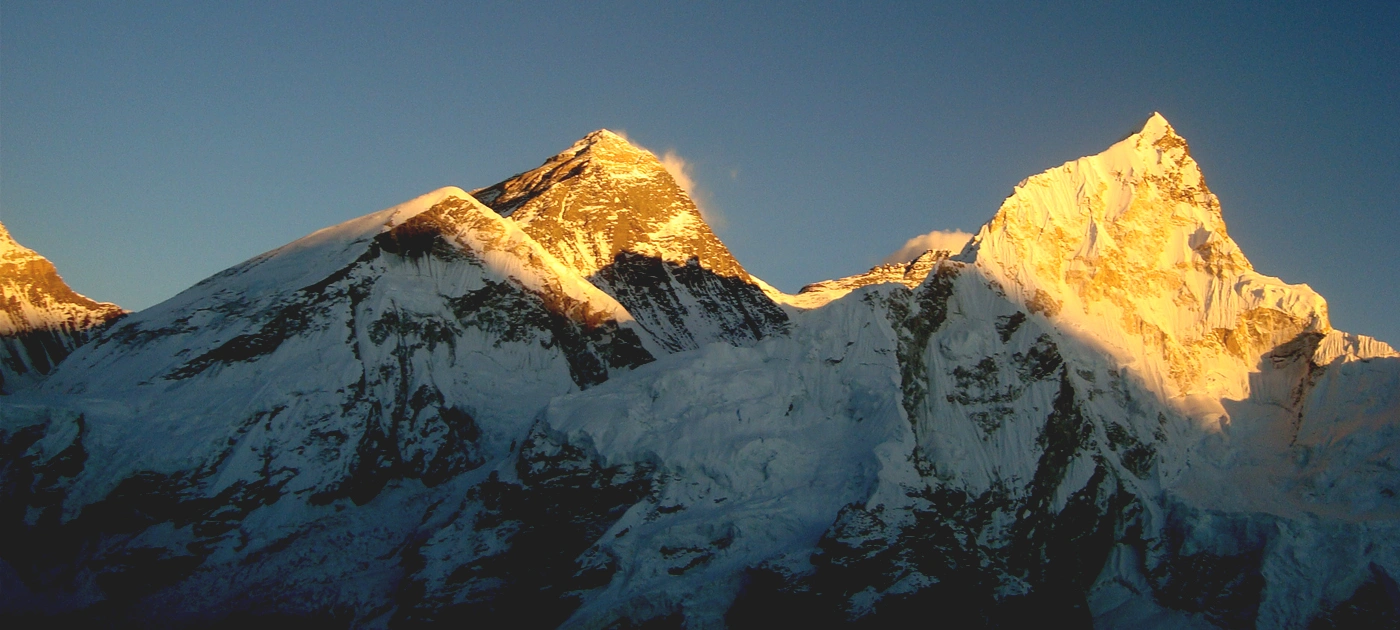
Nepal is a beautiful country of extraordinary contrasts, home to the world’s highest mountain, Mount Everest, ancient historic cities, lush forests, and the fertile plains of the Terai, where majestic tigers and the great one-horned rhinoceros roam freely.
For travelers seeking adventure, culture, and a true Himalayan experience, Nepal offers an unforgettable journey. From trekking through the magnificent Himalayas and exploring snow-capped mountains to discovering ancient temples, monasteries, and traditional villages, the country is filled with natural beauty and cultural treasures.
What makes Nepal truly special is its warm and welcoming people. Nepalese communities are known for their kindness, hospitality, and respect for people of different backgrounds and religions. Despite the country's rich religious and cultural diversity, people live together with a strong spirit of peace, harmony, and mutual respect.
Nepal is home to Mount Everest, the world’s highest peak, and offers diverse landscapes, rich culture, heritage sites, wildlife, and adventure. Discover the best places to see in Nepal and create unforgettable travel memories.
Whether you are trekking to Everest Base Camp, exploring the historic cities of Kathmandu Valley, experiencing wildlife in Chitwan, or simply enjoying the peaceful mountain scenery, Nepal offers something for every traveler. It is a destination where adventure, nature, culture, and genuine hospitality come together to create unforgettable memories.
Geography
Nepal is an independent, federal democratic republic located in South Asia. It lies between 26°22′ and 30°27′ north latitude and 80°04′ and 88°12′ east longitude. The country is bordered by the Tibetan Autonomous Region of the People’s Republic of China to the north and India to the east, south, and west.
Nepal stretches approximately 800 kilometers from east to west, while its width from north to south varies between 150 and 250 kilometers. Despite its relatively small area, Nepal has remarkable geographical diversity, ranging from the lowland Terai plains to the mid-hill regions and the high Himalayan mountains.
Geographically, Nepal is divided into three major regions: the Himalayan Region, the Hill Region, and the Terai Region.
Geography
Nepal is an independent, federal democratic republic located in South Asia. It lies between 26°22′ and 30°27′ north latitude and 80°04′ and 88°12′ east longitude. The country is bordered by the Tibetan Autonomous Region of the People’s Republic of China to the north and India to the east, south, and west.
Nepal stretches approximately 800 kilometers from east to west, while its width from north to south varies between 150 and 250 kilometers. Despite its relatively small area, Nepal has remarkable geographical diversity, ranging from the lowland Terai plains to the mid-hill regions and the high Himalayan mountains.
Geographically, Nepal is divided into three major regions: the Himalayan Region, the Hill Region, and the Terai Region.
Himalayan Region:
The altitude of this region ranges between 4,877 m and -8,848 m. It includes 8 of the highest 14 summits in the world, which exceed an altitude of 8000 meters, including Annapurna, Dhaulagiri, and others
Mountain region:
This region accounts for about 64 percent of the total land area. It is formed by the Mahabharat range that soars up to 4877 meters and the lower Churia range.
Terai region:
This region is located on very low land and occupies about 17 percent of the total land area of the country.
History
Nepal, a country with a long historical tradition, is an amalgamation of several medieval principalities. Before the campaign of national integration launched by King Prithvi Narayan Shah, the Kathmandu Valley was ruled by the Malla kings. Whose contributions to art and culture are indeed great and unique, in 1768 AD, the Shah dynasty ascended the throne of the unified kingdom. His Majesty King Birendra Bir Bikram Shah Dev is the tenth king of the Shah dynasty.
The kingdom's new democratic constitution was promulgated on November 9, 1990. Nepal is one of the founding members of the South Asian Association for Regional Cooperation SAARC of which the third summit was held in Kathmandu in November 1987.
What Can We See in Nepal?
Nepal is a natural paradise in South Asia, renowned for its stunning mountains, diverse landscapes, rich culture, and unique heritage. Nepal offers many exciting things to see and do, from trekking and hiking in the Himalayas to mountain climbing, expeditions, jungle safaris, paragliding, zip-flying in Nepal, bungee jumping, and river rafting. Visitors can also explore Nepal’s ancient cultural heritage, traditional villages, sacred temples, and historic sites. With so many adventure and cultural experiences to choose from, Nepal offers something for every type of traveler.