13
Days

Everest Base Camp Group Join Trek - 13 Days

151 Reviews in TripAdvisor
39 Reviews in Google Reviews

Are you interested in joining a group trek to Everest Base Camp?

Choosing a group trek to Everest Base Camp is an excellent way to experience one of the world's most iconic Himalayan adventures. This classic journey takes trekkers through breathtaking mountain landscapes and offers a close-up view of Mount Everest (8,848 m), the highest peak on Earth.

By joining a group trek, solo travelers and small parties can share the experience with like-minded adventurers while benefiting from the support of an experienced guide. Group trekking not only helps reduce costs but also enhances safety, provides logistical convenience, and adds a rewarding social element to the journey.

Duration
13 Days
Trip Grade
Moderate
Country
Nepal
Maximum Altitude
5,364 m | 17,598 ft
Group Size
1 - 20
Starts
Kathmandu
Ends
Kathmandu
Activities
Trekking
Best Time
Feb-May & Sep-Dec

Highlights of the Everest Base Camp Group Joining Trek

  • Trek together with fellow adventurers to Everest Base Camp (5,364 m), the world's highest mountain base camp.
  • Walk through the spectacular landscapes and high-altitude terrain of Sagarmatha National Park, a UNESCO World Heritage Site.
  • Enjoy a scenic and thrilling mountain flight between Kathmandu and Lukla.
  • Explore traditional Sherpa villages and visit ancient Buddhist monasteries rich in Himalayan culture and heritage.
  • Trek with an experienced local Sherpa guide and the support of a friendly porter.
  • Reduce overall trekking costs by joining a group departure.
  • Meet travelers from around the world and create lasting friendships along the journey.
  • Visit the magnificent Khumbu Glacier, one of the largest glaciers in the Himalayas.
  • Reach Everest Base Camp and stand at the foot of the world's highest mountain.
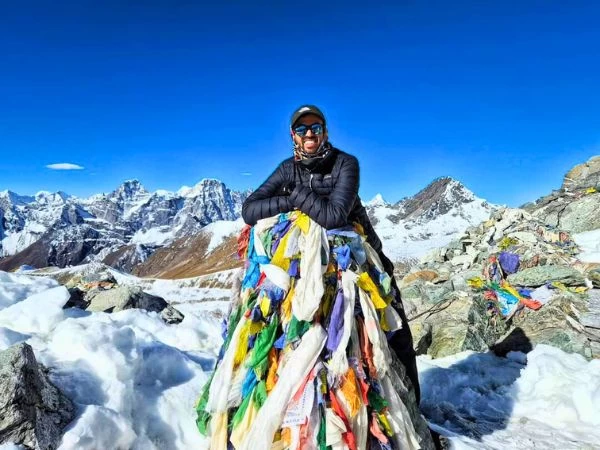
  • Climb Kala Patthar (5,545 m), the finest viewpoint in the Everest region, for breathtaking panoramic views of Mount Everest,Lhotse, Nuptse, and numerous surrounding Himalayan peaks.

Everest Base Camp Group Joining Trek Overview

The Everest Base Camp (EBC) Group Joining Trek is one of Nepal’s most popular trekking adventures, offering an unforgettable journey to Everest Base Camp at an altitude of 5,364 meters—the highest base camp in the world. This moderate-to-challenging trek typically takes 12–13 days and covers approximately 130 kilometers on foot through the heart of the Khumbu region.

The trek begins with a thrilling scenic flight to Lukla, home to the famous Tenzing-Hillary Airport, often regarded as one of the world’s most exciting mountain airports. Along the route, trekkers pass through traditional Sherpa villages, ancient Buddhist monasteries, and the breathtaking landscapes of Sagarmatha National Park, a UNESCO World Heritage Site renowned for its rich biodiversity and spectacular Himalayan scenery.

A major highlight of the journey is reaching Everest Base Camp and ascending Kala Patthar (5,545 m), the best viewpoint for panoramic views of Mount Everest (8,848.86 m) and surrounding peaks. The trek offers unparalleled mountain vistas and a unique opportunity to experience the culture and hospitality of the Sherpa people.

The Everest Base Camp Group Joining Trek is designed for travelers who wish to share the adventure with fellow trekkers from around the world. Group departures provide a more social trekking experience, enhance safety, and often help reduce overall travel costs.

This package offers flexibility regarding meals. Trekkers can choose their preferred breakfast, lunch, and dinner from local teahouses and Sherpa-run restaurants along the trail. Please note that meals are not included in the standard group joining trek package.

Participants should have a good level of physical fitness, as the trek involves several days of walking at high altitudes. Depending on the season, services included, and group size, the cost of the trek generally ranges from USD 1,090 to USD 2,590 per person.

The best times to undertake the Everest Base Camp Group Joining Trek are during spring (March–May) and autumn (September–November), when weather conditions are generally stable, and mountain views are at their finest. Trekking during the off-season offers a quieter experience, with fewer crowds along the trail.

Whether you are a solo traveler, a couple, or a small group, joining an Everest Base Camp group trek is an excellent way to experience one of the world’s most iconic trekking destinations while creating lasting memories with fellow adventurers.

Tourist Attractions - Everest Base Camp Group Trek

Everest Base Camp (5,364 m):

Everest Base Camp is the ultimate destination of this legendary trek and one of the most sought-after trekking goals in the world. Situated at the foot of Mount Everest (8,848.86 m), the highest mountain on Earth, the base camp offers an unforgettable experience surrounded by dramatic glaciers, rugged landscapes, and towering Himalayan peaks. For many trekkers, reaching Everest Base Camp is a lifelong dream and a remarkable personal achievement.

Sherpa Culture and Hospitality:

The Everest region is home to the renowned Sherpa people, celebrated worldwide for their mountaineering skills, resilience, and warm hospitality. Throughout the trek, you'll have the opportunity to visit traditional Sherpa villages, interact with local communities, and gain insight into their unique culture, customs, and spiritual way of life.

Breathtaking Views of Everest and the Himalayas:

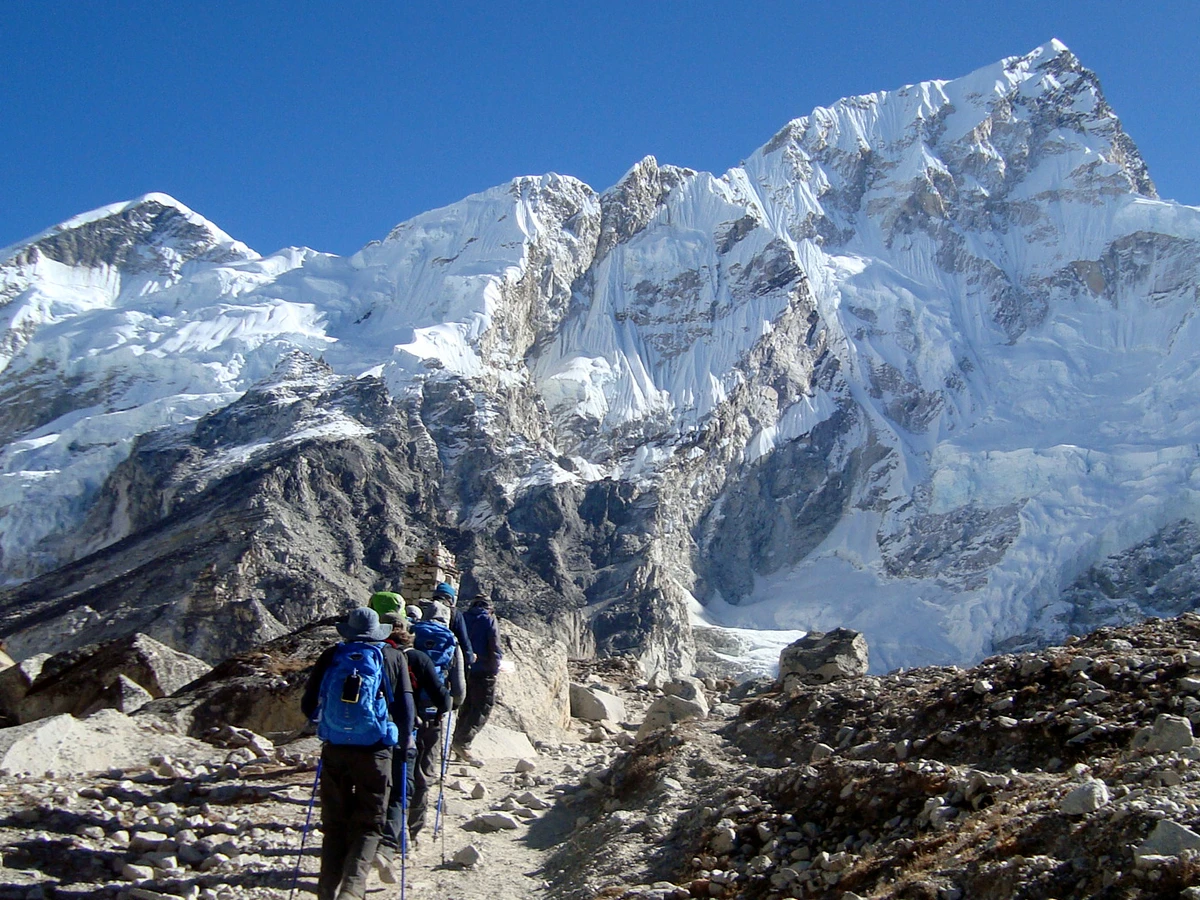
One of the greatest highlights of the Everest Base Camp trek is the spectacular mountain scenery. Along the trail, trekkers are rewarded with panoramic views of some of the world's highest peaks, including Mount Everest (8,848.86 m), Lhotse (8,516 m), Makalu (8,485 m), Nuptse (7,861 m), Ama Dablam (6,812 m), and many other snow-capped giants of the Himalayas.

Sagarmatha National Park:

The trek passes through Sagarmatha National Park, a UNESCO World Heritage Site renowned for its exceptional natural beauty and biodiversity. The park is home to diverse alpine forests, rare Himalayan wildlife, and breathtaking mountain landscapes, making it one of Nepal's most treasured protected areas.

Tengboche Monastery:

Tengboche Monastery is the largest and most significant Buddhist monastery in the Everest region. Surrounded by stunning Himalayan scenery, this sacred site offers visitors a unique opportunity to experience Buddhist traditions, observe monastic life, and enjoy some of the finest panoramic mountain views along the trekking route.

Why Choose a Group Joining Trek to Everest Base Camp?

Cost-Effective Adventure:

One of the biggest advantages of joining an Everest Base Camp group trek is affordability. Since the costs of guides, porters, transportation, accommodation, and logistics are shared among participants, group treks are generally more economical than private trekking packages.

Flexible Meal Choices:

Unlike all-inclusive trekking packages, the Everest Base Camp Group Joining Trek allows trekkers to choose and pay for their own meals along the route. This flexibility enables you to order food according to your appetite and personal preferences, ensuring greater convenience and value throughout the journey.

Enhanced Safety and Support:

Trekking at high altitudes can be challenging, especially for first-time trekkers. Joining a group provides an added layer of safety, as experienced guides and fellow trekkers are available to offer assistance when needed. In the event of altitude-related issues or emergencies, group support can be invaluable.

Shared Experiences and Lasting Friendships:

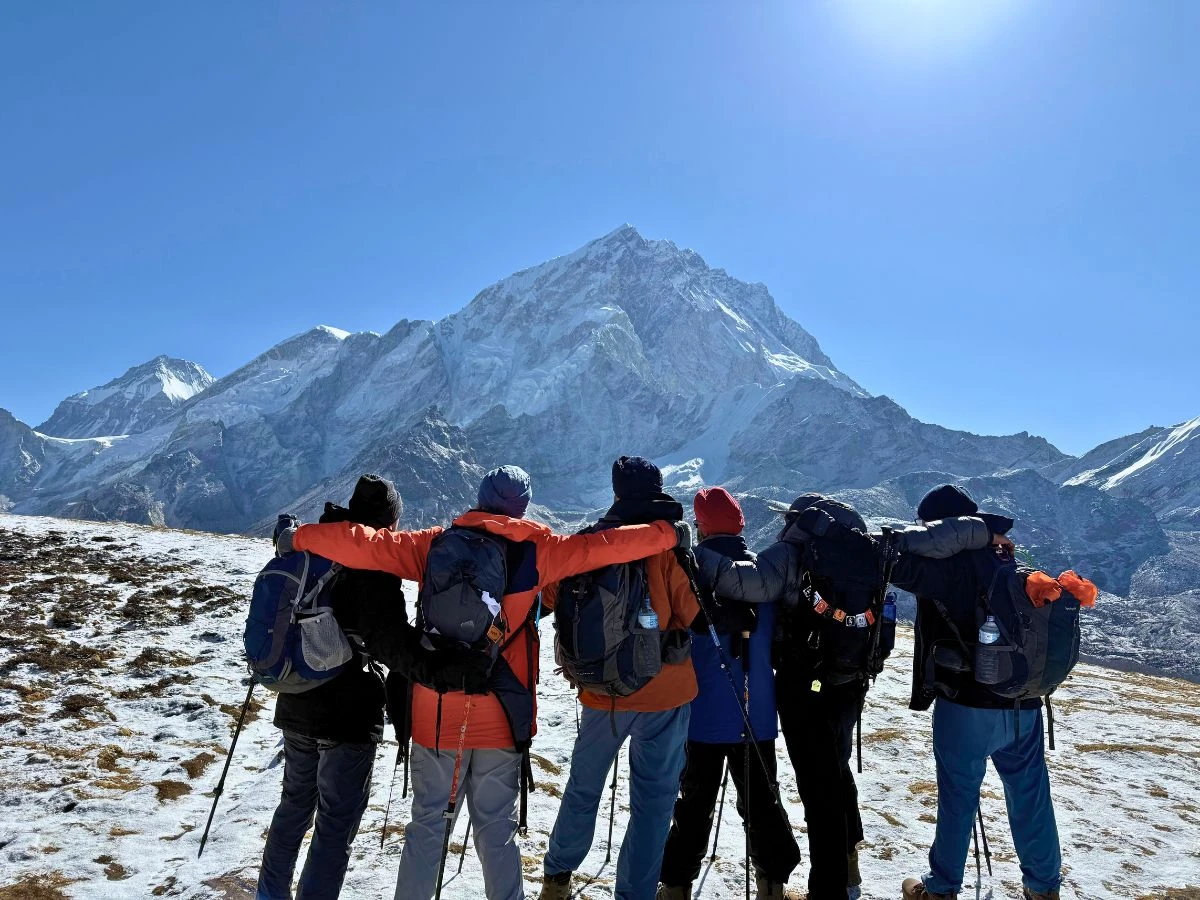
A group trek offers the opportunity to share this incredible adventure with travelers from different countries and cultural backgrounds. The camaraderie built along the trail often leads to lasting friendships and motivates the more demanding sections of the trek.

Experienced Local Guides and Porter Support

Group treks are led by knowledgeable local Sherpa guides who are familiar with the Everest region, its culture, and its trekking conditions. Porter support also helps reduce the physical burden of carrying heavy loads, allowing you to enjoy the journey more comfortably.

Well-Planned Itinerary and Proper Acclimatization:

Group departures follow a carefully designed itinerary that includes essential acclimatization days. This structured approach helps trekkers adjust gradually to higher elevations, reducing the risk of altitude sickness and increasing the chances of a successful trek to Everest Base Camp.

A Social and Enjoyable Trekking Experience:

Joining a group is an excellent way to meet like-minded adventurers from around the world. The shared experience of trekking through the Himalayas creates a fun and supportive atmosphere, making the journey even more memorable and rewarding.

Why Is the Everest Base Camp Trek So Popular?

1. Home to the World's Most Famous Mountain:

Mount Everest, the highest peak on Earth at 8,848.86 meters, has inspired adventurers for generations. Trekking to Everest Base Camp is a dream for many travelers and ranks among the world's most iconic trekking experiences. Reaching the base camp of this legendary mountain is a bucket-list achievement for trekkers from around the globe.

2. Accessible to Most Adventure Enthusiasts:

Unlike climbing Mount Everest, which requires advanced mountaineering skills, extensive training, and significant experience, the Everest Base Camp Trek is achievable for anyone with a good level of fitness, determination, and proper preparation. No technical climbing experience is required, making it accessible to a wide range of trekkers.

3. Spectacular Scenery and Adventure:

The Everest Base Camp Trek combines adventure, physical challenge, and breathtaking natural beauty. Each day brings incredible views of snow-capped peaks, deep valleys, glaciers, rivers, and dramatic Himalayan landscapes. The sense of achievement gained from trekking through one of the world's most famous mountain regions makes the journey truly unforgettable.

4. Rich Sherpa Culture and Heritage:

Beyond its stunning scenery, the Everest region offers a fascinating cultural experience. Trekkers have the opportunity to explore traditional Sherpa villages, visit centuries-old Buddhist monasteries, observe local customs, and learn about the unique lifestyle of the Sherpa people, whose rich cultural heritage is deeply influenced by Tibetan Buddhism.

5. A Paradise for Photography and Videography:

The Everest Base Camp Trek is one of Nepal's most photogenic adventures. From towering Himalayan peaks and colorful prayer flags to picturesque Sherpa settlements and dramatic mountain landscapes, every step offers incredible photo and video opportunities. During the peak trekking seasons of spring (March–May) and autumn (September–December), thousands of visitors travel to the Everest region to capture stunning images and create lasting memories of their Himalayan journey.

Everest Base Camp Group Join Trek Cost – 13 Days

Our 13-Day Everest Base Camp Group Join Trek is designed to provide an affordable and memorable Himalayan adventure. Depending on the level of service and comfort you choose, the cost ranges from USD 1,090 to USD 4,000 per person. Joining a group trek allows you to share this incredible journey with fellow trekkers from around the world, creating opportunities to make new friends and enjoy a more social trekking experience.

For groups of 10 or more participants, we offer special group discounts and customized pricing. Please contact us for the best available rates and personalized services, including experienced local Sherpa guides and porter support.

The cost of the Everest Base Camp Group Join Trek varies according to the services included in your package. Below is an overview of the available options:

1. Standard Budget Everest Base Camp Trek

Starting from USD 1,090 per person

This package includes all the essential services required for a successful Everest Base Camp trek:

  • Experienced local Sherpa trekking guide.
  • One porter shared between two trekkers (maximum combined luggage weight of 20–25 kg).
  • All necessary trekking permits.
  • Two nights of hotel accommodation in Kathmandu (one night before and one night after the trek) with breakfast.
  • Private airport transfers upon arrival and departure.
  • Teahouse/lodge accommodation throughout the trek.
  • Complimentary trekking equipment, including a sleeping bag, down jacket, and duffel bag (to be returned after the trek).
  • Round-trip domestic flights between Kathmandu and Lukla.
  • Guide and porter expenses, including salary, accommodation, meals, transportation, and insurance.

2. Everest Base Camp Full Board Package

Starting from USD 1,350 per person

This package includes everything in the Standard Budget Package, plus all meals during the trek:

  • Daily breakfast, lunch, and dinner throughout the trek.
  • Round-trip Kathmandu–Lukla flights.
  • Trekking permits.
  • Experienced guide and porter support.
  • Hotel accommodation in Kathmandu.
  • Teahouse/lodge accommodation along the trekking route.
  • Essential trekking equipment.

The Full Board Package is ideal for trekkers who prefer a hassle-free experience with all major trekking expenses included in advance.

3. Luxury Everest Base Camp Trek

Starting from USD 2,070 to USD 4,000 per person

For those seeking additional comfort and premium services, the Luxury Everest Base Camp Trek offers an enhanced trekking experience that may include:

  • Luxury lodge accommodation is available.
  • Higher-quality meals and upgraded services.
  • Private trekking guide and personalized support.
  • Additional comfort and premium amenities.
  • Scenic helicopter flight from Gorakshep to Lukla and/or Kathmandu (depending on the selected package).
  • Customized services tailored to your travel preferences.
  • The final cost depends on the level of luxury, accommodation standards, transportation options, and additional services selected.

Whether you choose a budget, full-board, or luxury package, the Everest Base Camp Group Join Trek offers an unforgettable opportunity to experience the beauty of the Himalayas, the culture of the Sherpa people, and the thrill of reaching the foot of the world's highest mountain.

When Is the Best Season for the Everest Base Camp Group Trek?

The Everest Base Camp Group Trek can be undertaken throughout the year; however, the two most favorable trekking seasons are Spring (March to May) and Autumn (September to November). These seasons offer the best weather conditions, clear mountain views, and comfortable trekking temperatures, making them ideal for exploring the Everest region.

Spring Season (March to May): 

Spring is widely regarded as one of the best times to trek to Everest Base Camp. During this season, the weather is generally stable, skies are often clear, and temperatures are relatively mild. The trails come alive with blooming rhododendrons and vibrant mountain landscapes, creating spectacular scenery throughout the journey.

Spring is also the peak climbing season on Mount Everest, allowing trekkers to experience the excitement of international mountaineering expeditions preparing for summit attempts.

Average temperatures:

  1. Daytime: Approximately 10°C to 15°C (50°F to 59°F)
  2. Nighttime at higher elevations: Around -10°C (14°F) or lower

Autumn Season (September to November):

Autumn is another excellent season for the Everest Base Camp Trek. Following the summer monsoon, the atmosphere becomes exceptionally clear, offering some of the finest mountain views of the year. The weather is generally dry and stable, making trekking conditions highly favorable.

Autumn is particularly popular among trekkers who seek crisp air, excellent visibility, and comfortable hiking temperatures. The trails are lively yet often less crowded than during the peak spring season.

Average temperatures:

  1. Daytime: Approximately 10°C to 15°C (50°F to 59°F)
  2. Nighttime at higher elevations: Around -10°C (14°F) or lower

Which Season Should You Choose?

Choose Spring (March–May) if you want warmer temperatures, colorful blooming landscapes, and the chance to witness Everest climbing expeditions.

Choose Autumn (September–November) if you prefer crystal-clear mountain views, dry weather, and excellent trekking conditions.

Both seasons provide outstanding opportunities to enjoy the Everest Base Camp Group Trek and experience the breathtaking beauty of the Himalayas at their very best.

Note: If you're being precise, autumn in Nepal's Everest region is generally considered Septemberto November. December is usually categorized as the beginning of the winter trekking season, with colder temperatures and fewer trekkers on the trail.

Group Trek to Everest Base Camp Itinerary Details

The 13-Day Everest Base Camp Group Join (EBC) trek itinerary is meticulously planned by an experienced Sherpa trek guide from Nepal Spirit Adventure. This trek is a group join trip, meaning there are no personal choices available, unlike a private trek. Once we begin the trek, the itinerary is fixed from start to finish, and all group members are required to adhere to it in accordance with the terms and conditions set by Nepal Spirit Adventure.

The trek begins and ends in Lukla. Each day, after dinner, the trek leader provides a briefing about the next day's program, which is essential for the success of the Everest Base Camp trek. This information is particularly important as you navigate the group join itinerary.

The Condition Foothill Journey to Mount Everest Base Camp:
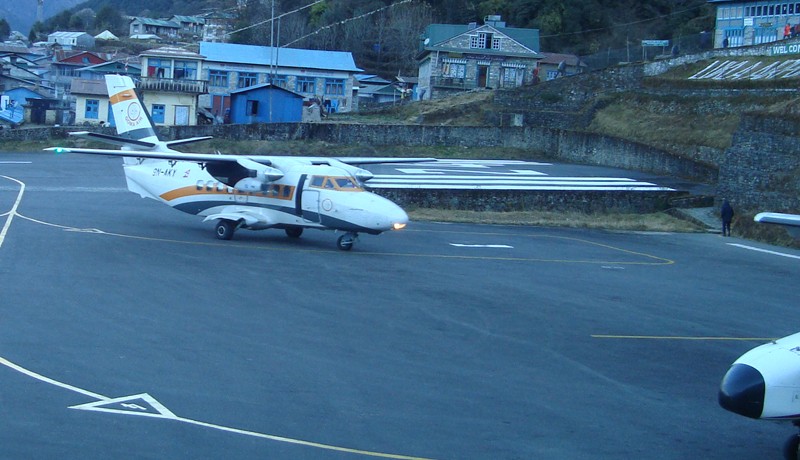

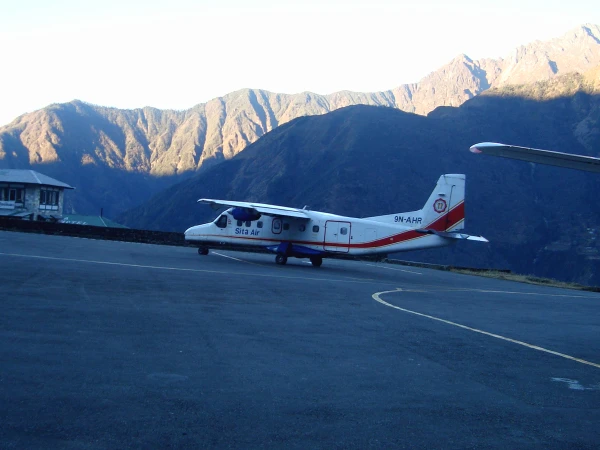
Lukla 2,840 m | 9,317ft, the world’s exciting airport, main gateway to the Everest base camp trek

The flight from Kathmandu to Lukla lasts approximately 35 minutes, followed by a trek to Phakding, situated at an elevation of 2,640 meters, which takes around four hours. Lukla, renowned for its adventurous airport, serves as both the starting and ending point for this journey. After exploring the vibrant city of Kathmandu, travelers can take a flight to Lukla, where a Sherpa guide will lead them through local Sherpa villages, alongside the Dudhkosi River, and into the enchanting forests of Sagarmatha National Park. This trek welcomes all Everest adventurers with its colorful rhododendrons, pines, and fir trees, eventually leading to an arctic temperature zone characterized by barren, icy landscapes. This journey allows for the observation of significant changes in vegetation, climate, and scenery within a brief holiday in Nepal, with the first overnight stay occurring in Phakding, conveniently located near the riverbank.

Trek from Phakding to Namche Bazaar (3,3450 m/11,287feet), approximately between 6-7 hours foothill journey


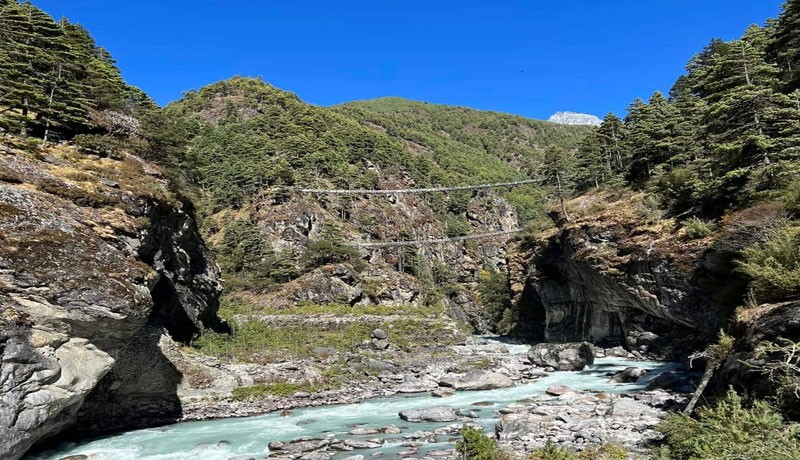
Our Everest base camp trekkers cross Hillary Bridge into the Dudha Koshi River.

Following breakfast, the trek on the second day from Phakding to Namche Bazaar involves a considerable amount of walking hours; however, the surrounding scenery is remarkable, featuring mountains, local villages, Sherpa farms, and numerous high bridges that cross the same river multiple times before reaching Namche Bazaar, where an overnight camping stay is planned. Namche Bazaar serves as a crucial junction for both locals and tourists visiting for various purposes. It is also recognized as the primary gateway to Mount Everest Base Camp, catering to trekking, peak climbing, and Everest expeditions. Notably, every Saturday is a special day when prices are reduced compared to other days, and tourist-level facilities are readily available in Namche Bazaar.

Trekking from Namche to Tenboche 3,867 m/12684 feet, approximately a 6-hour uphill walk, night stop at Dewoche
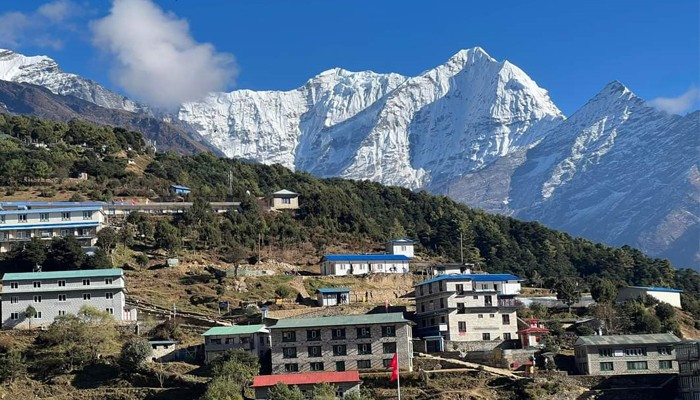

Namche Bazaar 3,440 m | 11,287 feet background view of Mt. Thamresku 6,618 m

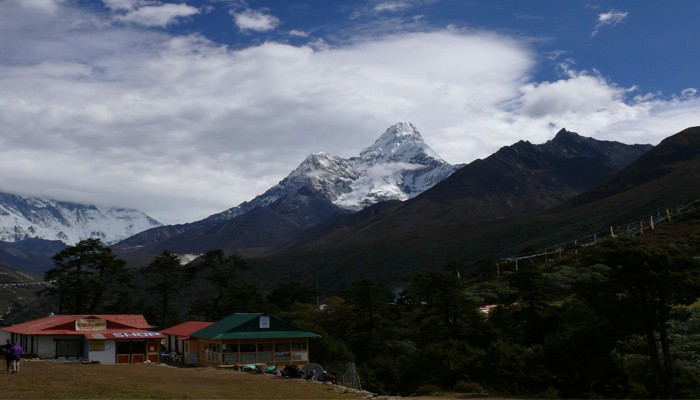
Today marks the third day of our trek. During the morning session, we are greeted with stunning views of the surrounding mountains under clear weather conditions. After enjoying breakfast, we will proceed along a scenic, wide path that offers our first glimpse of Everest, Lhotse, Ama Dablam, Kusum Kanguru, and Thamserku, along with their neighboring peaks. The trail ascends through a gentle forest, leading us to a picturesque location at the hilltop of Tengboche. The journey from the banks of the Dudh Kosi River to Tengboche involves a steady ascent, which can be quite physically demanding. Tengboche is home to an ancient Buddhist monastery, renowned throughout the Khumbu Valley as a significant spiritual site, often referred to as a Tibetan monastery.

Trek from Dewoche to Dingboche (4,350 m/14271 feet), approximately 6 hours ascending a high-altitude area


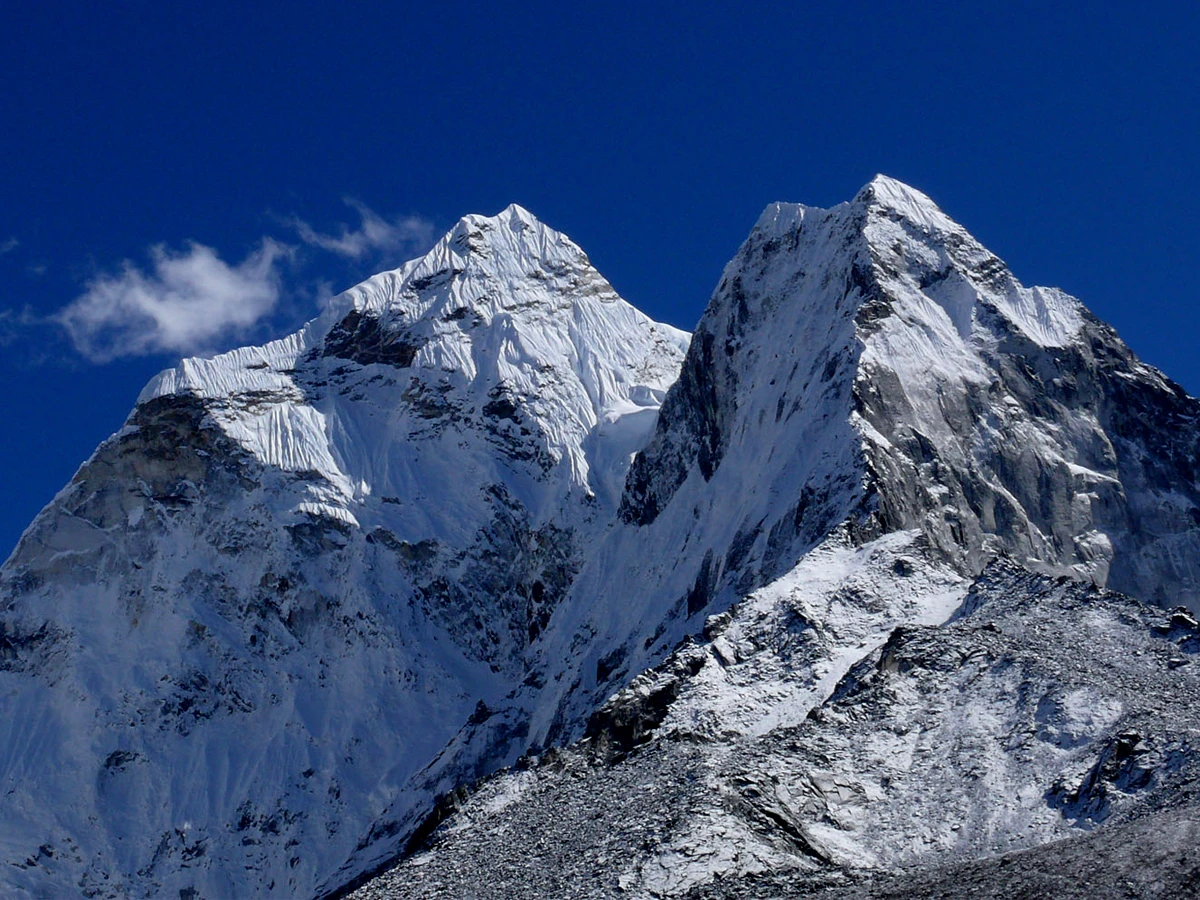
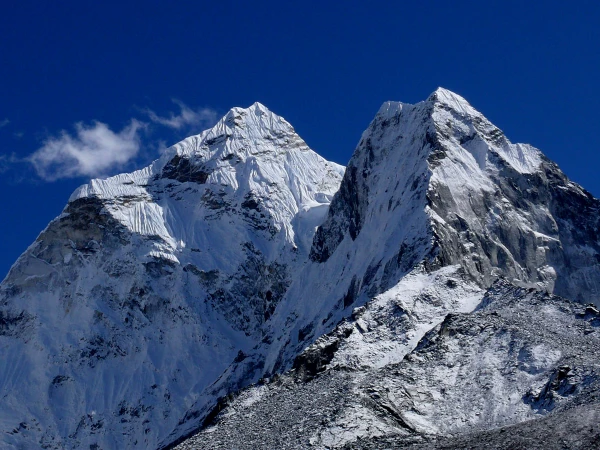
Mt. Ama Dublam 6,814 m view from Tengboche 3,867 m monastery

The four-day trek is not particularly strenuous; however, it does involve ascending into a high-altitude region. We begin our day with breakfast at Dewoche, which provides more comfortable overnight accommodations compared to Tengboche. Our journey continues as we trek through lush greenery and tree lines, leading us into the remote wilderness characterized by arid, windswept terrain. We pass by the villages of Tengboche and Dingboche, all the while enjoying the breathtaking views of the majestic Ama Dablam and Everest. We reach Pangboche and Shomare for a lunch break, where Shomare presents the finest view of Mt. Tawodhe Peak. After crossing the river, we enjoy a flat walk until we arrive at Dingboche, a spacious Sherpa village with agricultural fields and tropical Sherpa settlements. Dingboche is notably warmer than Pheriche.

Acclimatization Day at Dingboche

Before ascending to the high-altitude region, it is advisable to take a day for rest and acclimatization. Today will be dedicated to recuperation, although not solely for sleeping. We will engage in a hike that will enhance your fitness and improve oxygen intake at elevated altitudes. A pleasant 3-4 hour trek to Nangkartshang Gompa, situated on the ridge to the north of Dingboche village, is highly recommended. This location provides a stunning view of Mt. Makalu (8,463 m), the fifth-highest mountain in the world, to the east, along with breathtaking vistas of Mt. Ama Dablam and the valley below. Should we have sufficient energy, we can proceed to the summit of Nangkartshang Hill (5,090 m) for an added sense of adventure. We will then return to Dingboche for our overnight stay.

Trek from Dingboche- Loboche- Gorakshep- Everest Base Camp (5,364 m/17,598feet), re-trek back to Lukla.
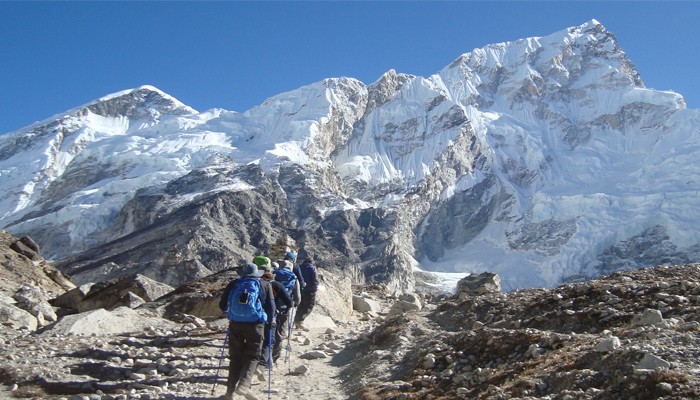

Nepal Spirit Adventure's groups are heading to Mt. Everest Base Camp at 5,364 m.

Following a remarkable acclimatization day in Dingboche, the trek ascends to higher altitudes from this point onward. The initial segment of the journey from Dingboche to Duglha offers a gentle and pleasant environment, showcasing stunning views of the snow-capped mountains. The trek from Duglha to Lobuche becomes more physically demanding as we progress towards our primary objective, the Everest Base Camp, which features the renowned Khumbu Ice Fall. We will spend the night in Lobuche (4,931 m/16,177 feet) and Gorakshep (5,170 m/16,961 feet), both of which serve as high-altitude overnight stops.

The trek from Lobuche to Everest Base Camp constitutes a lengthy day of hiking, requiring approximately seven to eight hours of walking. Upon reaching Mount Everest Base Camp, one can relish a delightful experience before retracing the same path back to Lukla. This journey includes a final ascent to a scenic viewpoint atop Kalapatthar, a rocky hill situated at an elevation of 5,545 meters (18,193 feet), which offers a breathtaking panorama of the surrounding peaks, with Everest prominently in view. The return trek to Lukla spans three days, during which the mountain vistas remain stunning; however, the descent demands considerable physical endurance. These elements are the defining features of the Everest Base Camp Trek.

Why Trek to Everest Base Camp with Nepal Spirit Adventure?

Choosing the right trekking company is essential for a safe, enjoyable, and memorable Himalayan adventure. Here are some reasons why trekkers choose Nepal Spirit Adventure for their Everest Base Camp journey:

Decades of Trekking Experience:

With decades of experience organizing treks in the Nepal Himalayas, particularly to Everest Base Camp, our team has extensive knowledge of the region, its trails, culture, and trekking conditions.

Affordable Group Joining Treks:

Our group joining treks are among the most cost-effective ways to reach Everest Base Camp. By sharing logistics and support services with fellow trekkers, you can enjoy a high-quality trekking experience at an affordable price.

Dedicated Customer Service:

We are committed to providing exceptional customer care before, during, and after your trek. Our team is always available to assist with planning, preparation, and on-the-trail support.

Supporting Local Communities:

We employ experienced local Sherpa guides and porters, ensuring that tourism benefits are directed toward the communities that call the Everest region home. By trekking with us, you contribute directly to the local economy.

Guaranteed Departures:

All of our published group departure dates are guaranteed to operate, giving you confidence when planning your travel arrangements.

Small Group Experience:

We organize small group treks to Everest Base Camp, allowing for a more personalized experience, better interaction with guides, and greater flexibility throughout the journey.

Flexibility and Independence:

Our group joining treks allow you to manage your daily meal expenses according to your preferences while still enjoying the support, safety, and companionship of a guided group.

Easy Online Booking and Secure Payments:

We offer convenient online reservations and secure payment options, including Visa and MasterCard, with no hidden transaction fees.

Complimentary Trekking Equipment:

To help you prepare for the high-altitude environment, we provide quality trekking equipment, including a down jacket, sleeping bag, and duffel bag for use during your trek.

Free Airport Transfers:

Enjoy complimentary airport pick-up and drop-off services, ensuring a smooth and hassle-free start and end to your adventure in Nepal.

Conclusion

For decades, Nepal Spirit Adventure has been successfully organizing Everest Base Camp group treks for travelers from around the world. This legendary Himalayan journey combines breathtaking mountain scenery, rich Sherpa culture, personal achievement, and unforgettable friendships.

The Everest Base Camp Trek is achievable for anyone with a good level of fitness, proper preparation, and a spirit of adventure. With experienced local guides, reliable support staff, carefully planned itineraries, and the companionship of fellow trekkers, you can confidently embark on one of the world's most iconic trekking experiences.

If you are ready to challenge yourself, explore the heart of the Himalayas, and stand at the foot of the world's highest mountain, the Everest Base Camp Group Join Trek with Nepal Spirit Adventure is an adventure you will remember for a lifetime.
Short Itinerary

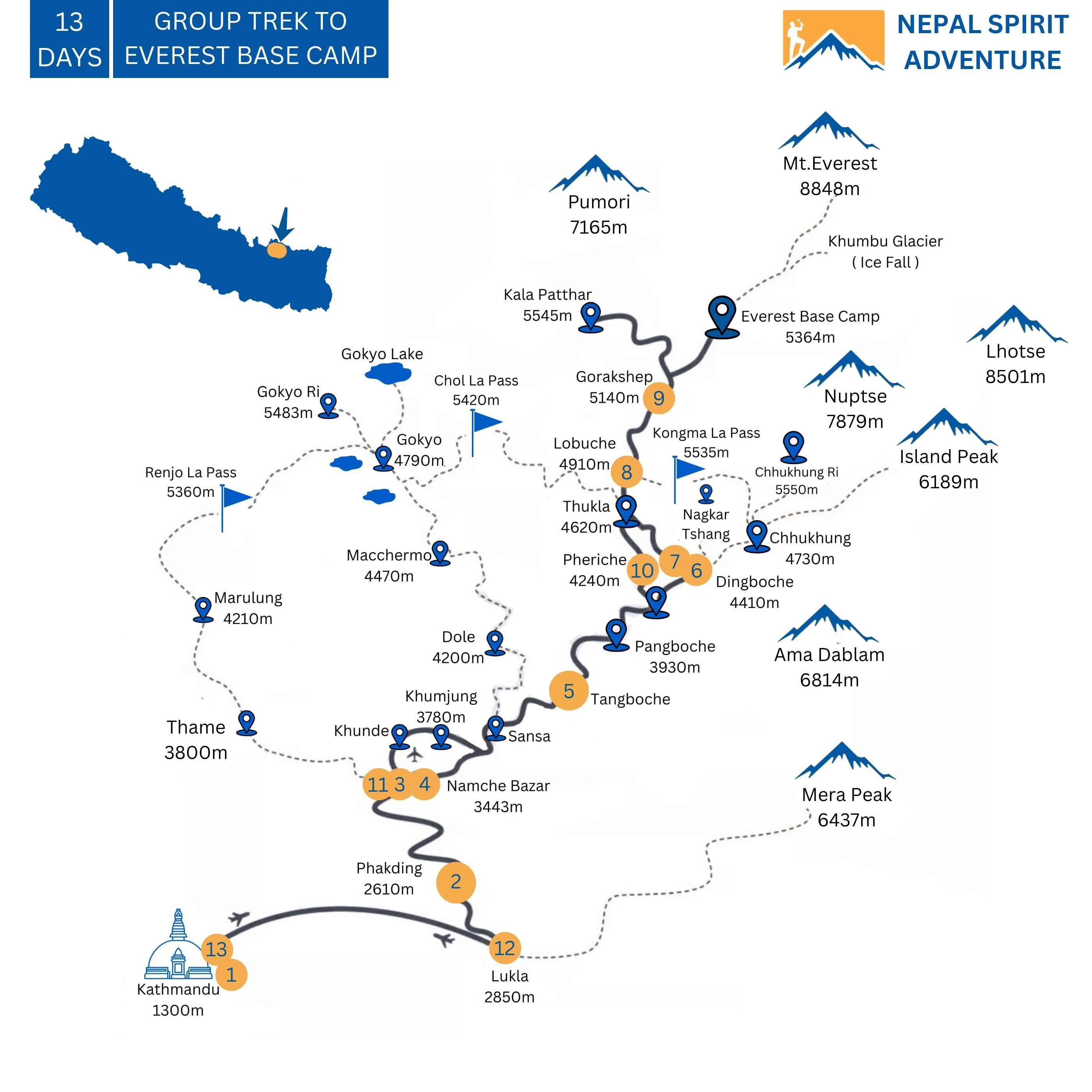
Group Trek to Everest Base Camp Map

Everest Base Camp Group Join Trek - 13 Days Itinerary

Start Point:Kathmandu
End Point:Kathmandu
Day01

Arrival in Kathmandu (Tribhuvan), Airport Pickup Transfer to Hotel

Upon your arrival at Kathmandu's Tribhuvan International Airport, you will be greeted by our assistant and then transferred to a hotel, where you will meet the trek leader and other participants. The trek leader will go over the equipment with you and answer any questions you may have about the high-altitude adventure. If you would like to store extra bags that will not be used during the trek, you can store them at the hotel (free of cost for luggage storage) overnight at the Thamel Park Hotel. Standard service includes airport pick-up and a hotel in Kathmandu. 

Day02

Flight to Lukla, Trek to Phakding 4hrs 7-8 km

According to the Kathmandu-Lukla flight schedule, your trek guide-leader will pick you up from your hotel and escort you to the domestic airport for the scenic trans-Himalayan flight. The flight concludes with a spectacular landing on the hillside at Lukla, the gateway to the Everest region. The flight from Kathmandu to Lukla takes about 35 minutes, offering breathtaking views of the Himalayan landscape.

Upon arrival, you will meet other staff who will assist with your duffel bag before beginning the trek downhill to the Sherpa town of Cheung. The trail then follows the edge of the Dudh Koshi Valley before ascending to Ghat (2,530 m). From there, it takes another easy hour to reach Phakding, where you will spend the night in a teahouse by the river.

Kathmandu to Lukla Flight Note:

During the main trekking seasons of March to May and October to November, Lukla flights are often diverted to Manthali (Ramechhap) Airport, located approximately 126 km from Kathmandu. The company arranges overland bus transportation from Kathmandu to Ramechhap, which takes around 4 hours. Private transportation is also available at an additional cost. The flight from Manthali to Lukla takes approximately 12 minutes.

Day03

Approx. 7hrs Trek to Namche Bazaar 11-12 km

After breakfast at Hotel Pine Forest, we begin Day 2 with a trek from Phakding to Namche Bazaar. The journey takes approximately six to seven hours of walking. The trail winds through pine forests and follows the Dudh Koshi River, crossing suspension bridges and passing through Sherpa villages such as Benkar, Chumoa, Monjo, and Jorsale—the entrance to Sagarmatha National Park and the permit checkpoint. Along the way, you’ll enjoy tranquil views of the glistening Thamserku (6,618 m / 21,714 ft).

The trail continues along the riverbed to the confluence of the Bhote and Dudh Koshi Rivers before climbing steadily to cross the impressive Tenzing-Hillary suspension bridge. Here, you will catch inspiring glimpses of Everest and the Nuptse–Lhotse ridge. A final three-hour ascent through the pine forest brings you to Namche Bazaar, a thriving trading and administrative town that serves as the gateway to the Khumbu-Everest region.

Day04

Acclimatization Day, Hike to Syanboche (3,880 m) 4hrs 4 km

At Namche Bazaar, you will have a rest day to aid acclimatization at this altitude of over 3,000 meters. On this day, take a short hike to the Everest View Hotel, located above Namche Bazaar. It is the first Porsche hotel or resort in the Khumbu region. The hotel offers spectacular views of Everest, Ama Dablam, and other surrounding peaks, all set against a beautiful backdrop of tall rhododendrons and silver fir trees.

Alternatively, you can take a walk higher above Namche to the Park Museum area, which provides breathtaking views of Everest, Lhotse, and the stunning Ama Dablam peaks. There is also time to visit the museum, which offers fascinating insights into the Khumbu region, including its Sherpa culture and history.

Day05

Approx. 6 Hour Trek to Tengboche approx. 9-10 km

From Namche, the morning begins with a short, steep climb that leads to a gradual, scenic trail. This winding path offers glorious views of Everest alongside the magnificent Ama Dablam, all set within the cool shade of woodland. As the walk continues downhill, you reach a bridge over the Imjatse River, leading to a small settlement at Phunge-Tenga, nestled in the forest—an ideal spot for a possible lunch break.

In the afternoon, the walk ascends into the cool, shaded forest filled with quaint woodlands of rhododendron, pine, and fir trees, eventually reaching a small plateau at Tengboche. Here, you are rewarded with an amazing panoramic view of the mountains, including Everest.

At Tengboche, visit the colorful and impressive monastery, where you can witness priests, lamas, and monks engaged in prayer amid the grand surroundings of tall trees and towering peaks. Tengboche is a scenic and beautiful place, known for its annual festival called Mani Rimdu, held in mid-October or November. During this vibrant event, monks don masks representing various deities and perform rituals to ward off evil spirits, a ceremony that continues overnight at the lodge.

Day06

Trek to Dingboche approx. 6hrs 10-11 km

In the morning, enjoy views of Everest and the magnificent Ama Dablam. The walk then descends for a few hours to a bridge over the Imjatse River. After crossing the bridge, the trail leads through open country where the tree line disappears, giving way to sparse vegetation and juniper bushes. Continuing with a gentle uphill walk, you will reach Pangboche village at 3,900 meters.

This is the last permanent village before Dingboche and the higher regions beyond. From Pangboche, a slow climb takes you to Somara for lunch. Afterward, the walk continues over pleasant terrain with a final ascent to Dingboche village, where you will spend the night. Situated in the Imjatse Valley, Dingboche offers a picturesque panorama of snow-capped mountains, including the north face of Ama Dablam.

Day07

Acclimatization Day, Nangkartshang Hike 6 km-4hrs

The second important rest-acclimatization day at Dingboche (main Sherpa village) is to allow better acclimatization and ensure that every member of the group is healthy and fit for the onward journey to Everest Base Camp.

Everest Base Camp Trek’s guide takes you on a short hike to Nangkartshang Peak, which is approximately 5,083 meters high. From the top of this peak, you can see a spectacular panorama of the Imjatse valley, including Island Peak, Taboche Peaks, and Mount Makalu (the world’s fifth-highest mountain). Making it a popular acclimatization hike for trekkers heading to Everest Base Camp

Day08

Trek from Dingboche to Lobuche 6hrs approx. 10-11 km

After a good rest day at Dingboche, the morning of leaving with a steep climb up to a ridge lined with prayer flags and Buddhist monuments, Stupas, facing grand views of peaks, where the walk from here leads on a gradual uphill to reach Thugla. A small place with about 2-3 tea houses serving as lunch stops, located at the end of the massive Khumbu glaciers that melt into a torrential river.

From here, a steep climb for an hour to reach the Thugla ridge top. Here, witness some memorials of unfortunate climbers around the mountains of the high Khumbu and Everest. After a refreshing break, walking is easier with a slow climb to reach Lobuche, situated in a corner of the valley beneath the Lobuche peaks. Overnight at Lobuche in its nice and cozy lodge with views of Nuptse peaks towards Everest and Lhotse.

Day09

Approximately 7-8hrsTrek to EBC (5,364m) back to Gorakshep 14-15 km

After a pleasant stop at Lobuche, the walk continues toward the main highlight of the journey: reaching the much-awaited Everest Base Camp. The morning trek follows a pleasant path, followed by a short climb to higher ground. Then, the trail leads to the Glass Pyramid, a meteorological station established as a joint venture between the Italian and Nepalese governments. This station monitors weather conditions and the movement of ice and glaciers.

From here, with interesting information about the project, the walk continues toward the moraine and ice above Khumbu’s massive glaciers, followed by a short descent to a wide-open field at Gorakshep, a small settlement with a few lodges.

Gorakshep was the original Everest Base Camp before the camp was moved further east. After a brief rest here, the journey resumes by walking across moraine and rocky terrain to finally reach Everest Base Camp, set against the dramatic backdrop of the Khumbu Icefall and glaciers. Everest itself is hidden between the peaks of Lho La and Nuptse, with only the tip visible from the base camp. Throughout, towering peaks surround the area, creating an awe-inspiring view.

After this exciting moment of the adventure, the trek heads back to Gorakshep for the last overnight stay at the highest point of the journey.

Day10

Climb to Kalapatthar (5,545 m) Trek to Pheriche 7hrs 13-14 km

Gorakshep is located beneath Kalapathar and the towering peak of Pumori. In the morning, there is a steep climb along a rocky path—an invigorating and breathtaking uphill trek—to reach the summit of Kalapathar, the highest point of the adventure at 5,545 meters. From here, you are rewarded with a sweeping panorama of towering mountains, including close-up views of Pumori and Everest.

After this glorious scenic moment, the descent begins back to Gorakshep, then continues along the same trail toward Lobuche. The trek then reaches Thugla, where the path from Dingboche and Pheriche splits. From here, the trail leads downhill into the flat, windy valley of Pheriche.

After about an hour’s walk through the scenic valley, you arrive at Pheriche—a settlement with several good lodges offering stunning views of Ama Dablam, Taboche, Cholatse, and a series of other peaks. An overnight stop is planned here.

Note: If you choose not to climb Kala Patthar, the trekking distance will be 7.1 miles (11.5 km) and take approximately 5 hours.

Day11

Approx. 7hrs Trek back to Namche Bazaar 14-15 km

From Pheriche, the morning trek begins by following the valley to its end, then descending briefly to a river. The path then ascends to a ridge marked by a Stupa, from which a long descent leads past the villages of Somare and Pangboche. After reaching Pangboche, the route involves retracing the ascent back up to Thyangboche, followed by a descent to the Imjatse River. A steep climb then brings you to the villages of Lobesa and Shanasa, before an easy walk takes you to the picturesque town of Kyanjima.

The journey continues toward Namche Bazaar, offering breathtaking views of Everest, Lhotse, Nuptse, and Ama Dablam, along with a stunning array of surrounding peaks. Certain sections of the trail also provide opportunities to spot wildlife, such as Musk Deer and herds of Himalayan Thar, as well as the vibrant Danphe (Lophophorus impejanus), the national bird of Nepal. The trek concludes with an overnight stay at Namche Bazaar after a day filled with scenic walking from Pheriche.

Day12

Trek back to Lukla 7hrs 17-18 km

Today marks the final day of our walking adventure. We will start with a morning stroll along a beautiful trail that winds beside the Dudh Kosi River, leading us to the village of Phakding. From there, we will continue toward the small settlements of Ghat and Tade-Kosi, culminating in a final ascent to the main entrance of Lukla. After this last climb, the remainder of the journey will be relatively easy as we make our way through the town of Lukla and its bustling marketplace, ultimately arriving at our overnight accommodation—a comfortable lodge. We will celebrate this achievement together with our fellow trekkers and the staff.

Day13

Fly to Kathmandu or Ramechhap - Transfer to Hotel

Following a scenic morning flight from Lukla to Kathmandu—offering breathtaking views of the mountains during the descent—our staff will assist you with your transfer to your hotel in the Thamel area. The rest of the day is yours to enjoy at your leisure.

Please note: Due to changes in flight schedules, we may need to travel to Kathmandu via Manthali (Ramechhap). The sharing tourist vehicle is included in the trek package. Private transportation is availabel as per your requirement paying extra cost.

Still Confuse?
No worries — we’re here to help. Whether you have questions or just need a bit more clarity, feel free to reach out. Our team is ready to guide you every step of the way.

Cost Details

Includes

Accommodation in Kathmandu:

  • Two nights' hotel in Kathmandu includes breakfast (twin-share room).
  • The hotel is centrally located near the market, restaurant, and some heritage places.
  • We provide a private room for a single person (requires paying an extra single room cost). Who doesn't want to share the room?

Transportation:

  • Domestic airport drop-off from your hotel by private vehicle (1 departure transport).
  • Domestic airport arrival, transfer to your hotel by private vehicle ( 1 arrival pickup transfer).
  • Kathmandu to Lukla to Kathmandu by air ( Jan, Feb, June, July, August, Sept, & Dec).
  • Ramechhap to Lukla to Ramechhap by air (October, November, March, April, and May months).
  • Kathmandu to Ramechhap to Kathmandu by tourist shared vehicle (if we need a flight from Ramechhap to Lukla to Ramechhap).

EBC Group Joing Trek Accommodation:

  • Five nights in a guesthouse include an attached bath-inside toilet, twin share room (Phakding 1 night, Namche 3 nights, and Lukla 1 night)
  • Six nights in a teahouse common bathroom: twin share room (Tengboche 1 night, Dingboche 2 nights, Lobuche 1 night, Gorakshep 1 night, and Pheriche 1 night)

Everest Base Camp Trek Route Permit:

  • Everest Base Camp trek route permit (Sagarmatha National Park Permit).
  • Pasang Lhamu rural village development municipality permit.
  • TIMS security card for staff and guests.

Trek Field Staff:

  • Sherpa trek guide, including his daily wages: Food, accommodation, transportation, salary, and insurance.
  • Porter (1 porter for 2 trekkers), including his daily wages, meals, accommodation, salary, and insurance.
  • Assistant trek guide (1: 10 people in group), including his daily wages, insurance, food, accommodation, transportation, and salary.

Equipment and First Aid:

  • Nepal Spirit Adventure's duffel/kit bag, EBC trek map, t-shirt, and flesh hat.
  • Down sleeping bag.
  • Down jacket.
  • Note: Sleeping bag, down jacket, and duffel bag (to be returned after the trek).
  • General first aid kit, including an Oximeter to check pulse and oxygen levels daily on the trek.
  • Everest Base Camp trek completion certificate.

24 Hours Helpline Support:

  • Easy with the question/answer before trip booking.
  • Every day, call a meeting with the trek guide (To know the condition of guests and staff).
  • Arrangement of emergency helicopter rescue ( it may be required).

Excludes

  1. Your international airfare to Kathamndu.
  2. Nepal visa fee.
  3. Personal trekking equipment.
  4. Daily food on trek (approximately $23-25$ per day).
  5. For travel and trek insurance, it is better to bring the insurance policy above 4000m.
  6. Personal medicine kit.
  7. Private transportation to Manthali-Ramechhap, if we need the flight to Lukla from Manthali.
  8. Tips for trek guide, porter, and driver.
Select Departure Dates
Jul 2026
Aug 2026
Sep 2026
Oct 2026
Nov 2026
Dec 2026
Jan 2027
Feb 2027
Mar 2027
Departure Date
Starts: Jul 03, 2026Ends: Jul 15, 2026
Status
Guaranteed
Confirm
Price
US$1090
Departure Date
Starts: Jul 08, 2026Ends: Jul 20, 2026
Status
Guaranteed
Confirm
Price
US$1090
Departure Date
Starts: Jul 13, 2026Ends: Jul 25, 2026
Status
Guaranteed
Confirm
Price
US$1090
Departure Date
Starts: Jul 22, 2026Ends: Aug 03, 2026
Status
Guaranteed
Confirm
Price
US$1090
Departure Date
Starts: Jul 26, 2026Ends: Aug 07, 2026
Status
Guaranteed
Confirm
Price
US$1090

13 Days Everest Base Camp Group Join Trek's online published departure date is confirmed to start from Kathmandu. If this departure date does not fit your travel plans for your trek in Nepal, you can select a different date and email us. We can organize private treks on any day of the year. Thank you!

Essential Information

Free Arrival  Pickup and Departure Transportation From the Kathmandu Airport

We’re delighted to provide complimentary transportation from the Tribhuvan International Airport of Kathmandu for trekkers who have made a reservation for a group trek to Mount Everest base camp with our company. Upon your arrival, a representative from Nepal Spirit Adventure will be waiting for you at the airport, holding a pamphlet displaying your name. He will then escort you to your hotel in a private vehicle. We provide this service to ensure you don’t face any difficulties in a foreign country.

Is The Group Trek to Everest Base Camp Fit For Me?

The trek is suitable for individuals with a good level of physical fitness and a sense of adventure. While it is a high-altitude physical trek, it is accessible to a wide range of people who are willing to prepare themselves physically and mentally for this category of adventure in the Nepal Himalayas.

It is a group-based trek, and you will meet people from different countries joining a group to the Everest base camp on the same trip departure date, starting and ending in Kathmandu. At Nepal Spirit Adventure, we organize 13-day itineraries tailored to fitness levels and preferences. Whether you are an experienced trekker seeking a challenging adventure or a first-time trekker with a sense of adventure, we can provide guidance and support to help you make the most of your Everest Base Camp Trek.

Is Kathmandu Hotel Included in the EBC Trek?

The accommodation in Kathmandu includes a package for two nights in a twin shared room at a three-star hotel, including breakfast. This arrangement covers one night before the trek and one night following the Everest Base Camp trek. The hotel is situated in the prime area of Thamel, providing convenient access to the main shopping and dining establishments.

What Types of Lodge Accommodations Are Offered in the Package?

We offer the finest and most hygienic twin-sharing accommodations in the guesthouse (lodge/teahouse) for individuals of the same gender along the trekking route. To enhance your comfort, we provide rooms with attached bathrooms, featuring both cold and hot showers at select locations, including Phakding (one night), Namche (three nights), and Lukla (one night). This additional service will enhance your experience during the Group Trek to Everest Base Camp, as well as at other destinations such as Tengboche, Dingboche, Lobuche, and Gorakshep, where you will find standard lodges with shared bathroom facilities.

Is The Equipment Provided for the Group Trek to Everest Base Camp?

Thank you for a very good question, which is important for the Group Trekking to Everest Base Camp. We provide a sleeping bag, down jacket, and duffel bag (returnable after the EBC trip). The personal EBC trekking equipment is not included in the trip package; you need to bring it from your home country, or if you do not have all, you can buy it in Kathmandu after you arrive. If your international flight is arriving in Kathmandu, Nepal, late at night, you should inform Nepal Spirit Adventure about your down jacket size.

Is Trek a Requirement For the Everest Base Camp Group Trek and Cost?

For the group trekking to Everest Base Camp, the hiking permit is a requirement, called the Sagarmatha National Park Permit. You need another local TREK CARD called Khumbu Pasanglhamu Rural Municipality. Both trekking permits cost 45 dollars per EBC trekker. This permit cost is included in the trip package of the group trek to Everest Base Camp. Without those permits, we can not complete the EBC trip in Nepal.

What Kind of Food Is Available & What Is the Cost for the Everest Base Camp Trek?

Food is very important for every Everest Base Camp trekker. Along the route, you'll find both domestic and international meals from the teahouses. These establishments offer basic and hearty meals, with a focus on local dishes such as Dal Bhat (lentil soup with rice), Momo (dumplings), pasta, and fried rice. You can also find some Western foods like pizza, pancakes, and spaghetti, along with a variety of soups.

Regarding the food system on the trek, breakfast and dinner are compulsory meals that you must eat in the teahouses (lodges) where you will be staying overnight. There will not be alternative dining options at these locations. However, for lunch, you can eat at different local Sherpa restaurants.

Typically, the breakfast menu includes options such as toast with honey, butter, or jam, egg dishes, pancakes with honey, porridge, tea, coffee, and more. On average, you can expect to spend around $22 to 25 USD per day per person for three meals; you can spend more or less depending on your appetite.

What Is the Packaging List for the Group Trek to Everest Base Camp?

Nepal Spirit Adventure provides you with a down sleeping bag jacket and a company duffel bag (return after the trek). The trek to Everest base camp is at a high altitude above 5,364 m, and you need to prepare well with trekking equipment before leaving Kathmandu. We recommend the following trekking equipment: cross-check this list when you are packing. If you do not have them with you from your place, remember that you can hire or buy them at a very reasonable price in Kathmandu after you arrive in Nepal.

Head:

  • Sun hat or scarf, or neck gaiter
  • Light balaclava or warm fleece hat
  • Sunglasses with UV protection

Upper Body:

  • T-shirts
  • Light and expedition-weight thermal tops
  • Fleece jacket or pullover
  • Fleece Wind-Stopper jacket (optional)
  • Waterproof (preferably breathable fabric) shell jacket
  • Down vest or jacket

Lower Body:

  • Under Garments
  • Hiking shorts
  • Lightweight cotton long pants
  • Light and expedition-weight thermal bottoms
  • Fleece or wool pants (seasonal)
  • Waterproof (preferably breathable fabric) shell pants

Feet:

  • Thin, lightweight inner socks
  •  Thick, warm wool hiking socks
  • Hiking boots with spare laces
  • Camp shoes (sneakers and/or sandals), Gaiters for hiking in winter to the base camp

Hands:

  • Lightweight gloves
  • Heavyweight gloves or mittens with a waterproof shell outer (seasonal)

Accessories:

  • Sleeping bag rated to zero DC * Supplied
  • Headlamp (e.g., Petzl Zoom) with spare bulbs and batteries
  • Trekking Bags/Duffel bag
  • Basic First Aid Kit
  • Large plastic bags - for keeping items dry inside the trek bag
  • Daypack (approximately 2500 to 3000 cubic inches)
  • Trekking Poles
  • Water bottle (2) or camel bag
  • Toiletries (Small wash towel, Toilet paper in a plastic bag, etc.)
  • Ear Plugs (who knows, some people in the group are snoring)

Personal:

  • Lip Guard
  • Passport copies
  • Flashlight

Toiletries:

  • 1 medium-sized quick-drying towel
  • Toothbrush/paste (preferably biodegradable)
  • Multipurpose soap (preferably biodegradable)
  • Aquatabs
  • Deodorants
  • Nail clippers
  • Face and body moisturizer
  • Feminine hygiene products
  • Small mirror
  • Suncream or Zinc Sun protection
  • Personal Hygiene:

  • Wet wipes (baby wipes)
  • Tissue /toilet roll
  • Bacterial hand wash

Extras/Luxuries:

  • Camera, spare batteries, and or Binoculars
  • Reading a book
  • Trail Map/Guidebook
  • Journal & Pen

What do you carry for the trek?

Please, bring the equipment listed above and pack your gear for the trek into a duffel bag or rucksacks, and a small day bag for you. The larger bag with your kit will be carried by the porter to meet you each evening. You should bring a day pack to carry by yourself for water, a rain jacket, a hat, gloves, money, etc. The weather in the mountains is changeable, so you will need some warm clothes with you in your day pack.

Can I get a Nepal visa upon arrival? How much will it cost?

Of course, you can receive a Nepal visa after you arrive at Tribhuvan International Airport at the visa section. If you are arriving in Nepal through overland services from the Chinese border, you can get a Nepal visa from either border. There is an immigration process for a Nepal visa. You can also apply for the online visa through Nepal Visa Service.

Arrival visa:

Upon arrival at Tribhuvan International Airport in Kathmandu or other entry points, you can fill out a visa application form available at the airport. You will need to provide a valid passport, a recent passport-sized photograph, and the visa fee in the form of cash (preferably in USD) or a credit card.

What Is the Cost of a Nepal Visa?

  1. 15 days: USD 30
  2. 30 days: USD 50
  3. 90 days: USD 125

What is The Best Season for A Group Trek to Everest Base Camp?

The ideal seasons to plan the Everest Base Camp Trek in Nepal are spring (March to May) and autumn (October to November/December). These seasons offer the most favorable weather conditions, excellent visibility, and well-maintained trails, ensuring a safe and enjoyable trekking experience.

IS Travel and Trekking Insurance Required for This Trip?

Travel and trekking insurance are essential for the group trek to the Everest base camp. Trek is a mandatory requirement. When choosing your insurance policy, ensure that it covers the following key aspects: trip cancellation or interruption, medical evacuation (including treatment costs, hospital charges, doctor's fees, and medication expenses), flight insurance (for cancellations and delays), and baggage insurance (in case of misplaced or lost luggage). You may also consider adding supplemental policies to cover specific issues such as identity theft, security, and political evacuations (related to natural disasters, civil unrest, political instability, etc.).

Alternatively, you can opt for a comprehensive insurance policy that covers all the aforementioned aspects, including expenses incurred due to delayed trips, missed flights, or any itinerary changes made by the tour company. It's important to note that the maximum elevation reached during this trek is 5,550 meters. Therefore, ensure that your policy includes helicopter and medical evacuation coverage up to 6,000 meters, as some standard policies only cover up to 4,000 meters. Prioritize obtaining comprehensive trekking and travel insurance to safeguard yourself against unforeseen circumstances and ensure peace of mind throughout your Everest Base Camp Trek.

What Happens If I Get Sick or Injured During the Everest Base Camp Trek?

Your safety is our utmost priority. We ensure that your trek is conducted by highly professional, experienced, licensed guides who are also trained in First Aid. Should you experience any illness or injury, our guides are equipped to administer essential first-aid care, and in critical circumstances. The natural treatment will be a 500 to 1000-meter descending trek from the event point of the high-altitude sickness. While your trek descending from high altitude to low altitude is still not working for your body, we'll arrange for a rescue helicopter to transport you back to Kathmandu for additional medical assistance.

Why Should I Book My Everest Base Camp Trek with Nepal Spirit Adventure?

Although Nepal Spirit Adventure provides services like any other trekking company in Nepal, there are still a few things that make us stand out in the crowd. Highly dedicated to perfection and superior service, we offer years of experience to plan an outstanding adventure trip for you. Our partnership with local people will help you explore those areas, cultures, and traditions in the Khumbu region that have seldom been explored before. We cater to every possible need of yours, during your stay in Nepal, be it food, accommodation, varied destinations, or communication needs. If our standard packages meet your requirements, we offer an option to fully customize the trip to meet the needs and requirements of each traveler. Our best packages are available at the most competitive rates in the market.

Moreover, registered under the government of Nepal, Nepal Spirit Adventure is fully licensed and certified to organize adventure trips like trekking, hiking, expeditions, tours, and other tourism-related services in Nepal, Bhutan, and Tibet. We believe in and practice responsible tourism. In addition to this, we are also very active members of the following organizations:

  • Nepal Tourism Board (NTB)
  • Trekking Agents Association of Nepal (TAAN)
  • Ministry of Finance, Department of Taxation
  • Company Registration Office, Pvt. Ltd.
  • Ministry of Tourism and Civil Aviation, Department of Tourism Industry

Equipments

Recommendation EBC trek equipment packing list

Head:

  • Sun hat or scarf, or neck gaiter
  • Light balaclava or warm fleece hat
  • Sunglasses with UV protection

Upper Body:

  • T-shirts
  • Light and expedition-weight thermal tops
  • Fleece jacket or pullover
  • Fleece Wind-Stopper jacket (optional)
  • Waterproof (preferably breathable fabric) shell jacket
  • Down vest or jacket

Lower Body:

  • Under Garments
  • Hiking shorts
  • Lightweight cotton long pants
  • Light and expedition-weight thermal bottoms
  • Fleece or wool pants (seasonal)
  • Waterproof (preferably breathable fabric) shell pants

Feet:

  • Thin, lightweight inner socks
  •  Thick, warm wool hiking socks
  • Hiking boots with spare laces
  • Camp shoes (sneakers and/or sandals), Gaiters for hiking in winter to the base camp

Hands:

  • Lightweight gloves
  • Heavyweight gloves or mittens with a waterproof shell outer (seasonal)

Accessories:

  • Sleeping bag rated to zero DC * Supplied
  • Headlamp (e.g., Petzl Zoom) with spare bulbs and batteries
  • Trekking Bags/Duffel bag
  • Basic First Aid Kit
  • Large plastic bags - for keeping items dry inside the trek bag
  • Daypack (approximately 2500 to 3000 cubic inches)
  • Trekking Poles
  • Water bottle (2) or camel bag
  • Toiletries (Small wash towel, Toilet paper in a plastic bag, etc.)
  • Ear Plugs (who knows, some people in the group are snoring)

Personal:

  • Lip Guard
  • Passport copies
  • Flashlight

Toiletries:

  • 1 medium-sized quick-drying towel
  • Toothbrush/paste (preferably biodegradable)
  • Multipurpose soap (preferably biodegradable)
  • Aquatabs
  • Deodorants
  • Nail clippers
  • Face and body moisturizer
  • Feminine hygiene products
  • Small mirror
  • Suncream or Zinc Sun protection

Personal Hygiene: 

  • Personal Hygiene:
  • Wet wipes (baby wipes)
  • Tissue /toilet roll
  • Bacterial hand wash

Extras/Luxuries:

  • Camera, spare batteries, and or Binoculars
  • Reading book
  • Trail Map/Guidebook
  • Journal & Pen

What do you carry for the trek?

Please, bring the equipment listed above and pack your gear for the trek into a duffel bag or rucksacks, and a small day bag for you. The larger bag with your kit will be carried by the porter to meet you each evening. You should bring a day pack to carry by yourself for water, a rain jacket, a hat, gloves, money, etc. The weather in the mountains is changeable, so you will need some warm clothes with you in your day pack.

Everest Base Camp Group Join Trek - 13 Days FAQs

The 13 – day Everest Base Camp group joins a trek group size of 1 – 10 people. Some groups could be above 20 people in one group; this depends on the trip booking and match trek departure dates.

Yes. Our online trip departure date guarantees all bookings and provides a confirmed Everest Base Camp Group join tour package for 2026 and beyond.

Yes. Most nationalities get Nepal visas at the Tribhuvan International Airport. To that end, please complete the online form in advance, keep this regard in your mobile, or better print it and bring it with you, then you can pay with cash or a credit card. You also need to ensure your passport is valid for at least 6 months beyond your arrival in Nepal and that you have at least one blank page available for a visa stamp.

To book your Everest Base Camp group trek, choose a departure date that fits your travel plans to Nepal. Simply fill out the trip form with the traveler's details. You can provide your flight itinerary to Kathmandu and insurance information later. If our trip departure date is not working. According to your holiday, do let us know for another departure date.

Yes, you will need to pay a trip advance deposit to secure your booking with us. A 20% deposit is required to guarantee your trip. Once we receive the deposit, your trip will be confirmed. The remaining balance can be paid after you arrive in Kathmandu.

The 20% deposit for your trek to Everest Base Camp serves as security and is non-refundable if you choose to cancel your trip for any reason, such as injury, illness, or unforeseen circumstances. However, as a goodwill gesture, we offer a full credit with no expiration date, which can be applied to any future trip with us.

The Everest Base Camp Group Join Trek covers approximately 130 kilometers (80 miles) round trip. This includes the hike to Everest Base Camp (5,364 m) and Kala Patthar (5,545 m), which is the highest point you can reach on this journey. Kala Patthar offers spectacular views of Mount Everest and many other peaks in the Khumbu Himalayan range.

The trek begins and ends in Lukla. Along the way, you will pass through the old Sherpa village of Phakding, Namche Bazaar, Everest View Hotel, Tengboche (home to a spiritual Buddhist monastery), Dingboche, Nangkartshang Hill, Lobuche, Gorak Shep, and finally reach Everest Base Camp (5,364 m), which represents the ultimate goal of this incredible journey.

The Everest Base Camp group trek is considered to be of moderate to strenuous difficulty. This is mainly due to the high altitude, rugged terrain, and daily walks of 6 to 7 hours, covering approximately 10 to 11 kilometers. No prior trekking experience is required, but good physical fitness, mental readiness, and an active lifestyle are essential.

Tipping is a customary tradition within Nepal's trekking culture and is commonly practiced at the end of a trek. Lukla is usually the final location where the entire trekking team comes together since porters typically finish their duties there, while guides often continue onward.

On group treks, fellow travelers may be staying in different lodges, making it challenging to gather later. Therefore, Lukla is the most appropriate place for a farewell and tipping moment. The amount you tip is entirely at your discretion and generally reflects your budget, satisfaction, and appreciation for the team's support throughout the journey.

The teahouse and lodge menus feature a variety of cuisines, including Nepali,Chinese,Indian, and Western dishes. Each meal offers options from the menu, including hot and cold drinks to suit your preferences. Meal costs vary from Lukla to Gorak Shep, Everest Base Camp.

We recommend bringing approximately USD 25-30 (NPR 3,600 – 4,300) per day for breakfast, lunch, dinner, tea, coffee, Wi-Fi internet, hot showers, device charging, and snacks. ATMs in Lukla and Namche Bazaar can be unreliable and may be out of service. Therefore, it is wise to withdraw enough cash in Kathmandu before your flight and keep it with you throughout the trip.

Yes, travel insurance is compulsory for all Everest Base Camp treks with Nepal Spirit Adventure. Your insurance policy must cover high-altitude trekking up to 5,000 meters, as well as emergency evacuation and helicopter rescue.

We suggest choosing a reputable global provider such as AXA Travel Insurance,Allianz Travel Insurance, or World Nomads. Additionally, we have compiled a helpful list of recommended insurance options based on feedback from past trekkers to assist you in your selection.

Due to the unpredictable weather in the Khumbu and Everest region, if a flight to Lukla is canceled or significantly delayed, we can arrange a helicopter ride at an additional cost of $450 per person, subject to availability. This option requires mutual agreement from all group members. If the group does not agree, the flight will be rescheduled for the following day.

What Our Guests Say?

Group trek Everest base camp

It was an incredible experience to have fun, meet international people, and trek together to the base camp of the world's highest peak. While the best option may not suit everyone, it worked perfectly for me, as I had been...

read more +
J
Jia -United States
March 21, 2026
Everest Base Camp Group Trek

I had an amazing experience with Nepal Spirit Adventure on the Everest Base Camp trek. The entire arrangement was perfect, starting with the airport pickup and the hotel in Kathmandu. One of the highlights was that we flew directly to...

read more +
A
Andrew -United Kingdom
March 19, 2026
Best Journey to Everest Base Camp

Our trek to Everest Base Camp was fantastic, and we were well taken care of from the moment we arrived in Kathmandu until our return home, thanks to Ram Magar. His customer service was exceptional, and he responded to our...

read more +
E
Elena -Ireland
March 17, 2026

Handpicked for You

Best Seller
Everest Base Camp Trek
Duration: 14 Days
5.0(138 Reviews)
Price From
US$1390
EBC Trek Helicopter Return
Duration: 10 Days
5.0(6 Reviews)
Price From
US$2599
Everest Three High Passes Trek - 21 Days
Duration: 21 Days
5.0(12 Reviews)
Price From
US$1799
Need Help? Call Us+977 9851072590