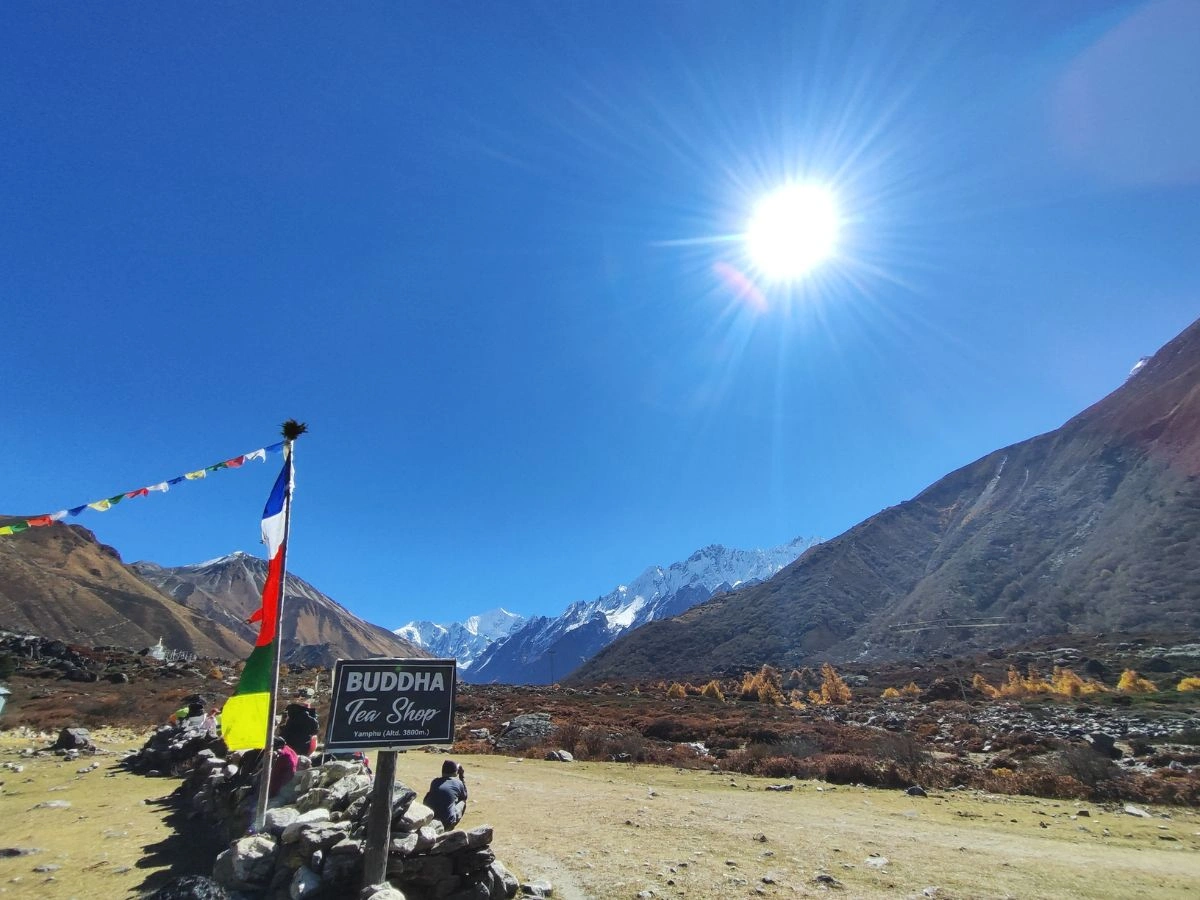
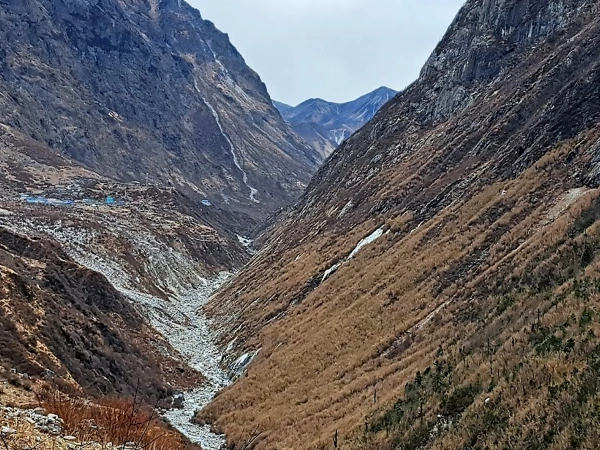
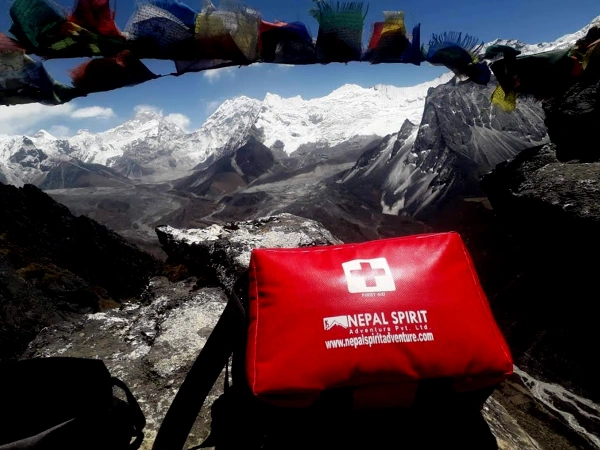
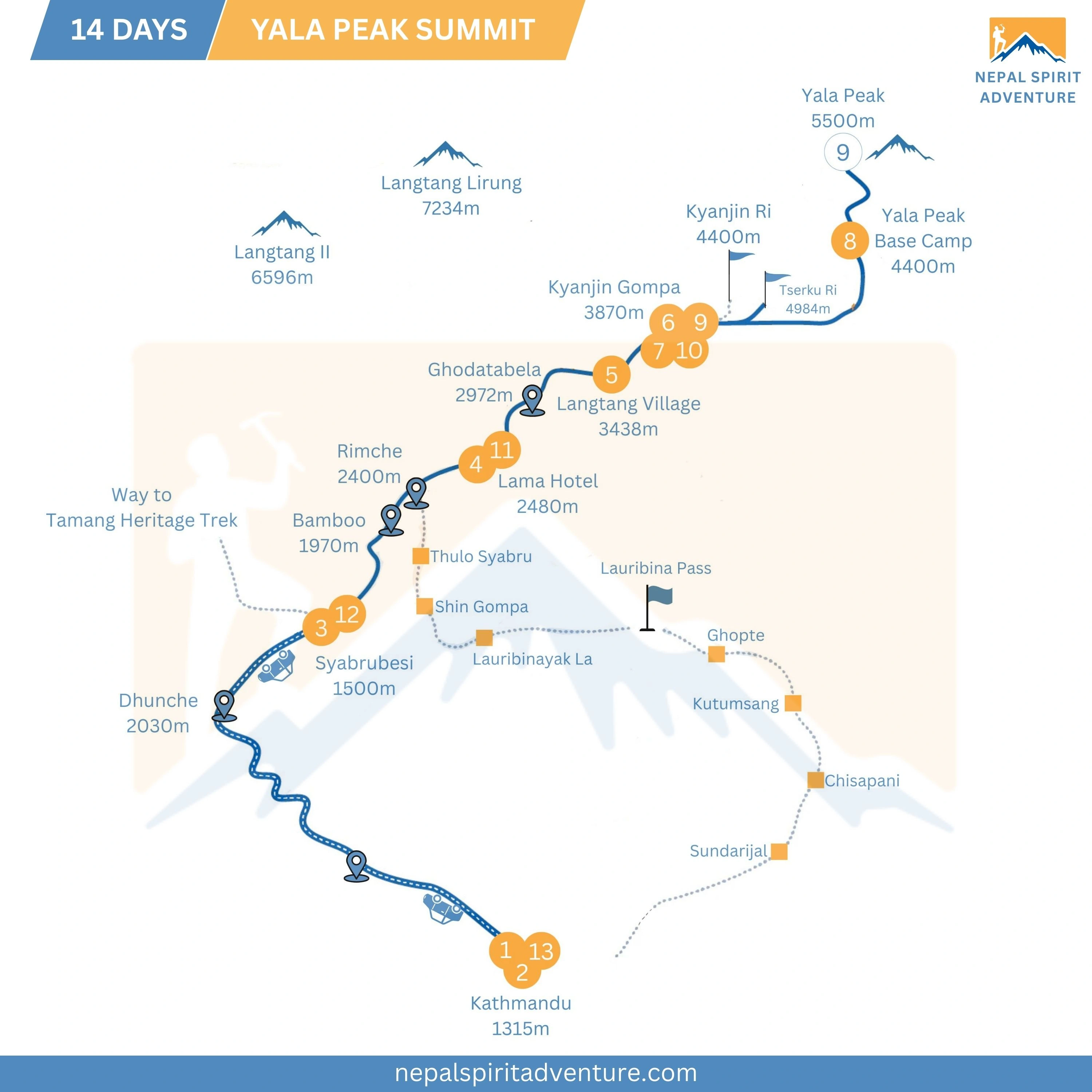
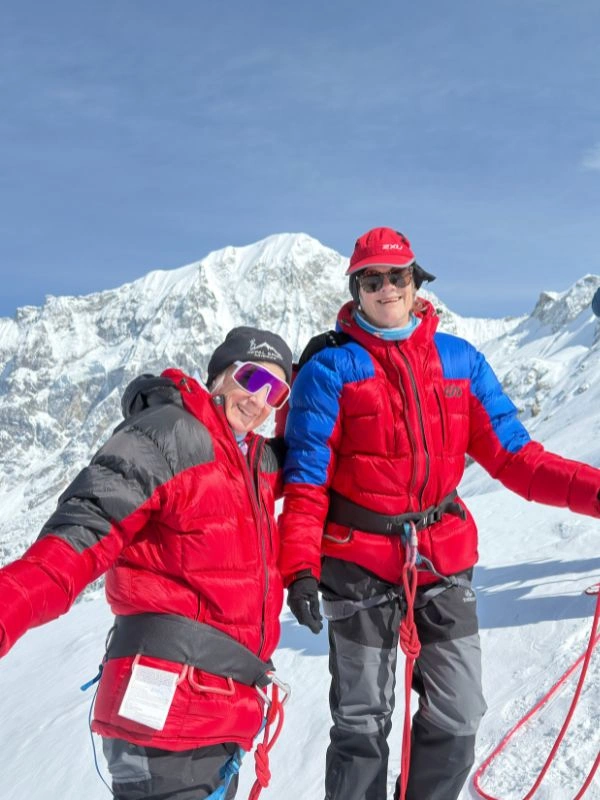
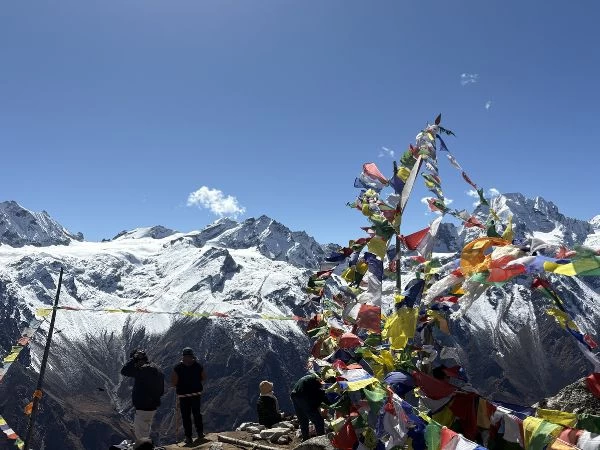
We start after breakfast. There's no rush today-the mountains aren't going anywhere. As we leave the village, look back once. The rebuilt homes, the prayer flags, the life that returned to this valley after such loss- it's a testament to our people's spirit. The trail continues northwest, following the Langtang Khola. Almost immediately, the valley widens dramatically. The forests of rhododendron and pine that enclosed us yesterday give way to open alpine meadows and yak pastures. The sky feels bigger here, the mountains closer.
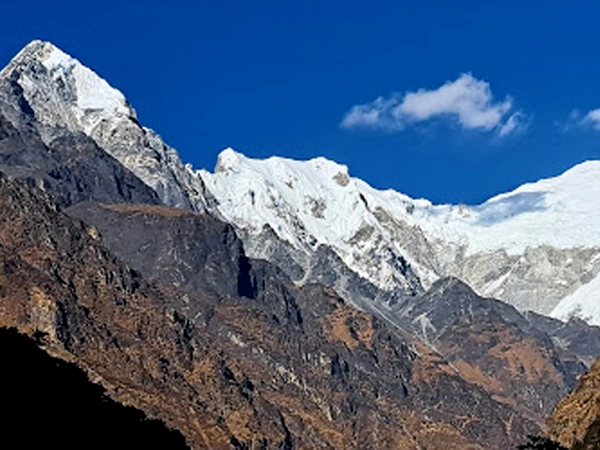
We walk through terrain dotted with mani stones and chortens- each one a prayer made physical. The trail is mostly gradual, with gentle ups and downs, never too demanding. This is by design; your body needs to adjust to the thinning air, and your soul needs time to absorb the beauty. The views unfold like a blessing. Langtang Lirung (7,227m) dominates the northern sky, its glaciers hanging like frozen rivers. To its side, Langtang Ri (7,205m) and Gangchenpo (6,387m) stand guard. You'll see them the entire way, growing larger with every step.
The Village of Mundu
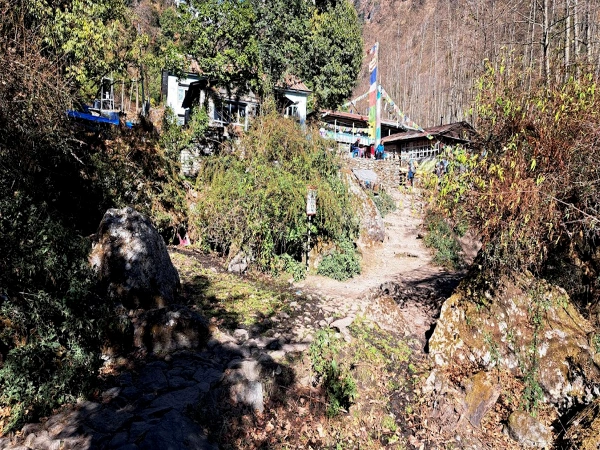
About 30 minutes from Lantang village, we reach Mundu- a small settlement that feels frozen in time. This is where the elder son of Mingyr Dorje Dhomare, our ancestor, built the Langtang Monastery generations ago. The village has traditional stone houses with slate roofs, surrounded by potato fields and grazing yaks. It's worth stopping here, just for a moment, to watch life continue as it has for centuries. The local women might be tending fields or spinning wool. The men might be repairing stone walls. This is the real Langtang, untouched by hurry.
Beyond Mundu, the trail meanders through more yak pastures. You'll cross small glacial streams over wooden bridges. The sound of water is everywhere- trickling, rushing, falling as the valley collects meltwater from the surrounding giants.
Yaks become a common sight here. These shaggy beasts are the lifeblood of our economy- they give us milk, butter, cheese, wool, and meat. They move slowly, deliberately, just like trekkers should at this altitude. Give them space; they're gentle but can be protective of their young.
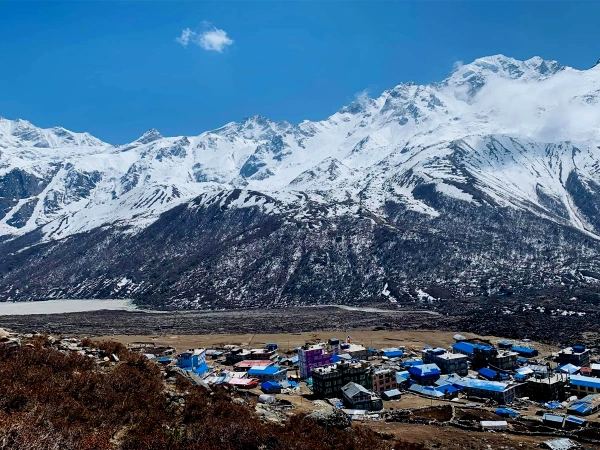
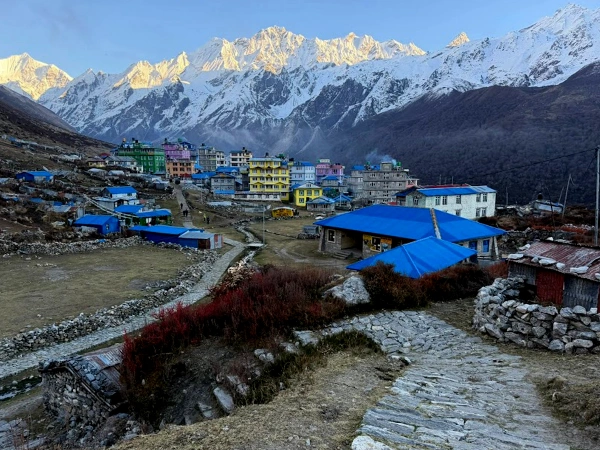
After 3 to 5 hours of walking, you'll see it: a cluster of stone lodges and the whitewashed walls of the monastery, nestled in a dramatic cirque of peaks. This is Kyanjin Gompa (3,870m). The name Kyanjin Gompa comes from a beautiful old myth. "Kyan" means "camel", and "Jin" means "ribs" in the local language. According to legend, the monastery was built on a rock formation that resembled the ribs of a camel.
Kyanjin Gompa Monastery
The monastery itself sits at 3,870 meters and is one of the oldest Buddhist sites in the Langtang Valley. Its exact age is debated-some say 280-300 years, while others often claim up to 600 years. Thiley Lama, head of the Dhomare clan until recently, told visitors that even the thangkas (religious paintings) adorning the walls were brought from Tibet about 400 years ago. The architecture is traditional Tibetan: whitewashed stone walls, wooden carvings, and a flat roof from which prayer flags flutter. The monastery is unique in that villagers, not monks, take turns maintaining it.
The Yak Cheese Factory
One of the first things you'll notice in Kyanjin is the Yak Cheese Factory. Established in 1995 with Swiss assistance, this factory was a collaboration to create sustainable livelihoods for local herding communities. The process is fascinating: herders bring fresh yak milk daily, which is processed into large wheels of cheese and aged in naturally cool cellars. The factory produces naturally 50-70 kg of cheese per week for local use and hungry trekkers. The cheese is delicious- nutty, firm, and utterly unique. High recommendation to every trekker to buy some for the hike back, or just enjoy with Tibetan bread in the teahouse.
We arrive by lunchtime, leaving the entire afternoon free. This is by design- it gives you time to explore, acclimatize, and prepare for tomorrow's summit attempts. Here are your options:
Visit the Monastery (1-2 hours):
Take time to visit the gompa properly. Observe the daily rituals (puja) if they're happening. Spin the prayer wheels. Sit quietly in the courtyard and absorb the peace. If a monk or caretaker is available, they may offer blessings. This is the spiritual heart of the valley- don't rush through it.
Explore the Village and Cheese Factory (1-2 hours)
Wander through the village, visit the cheese factory, and watch the yaks grazing against a backdrop of snow peaks. This is living culture, and not a museum.
Walk to the Glacier Viewpoint (1-2 hours):
An easier option: walk towards the hydropower plant and the man-made lake, with trails extending towards the glacier. It's flat, accessible, and brings you face-to-face with the ice.
Rest and Acclimatize:
Don't underestimate the value of rest. At 3,800+ meters, your body is working hard. Sit in the dining hall with a book, drink tea, and chat with other trekkers. Sometimes the best thing you can do for tomorrow's summit is nothing at all today.