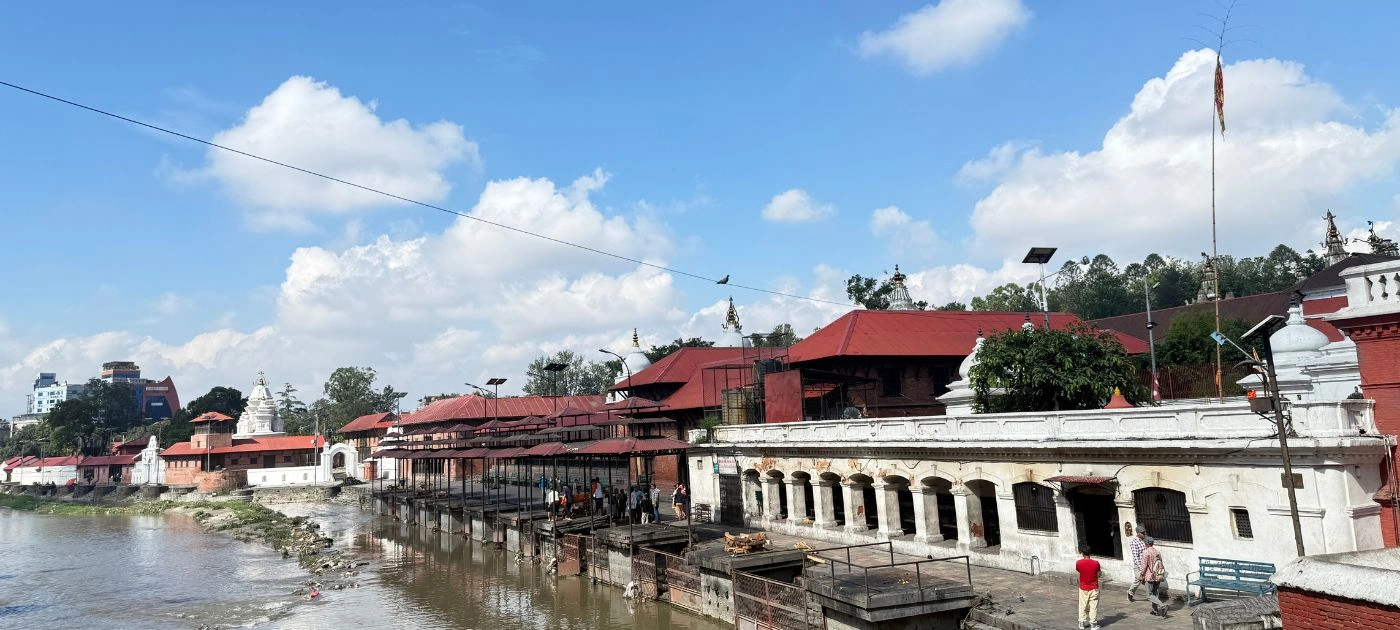
The Pashupatinath Temple is one of the largest temples in Nepal and is highly significant for Hindus. The name "Pashupati" translates to "Lord of Animals" or "Lord of Living Beings." Every day, thousands of Hindus visit this sacred site, which is located 7 kilometers from the old city of Kathmandu. The temple was listed in the UNESCO World Heritage Monument list in 1979.
The exact date of the temple's construction is unknown; however, it is believed to have been built by the Licchavi King Supuspadeva in the 6th century. It was later renovated by King Jyoti Malla in 1416 A.D. and reconstructed by King Bhupatindra Malla in 1697. Over the years, all the Shah Kings have contributed to its splendor.
Non-Hindus are not permitted to enter the main temple but can view the temple complex from the opposite side of the Bagmati River. Along the riverbank, there are various Ghats for ritual bathing, which are either rectangular or round. Behind these Ghats, there are small shelters, and dying near the temple is believed to ensure a better future life.
Cremation rituals begin immediately after death, and all the ceremonies can be observed from across the river. Pashupatinath Temple, known for its stunning architectural beauty, stands as a symbol of faith,religion,culture, and tradition. Regarded as the most sacred temple of Lord Shiva in the world, it is said to date back to 400 A.D. The richly adorned pagoda houses the sacred lingam, a phallic symbol of Lord Shiva. Thousands of pilgrims from around the globe come to pay homage to this temple, which is also referred to as "The Temple of Living Beings."