Forget everything you think you know about trekking to see Mount Everest. The Pikey Peak adventure isn’t about two grueling weeks; it’s about a direct, breathtaking journey to one of the planet’s most enduring and magnificent views. Here’s why the Pikey Peak trek is the Himalayan adventure you’ve been dreaming of, all condensed into one unforgettable 9-day itinerary.
Pikey Peak Trek - 9 Days
Pikey Peak Trek Highlights
-Embark on an iconic Everest-view adventure inspired by Sir Edmund Hillary in just 9 days on the Pikey Peak trek.
-Stand atop Pikey Peak at dawn for a spectacular 360-degree panorama of Mount Everest and seven other 8,000-meter peaks, including Lhotse, Kanchenjunga, Makalu, and many more.
-Avoid the crowded classical Everest routes and explore the tranquil pathways leading to Pikey Peak at an impressive altitude of 4,065 meters.
-An odyssey through blooming rhododendron forests and along peaceful ridges, connecting with the authentic rhythm of mountain life in Nepal.
-Immerse yourself in Nepal’s rich tapestry of traditional Sherpa villages like Jhapre, Bhulbhule, Taktor, and Junibesi.
-Visit the sacred Thupten Choling Monastery, the biggest monastery in the Lower Everest region, which serves as a sanctuary for reflection and inspiration.
-Ideal choice for first-time trekkers, photography enthusiasts, families and friends, and those with limited time, allowing you to revel in the glory of the world’s highest peak, Mount Everest.
-Skip the unpredictable and often nerve-wracking flight to Lukla, embracing a smooth & stress-free flight trek.
-Exclusive itinerary curated by an expert that is flexible and customizable, with over 25 years of experience in the tourism industry.
Pikey Peak Trek Overview
Pikey Peak Trek isn't just another hike or more than a single viewpoint. Pikey Peak trek is a direct journey to the most celebrated sunrise panorama in the heart of the Solukhumbu region. It is a less-traveled trail of magnificent vista, towering at an elevation of 4,065m | 13,337 feet, once a favorite view of Mount Everest of Sir Edmund Hillary. Forget the two-week commitment and high-altitude strain of the classic Everest Base Camp trails. This 9-day adventure offers a more accessible, yet profoundly rewarding path through the heart of the Lower Everest region, where authentic Sherpa culture and unmatched mountain scenery collide. An ideal choice for your first Himalayan trek and stay in classic teahouses, and explore ancient Sherpa villages and monasteries like Thupten Choling in Junibesi.
Why is Pikey Peak associated with Sir Edmund Hillary’s name?
Pikey Peak is associated with Sir Edmund Hillary primarily because he personally declared the view of Mount Everest from its summit (i.e., Pikey Peak, 4,065m) to be his favourite. Beyond this famous quote, Hillary had a deeper decade-long connection to the Solukhumbu region, where the Pikey Peak is located. Through his humanitarian works with The Himalayan Trust, he built schools, hospitals, and infrastructure in villages very close to the trekking route, such as Junibesi and near Salleri.
Why is the Pikey Peak trek gaining popularity?
Pikey Peak trek is capturing the hearts of adventurers for several compelling reasons:
1. Spectacular and Accessible views: Pikey Peak offers one of the best vantage points in Nepal for viewing Mount Everest, towering at an altitude of 8,848.86 m | 29,032 ft alongside giants like World's 3rd highest mountain, Kanchenjunga ( 8,586 m | 28,170 ft), Lhotse, 4th tallest mountain (8,516 m | 27,940 ft), and Makalu (8,485 m | 27,840 ft). The views from the Pikey Peak trek are nothing short of spectacular, perfect for avid photographers and nature enthusiasts alike.
2. Shorter & Less Crowded Experience: In just 5 to 7 days, you can explore this hidden gem, making an ideal voyage to time-constraint trekkers. The Pikey Peak trek offers an off-the-beaten-path experience with peaceful trails, allowing you to escape the crowds often found on popular routes like Everest Base Camp (EBC) and Annapurna Base Camp (ABC).
3. Rich Cultural Discovery & Easy Access: The Pikey Peak trail winds through authentic Sherpa villages and monasteries, allowing you to experience deep cultural immersion. The trek is easily accessible with a picturesque drive from Kathmandu, avoiding the need for expensive or unreliable flights.
4. Exceptional Value for your Adventure: The Pikey Peak trek combines breathtaking scenery, cultural richness, and lower altitude risks, making it a safer alternative to longer treks like the Everest Base Camp trek, the 21-day Everest Three High Passes Trek, or the 16-day Gokyo Lake Cho La Pass EBC.
Choosing the Pikey Peak trek means investing in an unforgettable journey that balances adventure, culture, and breathtaking beauty.
How difficult is the Pikey Peak trek?
The adventurous Pikey Peak trek is recognized for its easy-to-moderate difficulty level, making it an ideal choice for a variety of trekkers, from beginners to experienced trekkers.
Key factors influencing the level of difficulty:
Altitude: The summit of the Pikey Peak trek reaches an elevation of 4,065 meters | 13,367 feet. While this is significantly lower than the Everest Base Camp (5,364 m), mild altitude sickness is still possible. Our expertly crafted itineraries ensure that acclimatization is gradual and effective, allowing you to conquer the heights with confidence.
Daily Effort: Trekkers can expect to walk for 5 to 7 hours each day. You’ll navigate a variety of trails, including beautiful stone steps, serene forest paths, and invigorating steep ridges.
Fitness & Training: A solid fitness level is key to enjoying this trek to the fullest. Commit to 6 to 8 weeks of cardio training, which might range from running, cycling, or any activity that inspires you. Make sure you incorporate weekend hikes with elevation gain.
With this preparation, you’ll be ready to take on any challenge that comes your way. Join us on the Pikey Peak Trek and embrace the adventure, beauty, and personal triumph that awaits you. Seize the opportunity to make this unforgettable journey yours!
What are the mountains visible from Pikey Peak?
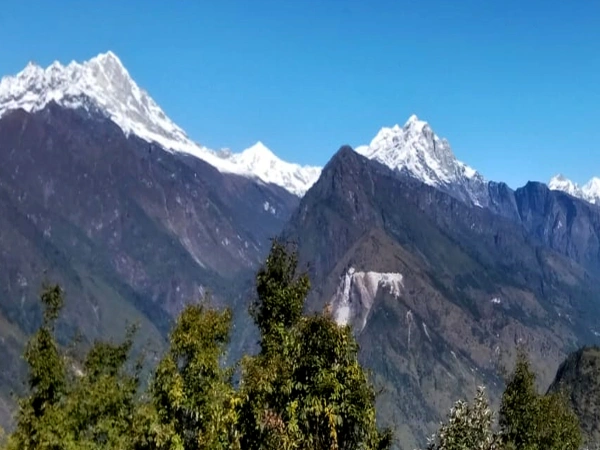
From the very first days of the trek, particularly in Dhap, you will be greeted by the enchanting view of the regional Numbur Himal, standing at an elevation of 6,957 m | 22,824 ft. At the summit, you can see not just one or two giants, but a staggering Himalayan parade. To the east, the world’s third-highest peak, Kanchanjunga, stands tall. Directly north, the crown jewels: Everest, Lhotse, and Makalu. The panorama often stretches as far west as the Annapurna range. You can also get a view of Sishapangma, Cho Oyo, Dhaulagiri, Kang Nachugo,
When is the best time to trek the Pikey Peak?
The Pikey Peak is a year-round trekking destination, with each season nurturing trekkers with distinct experiences. However, the best time to trek Pikey Peak is during the spring and autumn seasons.
Spring (March to May): During this season, the landscape comes alive with vibrant rhododendron blooms, painting the forests in stunning shades of red, pink, and purple. The weather is generally warm, with daytime temperatures inviting trekkers to explore. Mornings are typically clear and crisp, providing breathtaking views of the surrounding mountains and valley. This season is ideal for those who appreciate the beauty of nature in full bloom.
Autumn (September to November): Autumn is widely regarded as the most favorable season for outdoor adventures. During this time, the weather is typically stable, with cool, crisp air that enhances your experience. The vivid colors of fall foliage transform the landscape into a breathtaking canvas, while the sky is often a brilliant blue, providing unparalleled visibility of the majestic mountains. This is the ideal season for hiking, photography, and enjoying nature at its finest.
Other Seasons:
Winter (December to February): Winter brings a dramatic change, enveloping the landscape in a serene blanket of snow. While the temperature can plummet, resulting in frigid conditions, this season offers a unique tranquility and stunning vistas. Snowcapped peaks offer a striking contrast to the clear skies, making a haven for winter sports enthusiasts and those seeking solitude in nature. However, proper preparation is essential to stay warm and safe amidst the freezing temperatures.
Monsoon (June to August): The monsoon season is characterized by heavy rainfall, making it the least favorite time for outdoor excursions. Trails can become treacherous due to slippery conditions, and the increased moisture encourages the presence of leeches. Additionally, thick clouds frequently obscure the mountain views, diminishing the breathtaking scenery that typically defines the region. For these reasons, it’s best to avoid the monsoon season if you’re seeking an enjoyable experience in nature.
Can I do the Pikey Peak trek without a guide?
The answer is both yes and no. The official rule states that the Solukhumbu region requires or strongly recommends trekking with a licensed guide from a government-recognized trekking agency.
However, it is technically possible to hike without a guide, as the trail is well-marked, and tea houses are available, making a solo trek feasible for experienced individuals.
That said, we strongly recommend hiring a guide for your safety, cultural insights, and to manage permit with hassle-free.
Is the Pikey Peak trek Perfect for me?
Pikey Peak is an excellent choice if you:
-Desire breathtaking views of the Himalayas without the commitment of a two-week trek.
-Are either a first-time trekker in Nepal or possess a moderate fitness level.
-Are eager for an authentic cultural experience away from the hustle and bustle of large crowds.
-Are looking for a budget-friendly option compared to longer, flight-inclusive treks.
It may not be suitable if you have severe mobility or respiratory issues, or if you exclusively prefer luxury accommodations.
Ready to Claim Your Himalayan Sunrise?
This is more than a trek; it's your story waiting to be written. You've seen the view, understood the journey, and know it's within your reach.
Don't just dream about the mountains-stand atop the. Our all-inclusive 9-Day Pikey Peak Trek package is designed for comfort, safety, and unforgettable moments. Our expert local guides, seamless logistics, and commitment to sustainable travel ensure your adventure is in the best hands.
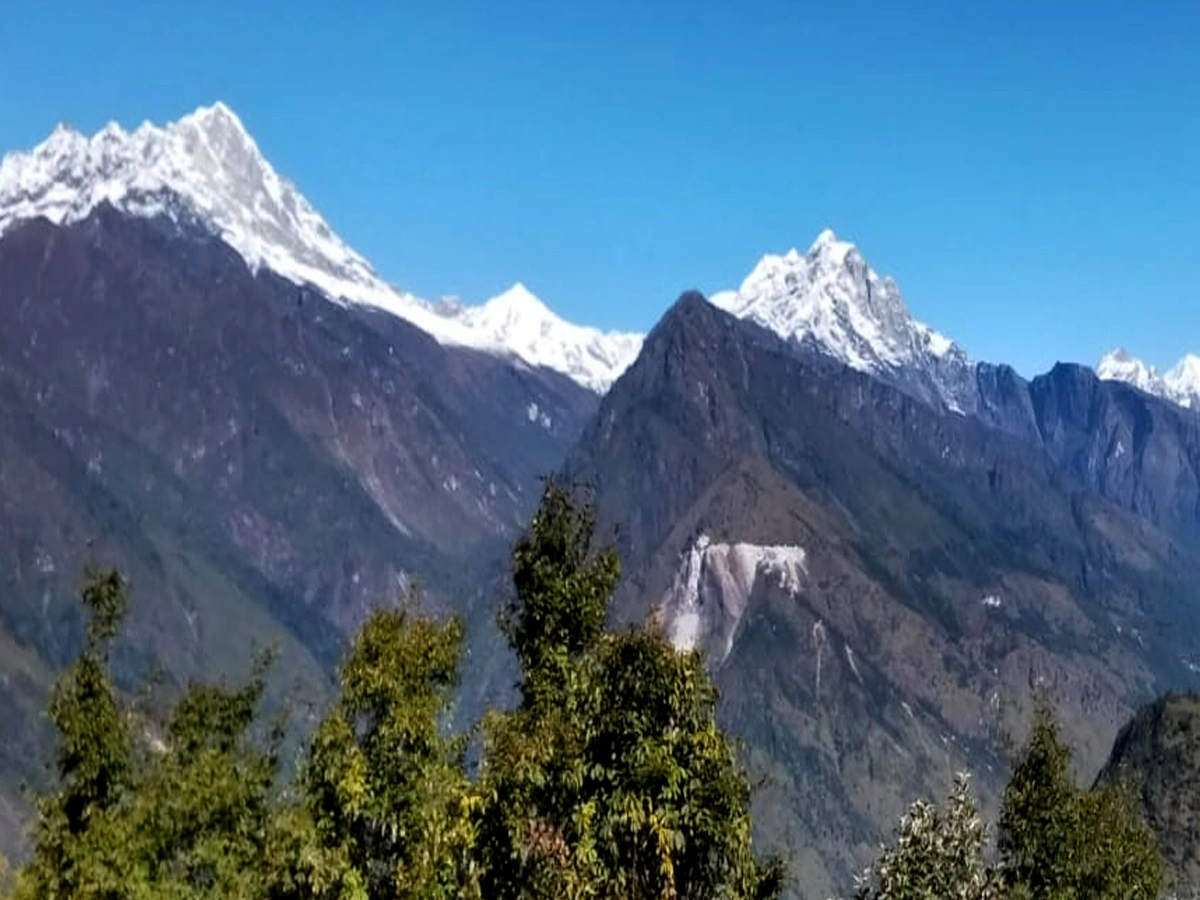
Trip Gallery


Short Itinerary
Arrival in Kathmandu Airport & Transfer to hotel
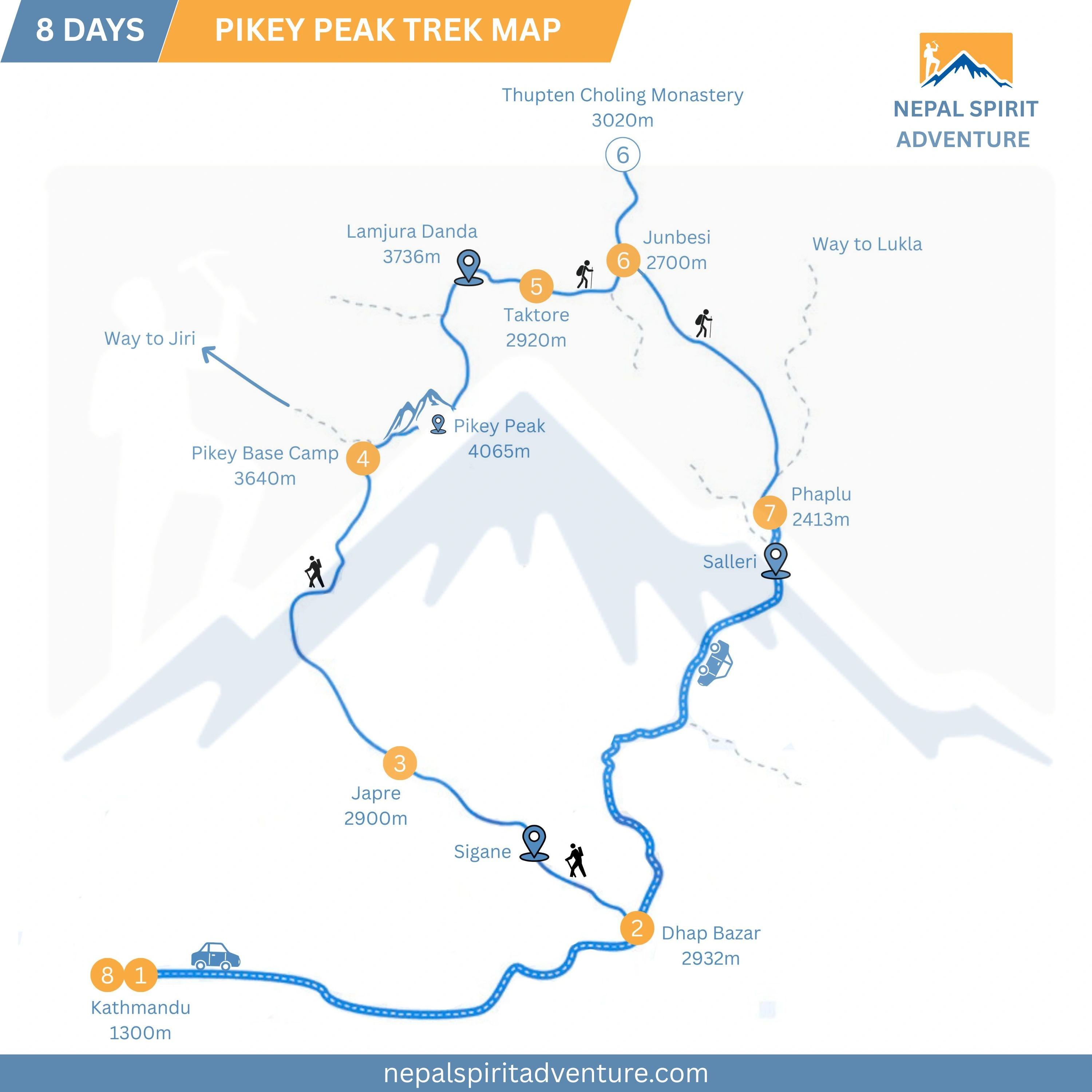
Drive by Bus from Kathmandu to Dhap 8-9hrs (approx. 250km)
Trek to Jhapre from Dhap 5hrs Walk, (Approx. 10km)
Approximately 6hrs Trek to Pikey Base Camp (11-12km)
Summit Pikey Peak & Trek to Taktore ( Approx. 15-16km. 8-9hrs)
Trek to Junbesi via Thupten Choling Monastery ( 7-8hrs walk)
Trek to Phaplu Approx. 10-11km 5-6hrs Walk
Bus Drive to Kathmandu ( Approx. 265km/7-8hrs)
Departure

Pikey Peak Trek - 9 Days Itinerary
This carefully paced itinerary ensures proper acclimatization, maximizes scenic enjoyment, and immerses you in the region's culture.
Arrival in Kathmandu Airport & Transfer to hotel
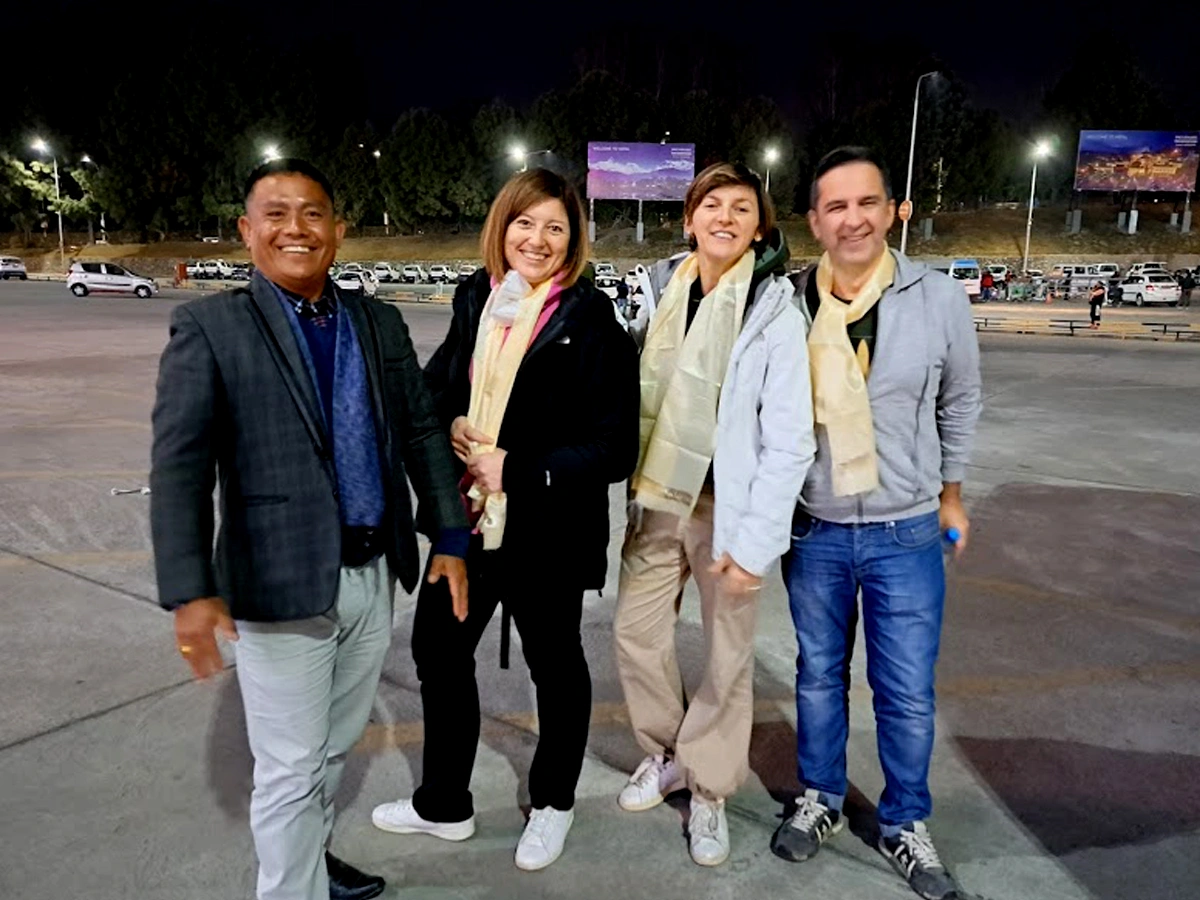
Upon your arrival at Tribhuvan International Airport (TIA) in Kathmandu, a representative from Nepal Spirit Adventure will greet you & escort you to your hotel. After checking in, you can take a rest. Or, you may also stroll around the streets of Thamel, a tourist hub in Kathmandu, for some shopping and exploration. Introduction to your trek leader, followed by a short briefing about the trek to Pikey Peak. Overnight in the hotel.
Drive by Bus from Kathmandu to Dhap 8-9hrs (approx. 250km)
The first chapter of the trek is a transition from city chaos to the serene, culturally rich foothills of the Himalayas. Our drive begins early in the morning, following the Arniko Highway, as we head northeast out of the valley. The highway follows the Sun Koshi river, where we begin to observe the terraced farms and rural village life characteristics of Nepal's mid-hills within the initial 2-3 hours.
As we wind our ascent into the middle hills, the road climbs through lush forests and numerous small villages towards the district town of Okhaldhunga. This is the longest section of the drive. We will pass many traditional settlements of various ethnic groups, including Rai, Limbu, and Tamang. Life here revolves around agriculture. The area features a combination of Hindu and Buddhist influences. Small roadside shrines, temples, and stupas are common sights.
Finally, the final ascent to Dhap Bazaar starts from Okhaldunga, a rugged mountain road leads north, with a significant final climb to Dhap. Dhap is a small market town ('Bazaar). The name is of local origin, often referring to a "raised place" or "high ground." A clear shift towards Sherpa culture is evident here. Prayer flags, chortens (Buddhist stupas), and monasteries become prominent, signaling your entry into the Solu-Khumbu region.
Upon arrival in Dhap, you may get your first glimpses of major peaks like Numbur Himal (6,958m), depending on the weather and exact location. Overnight stay at Dhap Bazaar.
Trek to Jhapre from Dhap 5hrs Walk, (Approx. 10km)
The first steps on the trail! A gentle climb through forests and villages rewards you with the first stunning views of Numbur Himal and, on clear days, Everest. After enjoying overnight and breakfast here in Dhap Bazaar, we climb towards Sigane, following the north trail of rhododendron and pine forest.
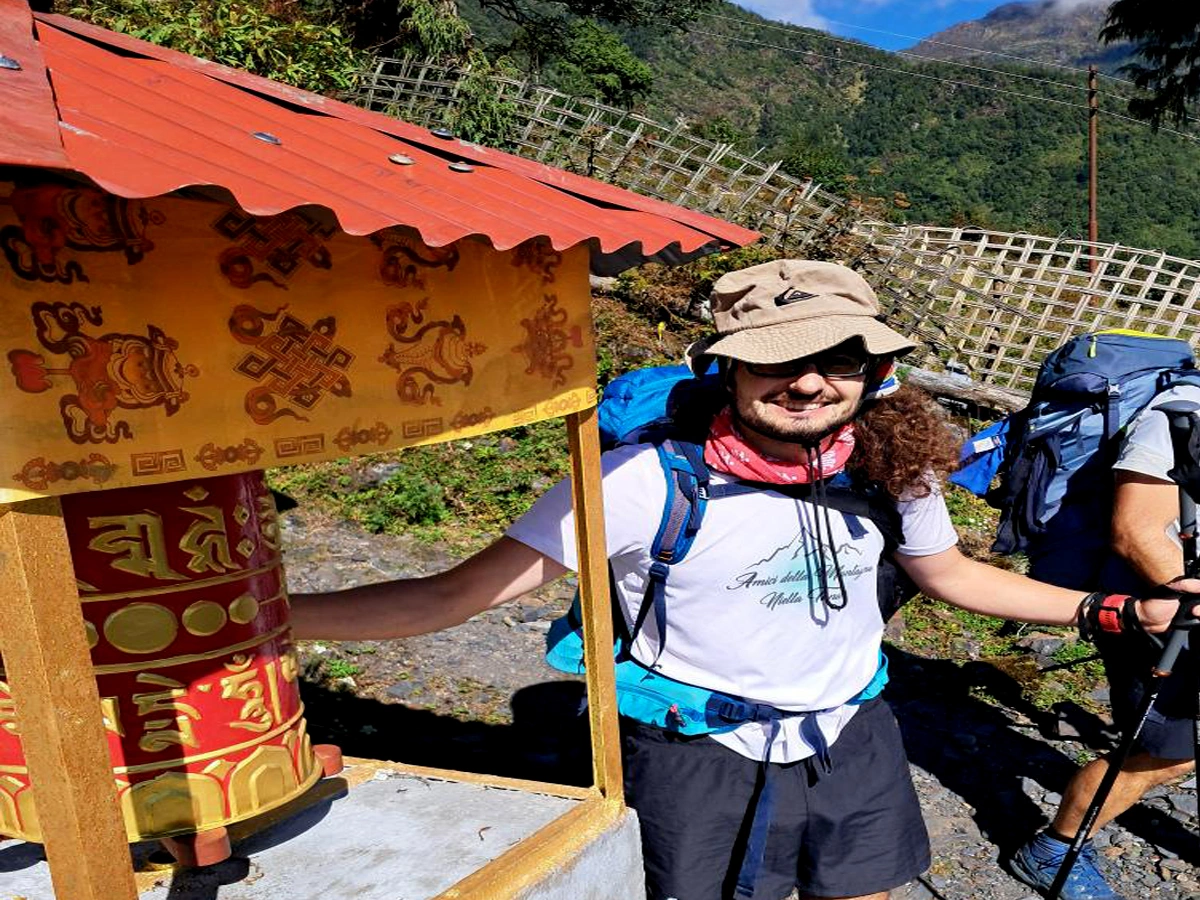
This day marks your entry into the Sherpa cultural zone. You'll notice traditional stone houses with wood trim. Tibetan Buddhism becomes visible. The trail is greeted with Mani walls (stone tablets carved with prayers) and prayer flags. We will be continuing our hike on a scenic ridge with occasional descents into small gullies.
The path contours around the hillside before the first views of Jhapre's supra appear. Jhapre is a village, well-known for its white Buddhist stupa and a small, active monastery, serving as a serene spiritual site. This part of a leg offers teaser views of Numbur Himal (6,958 m) dominating the skyline to the northwest, Karyolung Peak (6,681 m), and other peaks of the Solu-Khumbu range. Overnight stay in Jhapre.
Approximately 6hrs Trek to Pikey Base Camp (11-12km)
Finishing our breakfast in the Jhapre, we sustain our climb through fragrant rhododendron and pine forests, emerging above the tree line. The landscape opens to reveal breathtaking vistas as you reach the base camp lodge, gaining 720 m of elevation. Today, we will be rambling a trail which is part of the ancient trading and pilgrimage network connecting the Solu and Khumbu valleys. This is a demanding climb; we recommend that you drink water consistently and have high-energy snacks (nuts, chocolate, trail mix).
The trail climbs north from Jhapre, soon entering dense forest to a small, peaceful village named Bhulbhule (~3,200 m) after 1.5-2 hours from Jhapre. Bulbule is a small pasture and teahouse stop, where we will have our lunch. The name is playful, potentially meaning "place of confusion" or relating to a local plant.
Our hike will resume with a strenuous section of switch-backs ascending the Lamjura ridges (~3,500m). Lamjura refers to the long ridge ("La" means pass, "Jura" could relate to length). You may see herders with sheep and yaks in the higher pastures, reflecting the pastoral life in the majestic Himalayas. Cairns (piles of stones) and prayer flags increase in number, making the landscape sacred and offering protection to travelers. The panoramic views begin to open up dramatically stunning views of Numbur Himal, Karyolung Peak (6,681 m) on the eastern skyline, and at first glance, a triangular glimpse of Mount Everest may appear far on the horizon on exceptionally clear days.
The final push, often along a windswept ridge with scattered juniper bushes, leads to the cluster of teahouses at the Base Camp (~3,640 m). It is named for the sacred peak, serving as the overnight halt for summit attempts. Be aware of the early signs of altitude sickness (headache, nausea, dizziness), and make sure you inform your guide if you feel unwell. Prepare for Basic Stay, as the Pikey Peak base Camp teahouses are very simple. Manage expectations regarding amenities.
Summit Pikey Peak & Trek to Taktore ( Approx. 15-16km. 8-9hrs)
The Highlight of the overall trek. Today is a demanding but immensely rewarding day. A tip for the trekking day: make sure you carry a headlamp, trekking poles, and warm gloves. We will kick off a strenuous pre-dawn ascent to the Pikey Peak summit (4,065m) for the sunrise you will never forget.
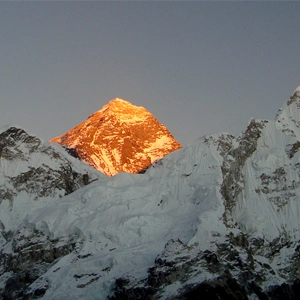
The summit push to the north/ northeast begins with a steep, often switchbacked path in darkness after early breakfast. After 1 hour, the final approach along a rocky, wind-exposed ridge to the cairn and prayer flags leads us to the Pikey Peak stancing at an elevation of 4,065 meters | 13,337 ft. Pikey is named for the local sky deity. "Pikey" or "Pike", making the peak a sacred pilgrimage site. The iconic 360-degree sunrise panorama is the trek's pinnacle of Kanchenjunga(8,586m, the world's 3rd highest mountain, settled on the border between Nepal and India's Sikkim), and Makalu(8,485m, the world's fifth-highest mountain, situated on the Nepal-China border) to the east. The North/Northeast direction from the Pikey Peak embraces the beauty of Everest (8,848.86 m), Lhotse (the world's fourth-highest mountain at an elevation of 8,516 m), Nuptse, Ama Dablam, and Thamserku. Dhaulagiri (8,167m), Annapurna 1 (8,091m), Manaslu (8,163m), Gaurishankar, and the dominant Numbur Himal
After soaking in the views, we will head back to the Pikey Base Camp and have our breakfast. After breakfast, we will recommence a steep drop from the summit to the southeast, leading to the important grassy pass at an altitude of 3,530m, Jase Bhanjyang, followed by Pabu Danda Pass. A long, undulating descent to the south/southeast continues along a broad ridge with incredible views, and eventually drops into the village. The village is named Taktore, whose lifestyle dwells on stone houses and potato fields, offering an authentic glimpse of daily Sherpa life away from the main trail. Overnight stay in Taktore.
This day combines physical challenge, unparalleled natural beauty, and deep cultural immersion, making it the defining chapter of the Pikey Peak trek.
Trek to Junbesi via Thupten Choling Monastery ( 7-8hrs walk)
This stage of the trek transitions from the high ridges of Pikey Peak into the cultural heart of the Solu-Khumbu region. It's a day of descent, cultural immersion, and spiritual discovery, culminating in one of the most significant monasteries in the Himalayas. Today's trail is characterized by a high ridge into a lush river valley, followed by a step, rewarding side climb to a sacred monastic complex.
We will start our trek to the southern descent of Taktore at a steady pace through mixed forests of rhododendron and pine. The path is generally clear, following ancient trade routes towards the Junbesi River valley. From Junbesi village, after lunch, we will follow a distinct path that leads us north alongside the Junbesi River. We will cross a suspension bridge and pass a power plant before a final steep climb to the monastery complex, marked by a large golden-topped stupa.
The Thupten Choling Monastery. After visiting the monastery, we will return to the valley floor and enter the traditional Sherpa village of Junbesi, often considered one of the most beautiful in the region.
Trek to Phaplu Approx. 10-11km 5-6hrs Walk
A final day of gentle descent following a river valley, transitioning from trekking paths to rural roads. After having breakfast in beautiful Junbesi, we will be descending alongside the Junbesi Khola (river), passing through terraced fields and small settlements. A key landmark is crossing a steel suspension bridge over the river, leading to the area of Beni Ghat. The path eventually joins a wider dirt road (funded partly by locals and Thupten Choling Monastery) that leads us into the Phaplu valley, ending the trek.
Bus Drive to Kathmandu ( Approx. 265km/7-8hrs)
Enjoy a final scenic drive back to the capital, reminiscing about the mountains. Driving to Kathmandu from Phaplu is more affordable but takes significantly more time. It's a great way, however, to see some of the countryside along the way. The road conditions between Phaplu and Kathmandu are rough, however, and you'll be on bumpy dirt roads for a portion of the way.
Option: If our trek ends day, there is a flight scheduled to Kathmandu, you can take a (35-40 minutes) flight to Kathmandu. The airfare is not included in the trek package. Nepal Spirit Adventure'll book the airline ticket according to your requirement!!
Departure
Transfer to the airport for our onward journey, carrying a lifetime of memories. Nepal Spirit Adventure's airport drop-off crew will take you to the international Tribhuvan airport three hours before the flight leaves from Kathmandu, Nepal.
Cost Details
Includes
Accommodation in Kathmandu and the Pikey Peak Trek:
- Two nights in a 3-star hotel (twin-sharing room) in Kathmandu, including breakfast.
- Six nights in mountain lodges/teahouses.
Transportation:
- Private vehicle provided for arrival and departure transfers.
- All ground transportation between Kathmandu and Dhap Bazaar, and Phaplu- Kathmandu.
Pikey Peak Trek's Meals:
- Daily, 3 times a day, hygienic meals: Breakfast, Lunch, and Dinner along the Pikey Peak trek.
- A cup of tea/coffee (back) in breakfast and dinner time.
Nepal Spirit Adventure Experience Crews:
- Experienced and English-speaking, governmentally licensed trekking guide, including his daily wages, food, accommodation, transportation, and trek insurance.
- Strong and sociable porter (one porter for two trekkers), including salary, food, accommodation, and trek insurance.
- One assistant trek guide for every ten people in the group, including his daily wages and insurance.
Inclusive Trek Equipment:
- Sleeping bag, down jacket, and duffle bag (to be returned after the trek).
- T-shirt, Woolen Camp, and Pikey Peak trekking map.
Customer Services:
- All government taxes and official charges.
- Trek and tour briefing before trip departure.
- Daily talk to the trek guide about the customer's walking and health condition.
- Arrangement for emergencies (if required).
- General medical kit throughout the trekking period.
- Farewell dinner and Departure after the trek.
Excludes
Registration Personal Securities:
- Nepal visa fees.
- Trekking and travel insurance regarding the Pikey Peak Trek.
- Physical fitness training and health are required before joining the Pikey Peak trip.
- International airfare.
Personal Extra Cost for the Pikey Peak Trek:
- Lunch and dinner in Kathmandu.
- Extra Night: Extra night accommodation in Kathmandu because of early, late departure, and early return from the mountain (due to any reason) than the scheduled itinerary.
- Your daily personal expenses, such as all alcoholic drink items: beers, whisky, rum/vodka, all alcoholic drinks available on route.
- Your daily personal expenses non-alcoholic: All types of cold and hot drinks, mineral water, boiled water, juice, extra tea/coffee, and a chocolate bar, or any souvenirs.
- Internet, battery recharge, and an extra porter.
- Upgrade the accommodation along the trek.
- Tipping for the trek guide and porter.
- Personal trekking equipment.
- Anything that is not included above in "COST INCLUDES".
Dates & Availability
Private TripPikey Peak Trek - 9 Days FAQs
Pikey Peak is located in the lower Solukhumbu region of Nepal, east of Kathmandu. It lies south of the Everest region and offers stunning Himalayan views without the crowds of popular Everest trails.
Pikey Peak stands at an elevation of 4,065 meters (13,336 feet) above sea level.
From the summit, you can enjoy panoramic views of Mount Everest, Kanchenjunga, Makalu, Lhotse, Nuptse, Gaurishankar, and many other Himalayan peaks.
The trek usually takes 6 to 8 days, depending on the itinerary, starting point, and pace. Nepal Spirit Adventure can customize the duration based on your schedule.
Yes. The Pikey Peak Trek is considered a moderate trek and is suitable for beginners with a reasonable level of fitness. No prior trekking experience is required.
The best seasons are:
- Spring (March–May) – Clear skies, blooming rhododendrons
- Autumn (September–November) – Stable weather and excellent mountain views
The trek is also possible in winter for those comfortable with cold conditions.
Yes. Trekkers need:
- Gaurishankar Conservation Area Permit (GCAP)
- TIMS Card
Nepal Spirit Adventure will arrange all necessary permits for you.
Before! It was a camping trek only. Nowadays, simple teahouses/lodges are available, run by Sherpa and Rai families. Expect twin-sharing rooms, basic facilities, and hearty home-style meals.
Altitude sickness is less common compared to higher-altitude treks, but it can still occur. Proper acclimatization, a gradual ascent, and staying hydrated help reduce the risk. Our guides are trained to handle altitude-related issues.
Yes, a licensed guide is required. Trekking with Nepal Spirit Adventure ensures experienced guides, safety, cultural insight, and a more enriching experience.
The trek offers:
- Fewer crowds than Everest Base Camp
- Authentic Sherpa culture and monasteries
- Spectacular sunrise and sunset views
- Peaceful trails and pristine nature
The Pikey peak trek is moderate, with manageable trails, gradual altitude gain, and 5-6 hours of walking daily. Some steep climbs and descents are involved.
Hygienic! Meals are simple, fresh, and locally sourced. Dal bhat, noodle soups, pancakes, bread, and MOmos are among the most common dishes. Vegetarians and vegans can be accommodated.
We start the trek with a drive from Kathmandu to Dhap. The road is partly paved and partly rough, especially after leaving the highway. A private jeep offers more comfort than a local bus, and we arrange the most reliable transport available.
Yes, we can see a 360-degree panorama from Pikey Peak summit (4, 065m), which includes Everest, Lhotse, Makalu, Kanchenjunga, and Annapurna. Sir Edmund Hillary called it the best views of Everest he had ever seen.
We highly recommend: Layered clothing, trekking boots, a down jacket, a sleeping bag, a daypack, water purification, and personal essentials. A full packing list is available on our page of Pikey Peak trek’s equipment packing list.
Nepal Spirit Adventure, we provide warm sleeping bags, a down jacket, duffel bags, hart and t-short. Additional items can be rented or bought in Kathmandu at a reasonable price before the trek departure from Kathmandu.
Yes, you must have insurance that covers trekking up to 5,000 m and emergency evacuation.
The 9-day Pikey Peak Trek Cost with Nepal Spirit Adventure ranges from USD 590 to USD 700 per person, it is depending on group size and service level. Our best-selling packages cost includes guide, porter, meals, Pikey peak route permit, accommodation, and transportation.
Dhap is the most common starting point for the Pikey Peak Trek, located about 230 km (143 miles) east of Kathmandu. From Dhap, it usually takes 3–4 trekking days to reach the summit of Pikey Peak (4,065m), depending on your pace and itinerary.
The distance from Dhap to the top of Pikey Peak is approximately 35–40 km (22–25 miles) on foot, traversing gradual ascents through villages, forests, and ridges. Most itineraries break the journey into manageable daily walks of 5–6 hours.
In short: After a 7–8 hour drive from Kathmandu to Dhap, you’ll begin the trek and typically reach the Pikey Peak summit within 3–4 days.
What Our Guests Say?
A big thank you to Nepal Spirit Adventure and especially to “Ram” for organizing an exceptional trekking experience. Walking through the charming local villages, enjoying meals and accommodations with warm Sherpa families, made the journey truly special. We felt fortunate...

We were so lucky to find Nepal Spirit Adventure, Nepal's top trek company. Mr. Ram convinced us well, especially since we didn't have enough experience with trekking in Nepal and had never done a high-altitude Mountain hike before. Ram had...