11
Days

Langtang Valley Trek- 11 Day

151 Reviews in TripAdvisor
39 Reviews in Google Reviews

The Langtang Valley Trek is one of Nepal's best short trekking adventures, offering breathtaking Himalayan views, fascinating Tamang culture, and diverse wildlife. Located just north of Kathmandu, the trek is easily accessible by road, making it a convenient option for travelers with limited time. Unlike treks in the Everest and Annapurna regions that often depend on flights to Lukla or Jomsom, the Langtang Valley Trek avoids the uncertainty of flight delays and cancellations, allowing for a smoother travel experience.

Duration
11 Days
Trip Grade
Moderate
Country
Nepal
Maximum Altitude
3,910 m | 12,828 ft
Group Size
Minimum 1 - 20
Starts
Kathmandu
Ends
Kathmandu
Activities
Trekking in Nepal
Best Time
Feb to May | Aug to Dec

Langtang Valley Trek Highlights

  • Enjoy breathtaking 360-degree panoramic views from Kyanjin Ri and Tserko Ri.
  • Trek through the stunning landscapes of the Langtang Valley.
  • Discover traditional Tamang villages and experience Tibetan-influenced culture and heritage.
  • Visit the sacred Kyanjin Gompa, one of the region's most important Buddhist monasteries.
  • Marvel at spectacular views of Langtang Lirung, Ganesh Himal, and numerous surrounding Himalayan peaks.
  • Pass through charming mountain settlements such as Syabrubesi, Lama Hotel, and Ghoda Tabela.
  • Experience the warm hospitality and unique lifestyle of local mountain communities.
  • Explore diverse ecosystems rich in wildlife, rare flora, and fauna.
  • Savor authentic Nepali and local dishes in cozy teahouses along the trail.
  • Suitable for both beginner and experienced trekkers.
  • Enjoy one of Nepal's most accessible short treks, located within easy reach of Kathmandu.
  • Immerse yourself in the peaceful and unspoiled beauty of the Langtang region.

Langtang Valley Trek Overview

The 11-Day Langtang Valley Trek is one of Nepal’s most rewarding trekking adventures, offering a perfect blend of spectacular mountain scenery, rich cultural heritage, and peaceful trails. Situated north of Kathmandu near the Tibetan border, the Langtang region is renowned for its pristine alpine landscapes, traditional mountain villages, and authentic Himalayan experiences.

Unlike the more crowded routes to Everest Base Camp and Annapurna Base Camp, the Langtang Valley Trek provides a quieter and more intimate trekking experience. Along the trail, trekkers have the opportunity to interact with the indigenous Tamang, Sherpa, and Tibetan-influenced communities, gaining insight into their unique culture, traditions, and lifestyle.

The trek passes through the beautiful Langtang National Park, a protected area rich in biodiversity and known for its diverse flora and fauna. The region is a paradise for nature lovers, bird-watchers, and wildlife enthusiasts, with chances to spot rare Himalayan species in their natural habitat.

This trek is considered moderate in difficulty and is suitable for trekkers with a reasonable level of fitness. While prior trekking experience is not essential, good physical conditioning will help you fully enjoy the journey.

One of the major highlights of the trek is reaching Kyanjin Gompa, a picturesque mountain settlement surrounded by towering Himalayan peaks. From here, adventurous hikers can ascend to Kyanjin Ri and Tserko Ri (4,984 m), where breathtaking 360-degree panoramic views of the Langtang Himalayas await.

If you are seeking a short yet rewarding Himalayan adventure, stunning mountain vistas, rich cultural encounters, and authentic trekking experiences, the Langtang Valley Trek is an excellent choice. Our carefully designed 11-day itinerary combines comfortable accommodations, warm hospitality, professional service, and exceptional value, allowing you to fully immerse yourself in the beauty and mystique of the Langtang region.

What Makes the Langtang Valley Trek Special for 2026/2027

The Langtang Valley Trek remains one of Nepal's most rewarding Himalayan adventures for 2026 and 2027. Combining spectacular mountain scenery, authentic Tamang culture, diverse landscapes, and easy accessibility from Kathmandu, this trek offers an unforgettable experience for nature lovers, cultural explorers, families, and first-time trekkers alike.

A Scenic Trek Through the Heart of Langtang Valley:

The Langtang Valley Trek takes you through beautiful forests, alpine meadows, glacial valleys, and traditional mountain settlements while surrounded by some of the most impressive peaks in the Nepal Himalayas. Along the journey, trekkers can explore the Langtang Glacier, visit Langtang Lirung Base Camp, hike to Kyanjin Ri and Tserko Ri, and even extend their adventure to Yala Peak.

The standard 11-day itinerary begins and ends at Syabrubesi or Dhunche, both accessible by a scenic 6–7-hour drive from Kathmandu. The trail passes through charming settlements such as Lama Hotel, Riverside, Ghodatabela, Langtang Village, Mundu, and Kyanjin Gompa before returning along the same route.

Explore the Wilderness of Langtang National Park:

Established in 1976, Langtang National Park is Nepal's first Himalayan national park and covers approximately 1,710 square kilometers, including an extensive buffer zone. The park protects a remarkable variety of ecosystems, ranging from subtropical forests to alpine landscapes.

Trekkers may encounter Himalayan wildlife such as red pandas, Himalayan black bears, musk deer, langurs, and numerous species of birds. Walking through these pristine natural surroundings offers a peaceful escape from city life and an opportunity to reconnect with nature.

Authentic Mountain Hospitality:

Despite its remote location, Langtang Valley offers comfortable tea house accommodation throughout the trekking route. Most lodges provide twin-sharing rooms, warm dining halls, and traditional Nepalese meals prepared with locally sourced ingredients.

The people of Langtang are known for their kindness, humility, and genuine hospitality. Staying in local tea houses allows visitors to experience authentic mountain life while supporting local communities that continue rebuilding and developing tourism in the region.

Discover the Rich Tamang Culture:

One of the most unique aspects of the Langtang Valley Trek is the opportunity to experience the rich culture of the Tamang people, who make up the majority of the local population. Influenced by Tibetan Buddhism, the Tamang community preserves its own language, traditional dress, customs, music, and religious practices.

Visitors can witness colorful prayer flags, ancient monasteries, traditional stone houses, and cultural ceremonies throughout the journey. If visiting during February or March, trekkers may also experience Sonam Lhosar, the Tamang New Year celebration filled with music, dance, and cultural festivities.

Spectacular Himalayan Panorama:

The Langtang region offers some of Nepal's most impressive mountain views. Throughout the trek, you'll be surrounded by snow-capped peaks, glaciers, and rugged alpine landscapes.

Highlights include magnificent views of:

  • Langtang Lirung (7,234 m)
  • Ganesh Himal
  • Dorje Lakpa (6,966 m)
  • Gangchempo (Langtang Ri)
  • Porong Ri
  • Yala Peak (5,520 m)
  • Shishapangma (8,027 m) in Tibet, visible from higher viewpoints

The dramatic glacier moraine landscapes and towering mountain walls create unforgettable photographic opportunities.

Kyanjin Gompa – The Cultural Heart of Langtang

Located at an altitude of 3,870 meters, Kyanjin Gompa is the final settlement on the Langtang Valley Trek and one of its major highlights. This beautiful village is home to an ancient Buddhist monastery, stunning mountain scenery, and a famous local Yak Cheese Factory.

Visitors can explore the monastery, learn about local traditions, interact with villagers, and enjoy some of the finest Himalayan cheese produced in Nepal.

Sunrise Adventure to Tserko Ri (4,984 m)

A hike to Tserko Ri is considered one of the most rewarding side trips in the Langtang region. Starting from Kyanjin Gompa, trekkers ascend nearly 1,100 meters to reach this spectacular viewpoint.

From the summit, breathtaking 360-degree views of the Langtang Himalayas, Tibetan Plateau, glaciers, and surrounding peaks unfold before you. The sunrise from Tserko Ri is often regarded as one of the finest mountain panoramas in Nepal.

Optional Extension to Sacred Gosainkunda Lake:

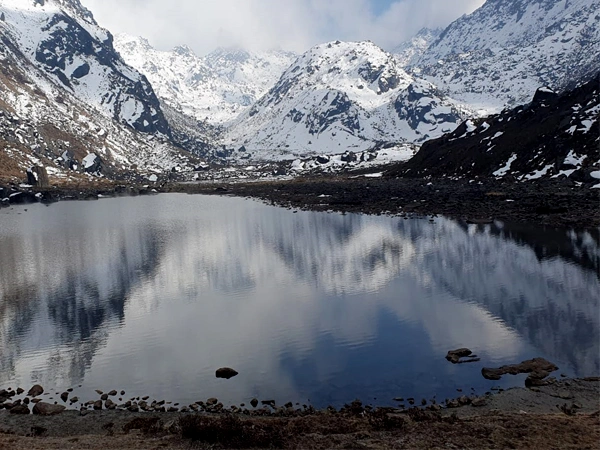
For trekkers seeking a longer adventure, Langtang Valley can be combined with the sacred Gosainkunda Lake Trek. Situated at 4,380 meters, Gosainkunda is one of Nepal's most revered pilgrimage sites for both Hindus and Buddhists.

The region contains more than 100 alpine lakes, with Gosainkunda, Bhairab Kunda, Saraswati Kunda, Surya Kunda, and Naga Kunda being among the most famous. The lakes are particularly beautiful during the summer pilgrimage season and the clear autumn months.

Ideal for Families and First-Time Trekkers:

Unlike many high-altitude Himalayan expeditions, the Langtang Valley Trek is considered a moderate trek with manageable daily walking distances and well-spaced tea houses. This makes it an excellent choice for families, beginner trekkers, and travelers with limited time.

The trail offers outstanding mountain views without requiring extensive technical climbing experience.

Gateway to Other Trekking Adventures

The Langtang region serves as a gateway to several exciting trekking routes, including:

  1. Tamang Heritage Trail
  2. Gosainkunda Lake Trek
  3. Gosainkunda Pass Trek
  4. Langtang Valley and Ganja La Pass Trek
  5. Helambu Circuit Trek
  6. Ruby Valley and Pangsang Pass Trek
  7. Yala Peak Climbing

These routes can be combined to create longer and more adventurous Himalayan journeys.

Why Choose Langtang Valley Trek in 2026/2027

For trekkers seeking an authentic Himalayan experience away from the crowds, the Langtang Valley Trek offers the perfect combination of natural beauty, cultural immersion, wildlife, and adventure. With improved trekking infrastructure, comfortable tea houses, and flexible itineraries, Langtang continues to be one of Nepal's best-value trekking destinations.

Whether you are a solo traveler, a family, a cultural enthusiast, or a mountain lover, the Langtang Valley Trek in 2026/2027 promises an unforgettable journey into one of Nepal's most beautiful mountain regions.

Off the Beaten Trail in the Langtang Valley Trek:

Escape the crowds and discover one of Nepal's most beautiful hidden gems with the Langtang Valley Trek. This 10-day adventure with Nepal Spirit Adventure takes you deep into the heart of the Langtang Trekking Region, where pristine mountain landscapes, authentic Himalayan culture, and unforgettable trekking experiences await.

Nestled north of Kathmandu near the Tibetan border, the Langtang Valley offers a quieter and more intimate alternative to Nepal's busier trekking routes. This remarkable journey combines spectacular natural beauty with rich cultural encounters, making it an ideal choice for travelers seeking an authentic Himalayan adventure.

As you follow scenic mountain trails through Langtang National Park, you'll pass through lush rhododendron and bamboo forests, cross sparkling rivers, and trek beneath towering snow-capped peaks. Along the way, breathtaking views of Langtang Lirung (7,234 m), Ganesh Himal, Dorje Lakpa, and other Himalayan giants create a stunning backdrop throughout the journey.

The trek leads you through traditional mountain settlements such as Syabrubesi, Lama Hotel, Ghodatabela, Langtang Village, and Kyanjin Gompa, where you will experience the warm hospitality and unique traditions of the local Tamang and Tibetan-influenced communities. These cultural interactions provide valuable insight into the lifestyle, customs, and spiritual heritage of the region.

A major highlight of the trek is the visit to Kyanjin Gompa, an ancient Buddhist monastery surrounded by dramatic mountain scenery. From here, trekkers can explore the surrounding valley, visit the famous Yak Cheese Factory, or hike to nearby viewpoints for spectacular panoramic vistas of glaciers and Himalayan peaks.

Whether you are a first-time trekker or an experienced adventurer, the Langtang Valley Trek offers a rewarding experience within a relatively short timeframe. The moderate difficulty level, well-established tea house accommodations, and stunning diversity of landscapes make it one of Nepal's most accessible and enjoyable trekking destinations.

Join Nepal Spirit Adventure on this unforgettable journey through the Langtang Valley and discover a world of natural beauty, cultural richness, and mountain serenity. Let our experienced team guide you through one of Nepal's most spectacular off-the-beaten-path trekking adventures and create memories that will last a lifetime.

What Kind of Meals and Accommodation Can You Expect?

The Langtang Valley Trek offers a comfortable and authentic tea-house trekking experience. Over the years, the region has developed a well-established network of lodges and guesthouses that provide trekkers with essential comforts while preserving the charm of mountain hospitality.

Although the 2015 earthquake and subsequent landslides significantly affected parts of the Langtang region, including Langtang Village, local communities have rebuilt much of the trekking infrastructure. Today, visitors can enjoy clean, welcoming accommodations throughout the trail, with improved facilities in many locations.

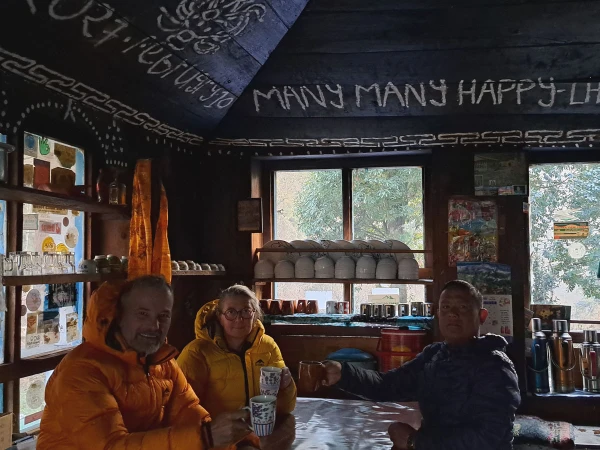
Most tea houses offer twin-sharing rooms with comfortable beds, warm blankets, and cozy dining halls where trekkers gather to relax and socialize after a day on the trail. During colder months, wood-burning or yak-dung-fueled stoves provide warmth in the communal areas. Some lodges also offer hot showers, charging facilities, and Wi-Fi services for an additional fee.

Meals on the Trek:

The tea houses along the Langtang route serve a wide selection of freshly prepared meals, combining traditional Nepalese cuisine with popular international dishes.

Typical menu options include:

  • Dal Bhat (traditional Nepalese rice, lentils, and vegetables)
  • Noodles and fried rice
  • Soups and pasta dishes
  • Tibetan bread and pancakes
  • Eggs, potatoes, and porridge
  • Tea, coffee, and hot beverages

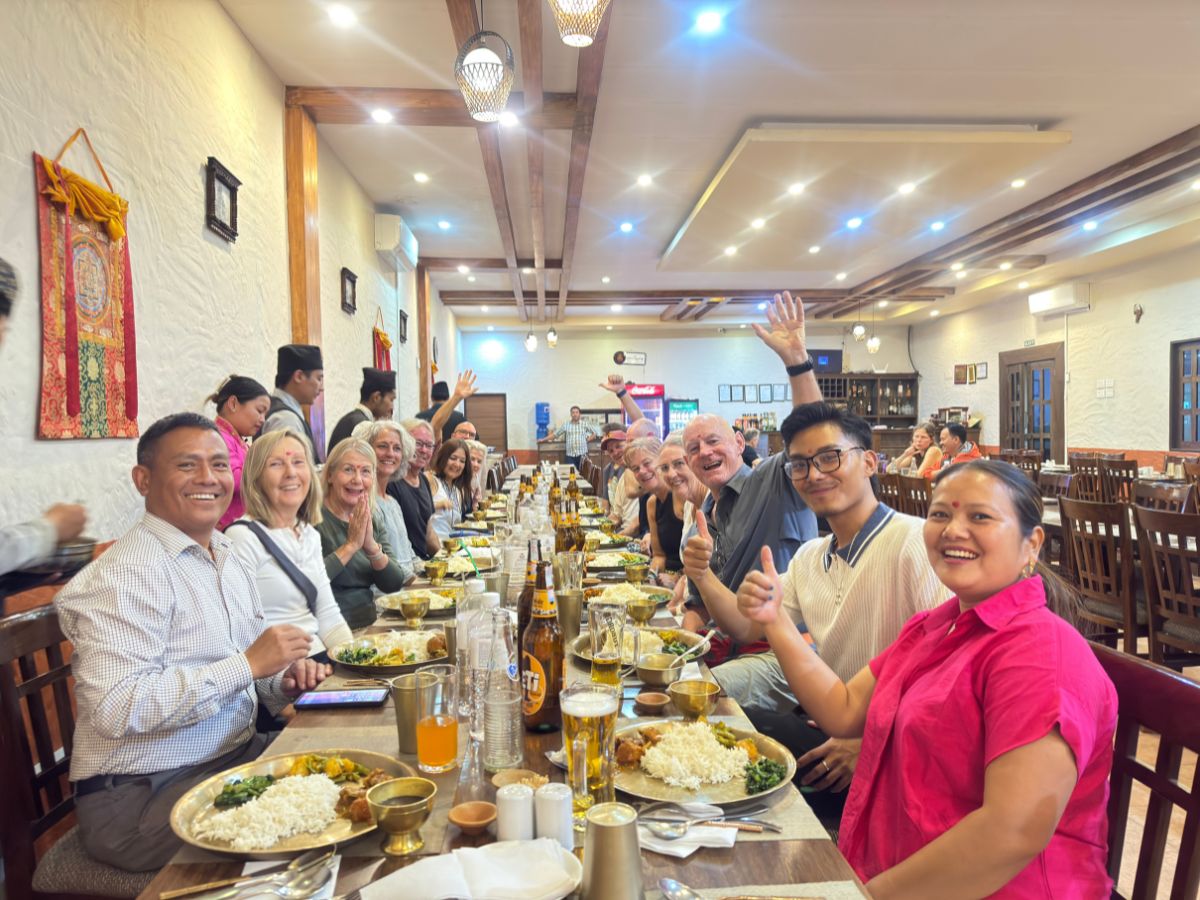
One local specialty not to miss is momo, Nepal's famous dumpling. In the Langtang region, momos are often larger, heartier, and more pastry-like than those commonly found in Kathmandu, making them a favorite meal among trekkers.

A Genuine Mountain Experience:

While accommodation and facilities become more basic at higher elevations, the warmth of local hospitality more than compensates. Staying in family-run tea houses provides an excellent opportunity to interact with local communities, learn about mountain life, and enjoy authentic Himalayan culture throughout your journey.

Overall, the Langtang Valley Trek offers a comfortable balance between adventure and convenience, ensuring a rewarding trekking experience without sacrificing essential comforts.

When Is the Best Time to Trek in the Langtang Valley?

The Langtang Valley Trek can be enjoyed throughout much of the year, but the best trekking seasons are autumn (September to November) and spring (March to May). These periods offer the most favorable weather conditions, clear mountain views, and comfortable temperatures for trekking in the Himalayas.

While trekking is possible during the winter months, the monsoon season (June to August) is generally considered the least suitable time due to heavy rainfall, slippery trails, and limited mountain visibility.

Autumn Season (September to November):

Autumn is widely regarded as the best time to trek in the Langtang Valley. Following the summer monsoon, the skies become exceptionally clear, providing breathtaking views of the surrounding Himalayan peaks. The landscapes are fresh and vibrant, and the weather remains stable with pleasant daytime temperatures.

During this season, trekkers can enjoy:

  • Crystal-clear mountain panoramas
  • Comfortable trekking temperatures
  • Dry and stable trail conditions
  • Excellent photography opportunities
  • Vibrant local festivals and cultural experiences

Autumn is also the most popular trekking season in Nepal, offering ideal conditions for both beginners and experienced trekkers.

Winter Season (December to February):

Winter trekking in Langtang is possible and rewards visitors with peaceful trails and spectacular snow-covered scenery. However, temperatures can drop significantly, particularly at higher elevations around Kyanjin Gompa and Tserko Ri.

Highlights of winter trekking include:

  • Fewer trekkers and quieter trails
  • Stunning snow-covered landscapes
  • Clear skies and crisp mountain views
  • Unique winter trekking experience

Trekkers should be prepared for cold mornings, freezing nights, and occasional snowfall, especially during January and February.

Spring Season (March to May):

Spring is another excellent season for the Langtang Valley Trek. As temperatures gradually warm, forests burst into life with blooming rhododendrons, magnolias, and other alpine flowers. The valleys become lush and colorful, creating some of the most picturesque trekking conditions of the year.

Benefits of trekking in spring include:

  • Pleasant temperatures and stable weather
  • Colorful rhododendron forests in full bloom
  • Excellent mountain views
  • Rich biodiversity and wildlife activity
  • Ideal conditions for trekking and peak climbing

Although occasional haze may develop later in the season, spring remains one of the most rewarding times to explore the Langtang region.

Monsoon Season (June to August):

The monsoon season brings frequent rainfall to the Langtang region, making trekking more challenging. Trails can become muddy and slippery, while clouds often obscure mountain views. Landslides and transportation disruptions are also more common during this period.

Challenges of monsoon trekking include:

  • Heavy rainfall and wet conditions
  • Reduced visibility of mountain scenery
  • Slippery and muddy trails
  • Increased risk of landslides and trail damage
  • Leeches in lower forested sections

For these reasons, most trekkers prefer to avoid the monsoon season unless they specifically seek a quieter and more adventurous trekking experience.

Our Recommendation:

For the best overall trekking experience, we highly recommend planning your Langtang Valley Trek during autumn (September–November) or spring (March–May). Both seasons offer excellent weather, spectacular Himalayan views, comfortable temperatures, and unforgettable trekking conditions.

Whether you choose the colorful landscapes of spring or the crystal-clear mountain vistas of autumn, the Langtang Valley promises a memorable Himalayan adventure.

Getting There: Route Overview

The Langtang Valley Trek begins with a scenic drive from Kathmandu to Syabrubesi, the traditional gateway to the Langtang region. The journey follows winding mountain roads through picturesque hills, terraced farmlands, and rural villages, offering a glimpse into Nepal's beautiful countryside before reaching the trailhead.

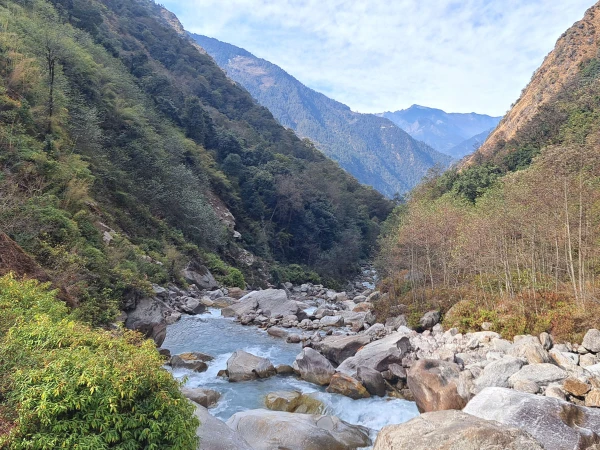
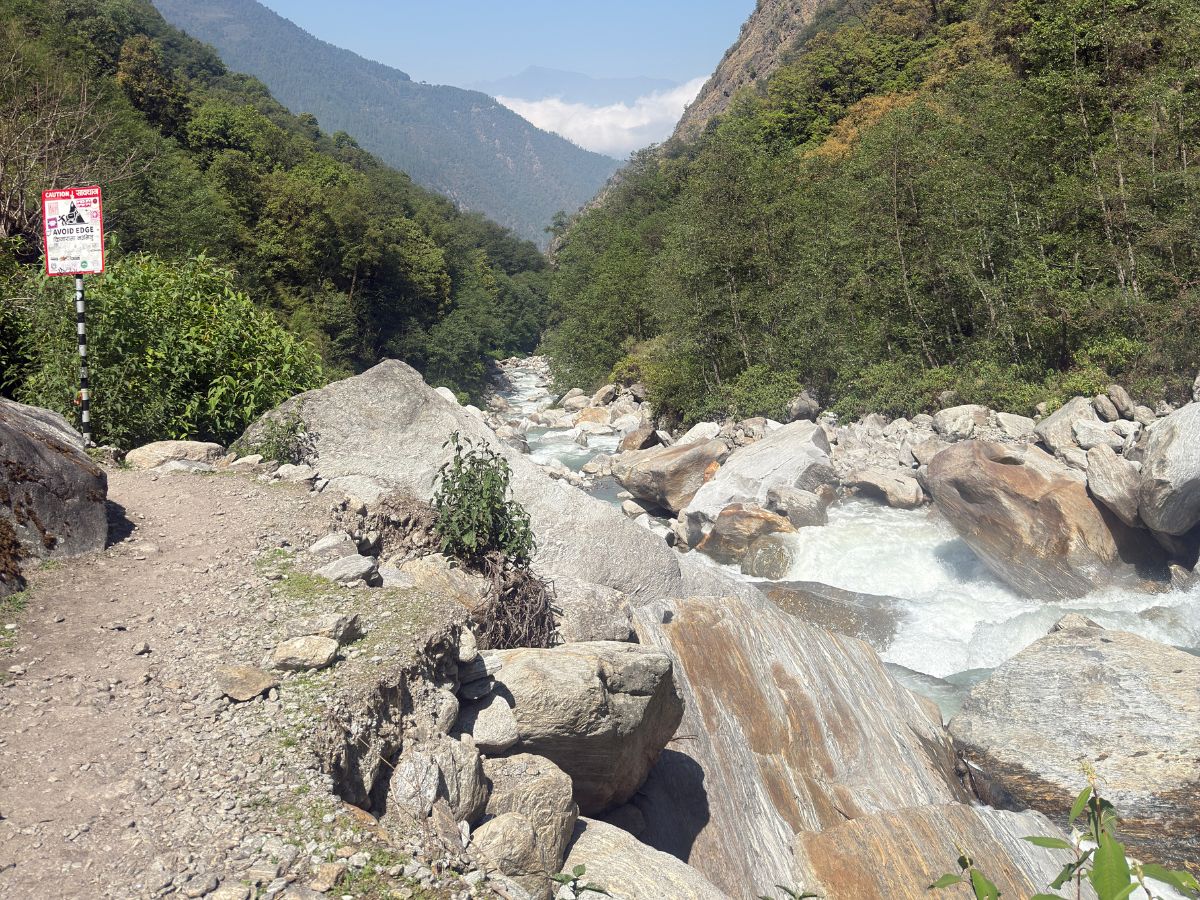
From Syabrubesi, the trek follows the banks of the Langtang Khola River, gradually ascending through lush forests of rhododendron, bamboo, oak, and pine. Along the trail, trekkers are rewarded with stunning natural scenery, cascading waterfalls, and opportunities to spot diverse wildlife and bird species within Langtang National Park.

As the journey continues deeper into the valley, the trail passes through several charming settlements, including Lama Hotel, Ghodatabela, and Langtang Village. These traditional mountain communities provide valuable insight into the unique culture, lifestyle, and hospitality of the local Tamang people.

The trek reaches its highest overnight destination at Kyanjin Gompa, a beautiful Himalayan village situated at the foot of the towering Langtang Lirung. This peaceful settlement is home to an ancient Buddhist monastery, a renowned Yak Cheese Factory, and some of the most spectacular mountain scenery in the region. Trekkers can spend time exploring the monastery, interacting with residents, and enjoying breathtaking panoramic views of the surrounding snow-capped peaks and glaciers.

For those seeking additional adventure, Kyanjin Gompa also serves as the starting point for rewarding day hikes to Kyanjin Ri and Tserko Ri, both offering unforgettable sunrise views and magnificent Himalayan panoramas.

After exploring the upper valley, the trek retraces the same scenic route back through Langtang Village, Ghodatabela, Lama Hotel, and Syabrubesi. The adventure concludes with a comfortable drive back to Kathmandu, bringing an end to an unforgettable journey through one of Nepal's most beautiful and culturally rich trekking destinations.

Trek Variations and Extensions

For trekkers with additional time, the Langtang Valley Trek can be extended into several rewarding routes that offer deeper cultural experiences and greater Himalayan exploration.

Tamang Heritage Trail Extension:

One of the most popular additions is the Tamang Heritage Trail, which can extend your journey by approximately 4–6 days. This culturally rich route passes through traditional Tamang villages, where visitors can gain a deeper understanding of the region's unique heritage, customs, and way of life.

The Tamang people are believed to have Tibetan origins, and their culture reflects strong Buddhist traditions, distinctive architecture, colorful attire, and warm mountain hospitality. This extension provides an excellent opportunity to experience authentic local life beyond the main trekking route while enjoying beautiful landscapes and panoramic mountain views.

Gosainkunda Lake Extension:

For those seeking a more adventurous alternative, the Langtang Valley Trek can be combined with the spectacular Gosainkunda Lake Trek instead of returning directly to Kathmandu by road.

This route crosses high mountain terrain to reach the sacred Gosainkunda Lakes, located at an altitude of 4,380 meters. Revered by both Hindus and Buddhists, Gosainkunda is famous for its crystal-clear turquoise waters, dramatic alpine scenery, and spiritual significance. The area is home to numerous glacial lakes surrounded by rugged Himalayan peaks, creating one of the most stunning landscapes in the Langtang region.

Many trekkers prefer visiting Gosainkunda after completing the Langtang Valley Trek rather than before it. By this stage of the journey, trekkers are generally better acclimatized to higher elevations, making the ascent to the lake and surrounding passes more comfortable and safer.

Important Altitude Considerations:

While these extensions are highly rewarding, they involve higher elevations and longer trekking days. Proper acclimatization, adequate hydration, and careful itinerary planning are essential to reduce the risk of altitude-related illness.

Independent trekkers should pay close attention to route information and verify altitude data from reliable and up-to-date sources. Carrying accurate maps, consulting local guides, and monitoring weather and trail conditions can significantly enhance both safety and enjoyment throughout the trek.

Whether you choose the cultural richness of the Tamang Heritage Trail or the alpine beauty of Gosainkunda, these extensions add an extra dimension to the Langtang Valley experience and create an even more memorable Himalayan adventure.
Short Itinerary

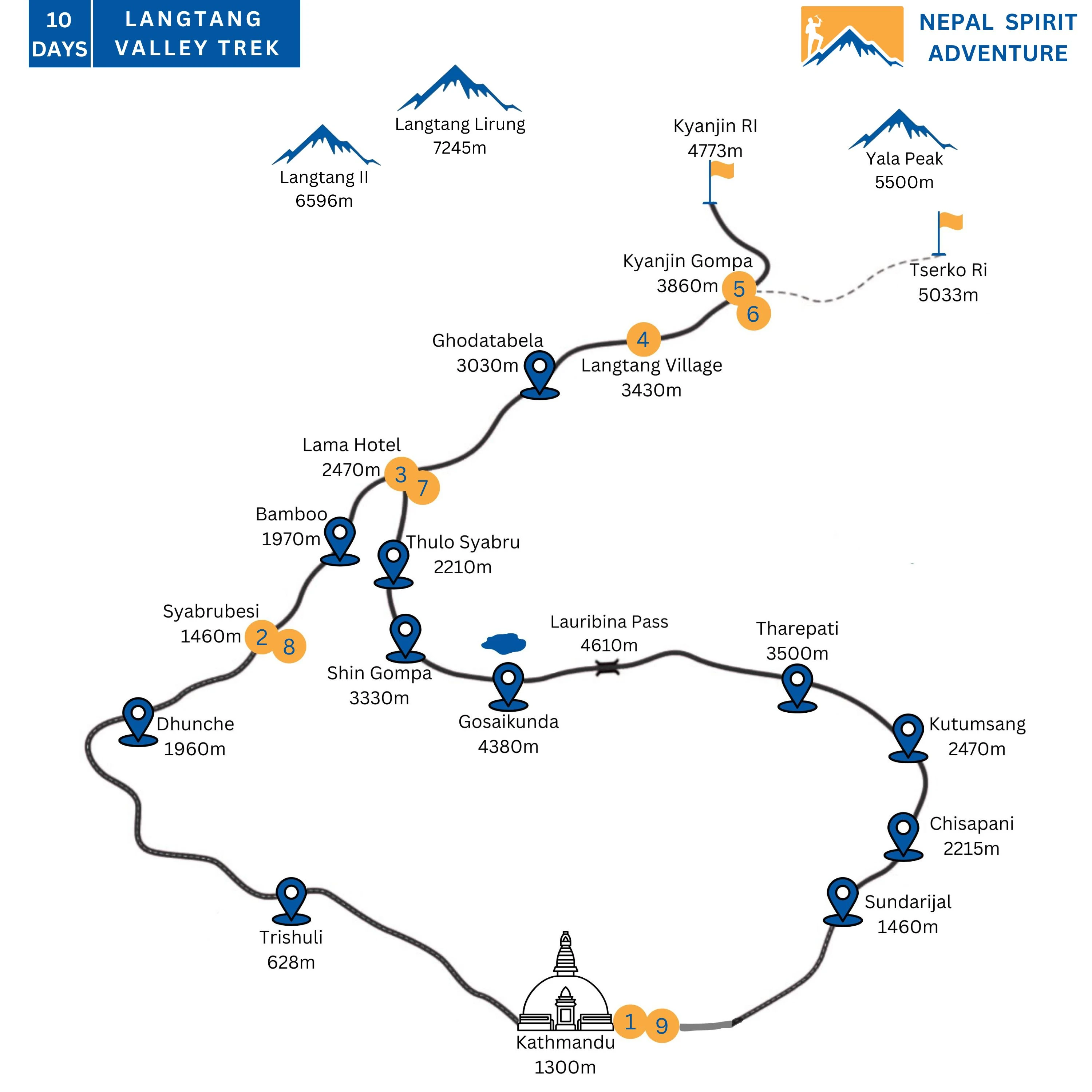
Langtang Valley Trek Map

Langtang Valley Trek- 11 Day Itinerary

Start Point:Kathmandu
End Point:Kathmandu
Day01

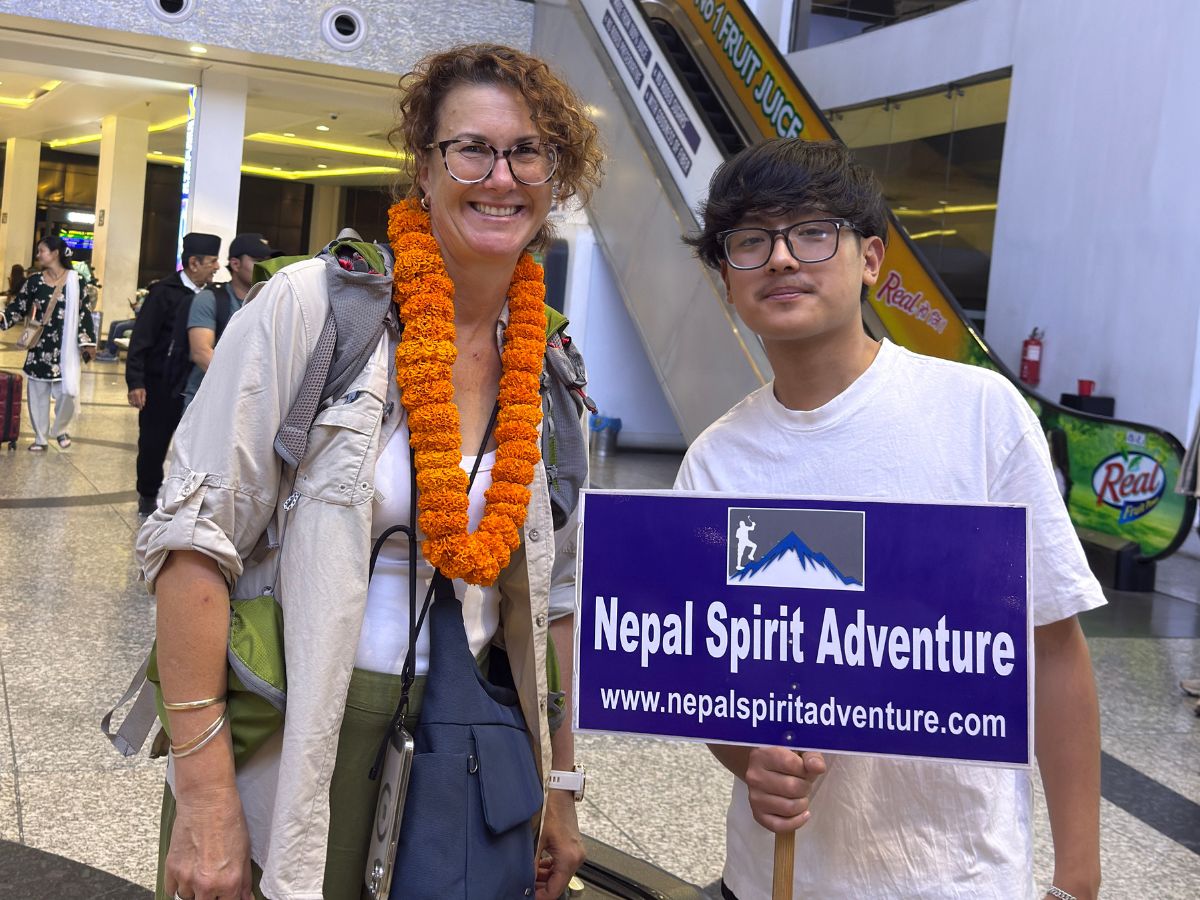
Arrive in Kathmandu, Airport Pickup, Transfer to Hotel

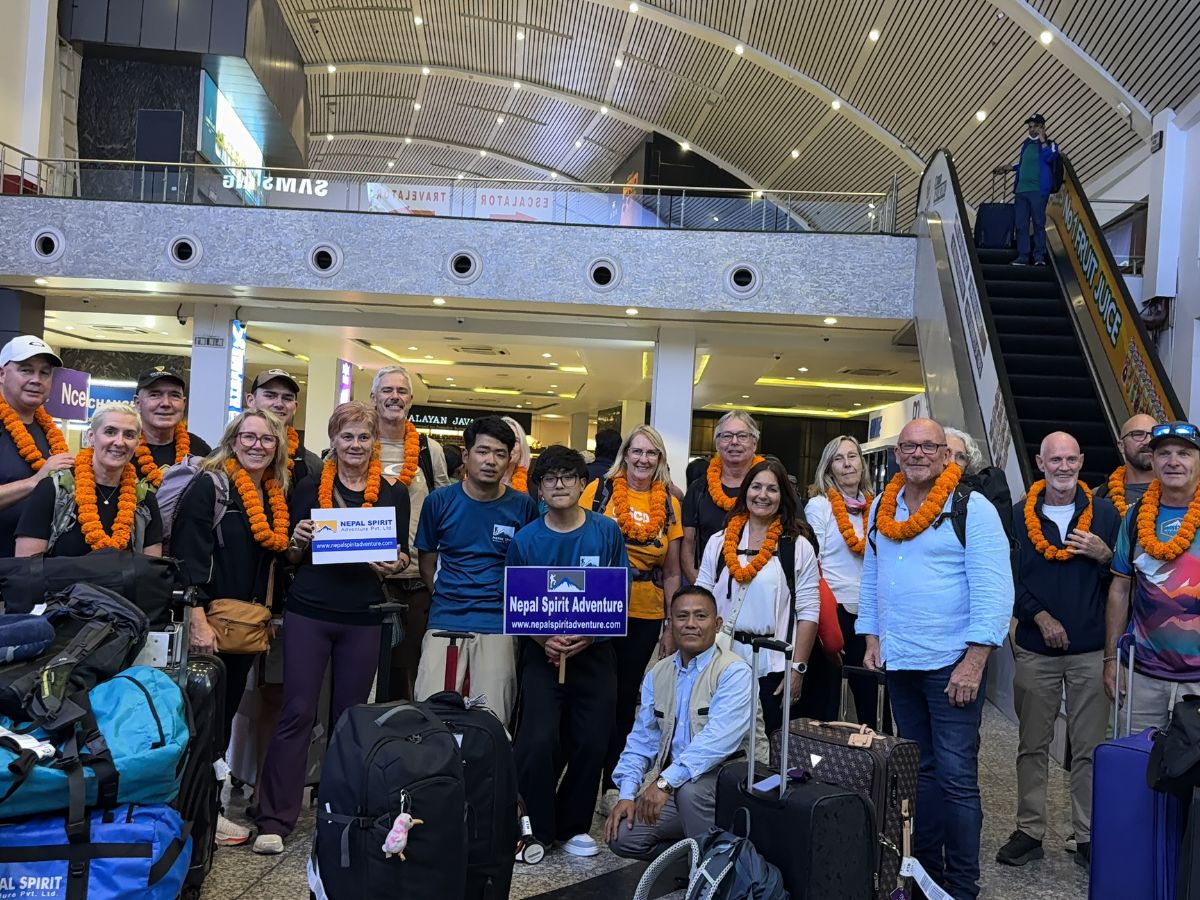
After landing at Tribhuvan International Airport in Kathmandu, our airport representatives will meet you and arrange a short drive to your hotel in the heart of the city. Once you check into your comfortable room and take some time to rest and recover from any jet lag, you will have the chance to meet another group member from the Langtang Valley Trek.

Our guide will provide you with important information about the trek to Langtang Valley, details about our services, and we will review the trek equipment. You’ll spend the night in Kathmandu, preparing for the adventure ahead.

​​​​Tribhuvan International AirportWelcome to Nepal
Day02

In Kathmandu

Today in Kathmandu is a day for relaxation, rest, and acclimatization. You can organize your trekking equipment for the Langtang Valley. If your international flight arrives in Kathmandu during the daytime instead of a late-night flight, you may explore the sights of the Kathmandu Valley with the expert guidance of Nepal Spirit Adventure.
Here are some of the best places to visit on a full-day Kathmandu tour:

1. Swyambhunath (Monkey Temple)

2. Kathmandu Durbar Square (Hanuman Dhoka and the Living Goddess)

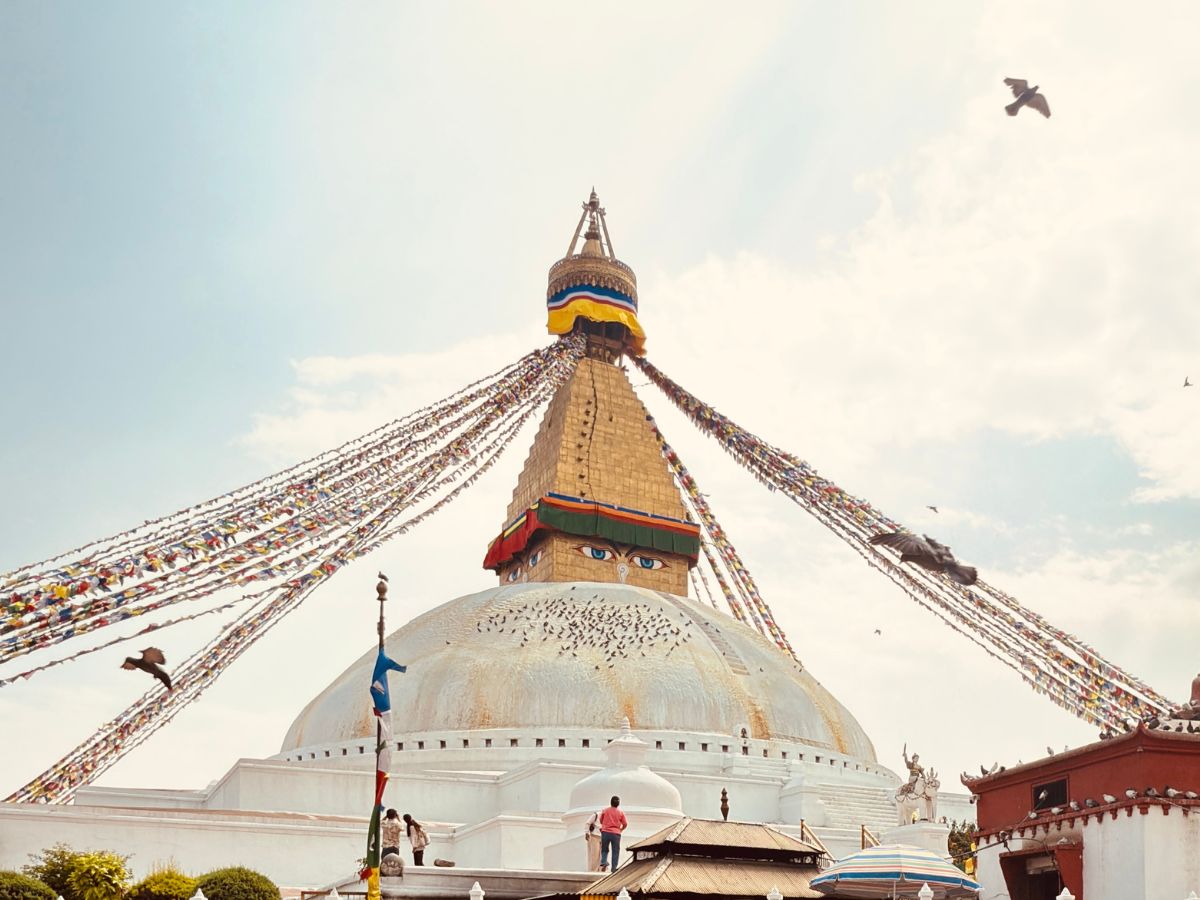
3. Boudhanath Stupa (Buddhist Temple)

4. Pashupatinath Temple (Hindu Temple)

In the late afternoon, at 4:45 PM, there will be a trip briefing about the Langtang Valley trek. You will meet your trek leader/guide and receive the company trek/duffel bag. This includes the arrangement of your sleeping bag and down jacket, both provided in the trip package. You will spend the night in Kathmandu.

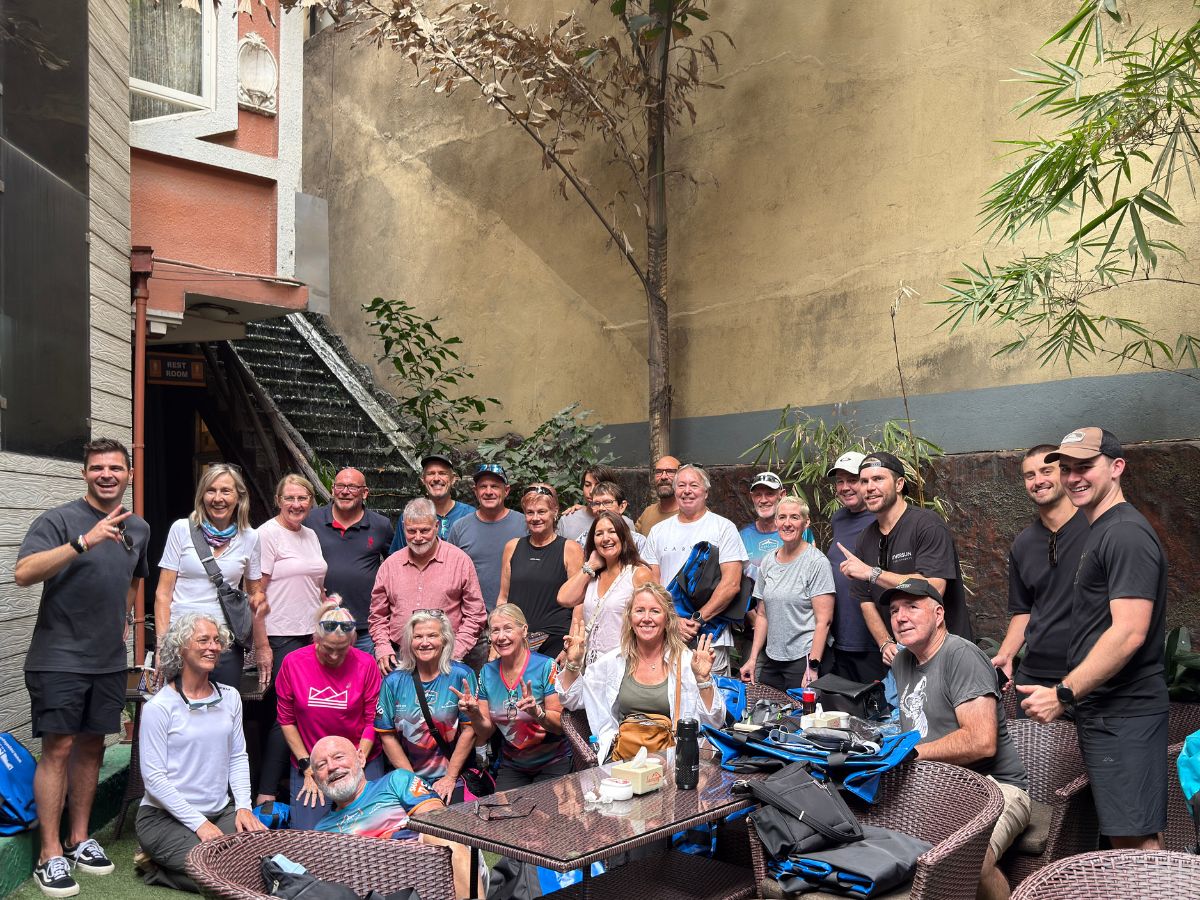
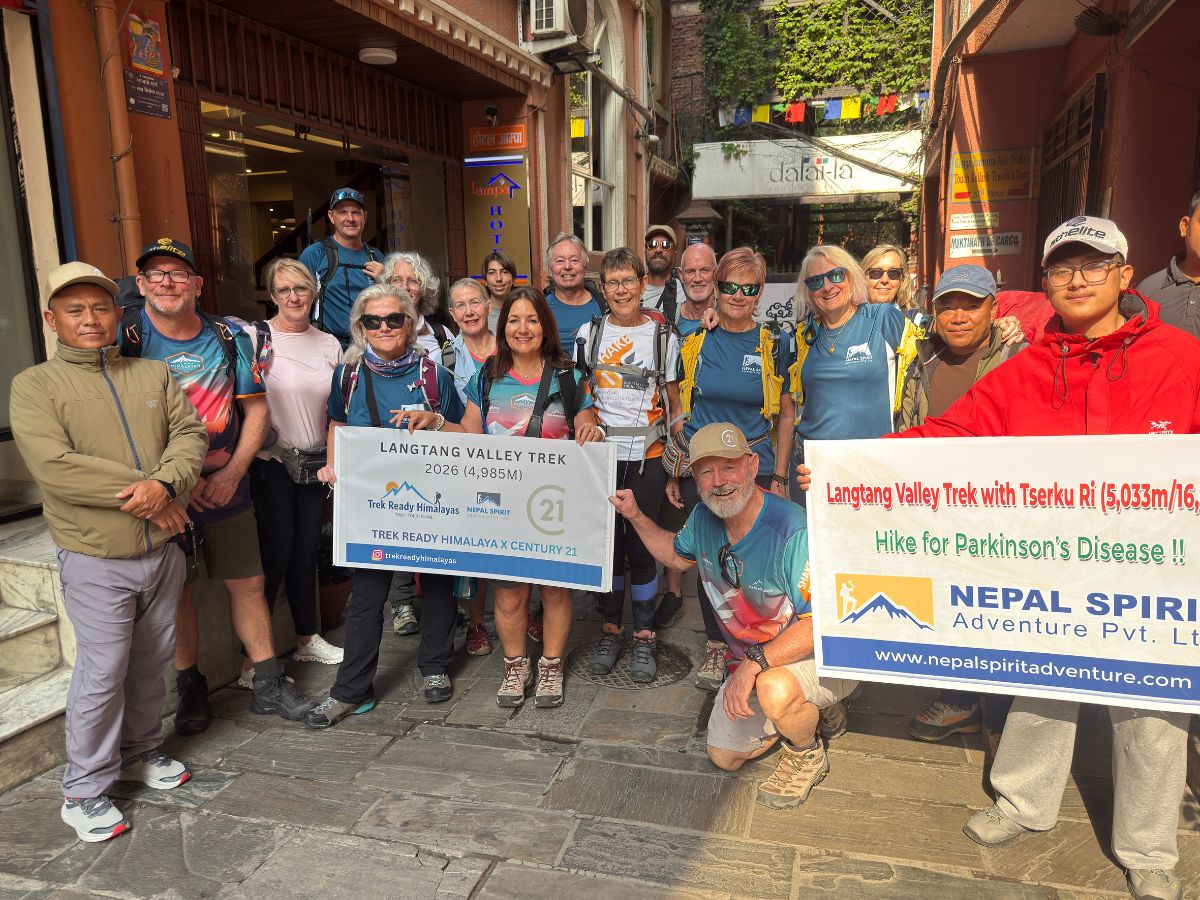
Our team preparing together before the trek beginsA peaceful visit to Boudhanath Stupa
Day03

From Kathmandu to Syabrubesi by Bus Approx. 6-7hrs,122km

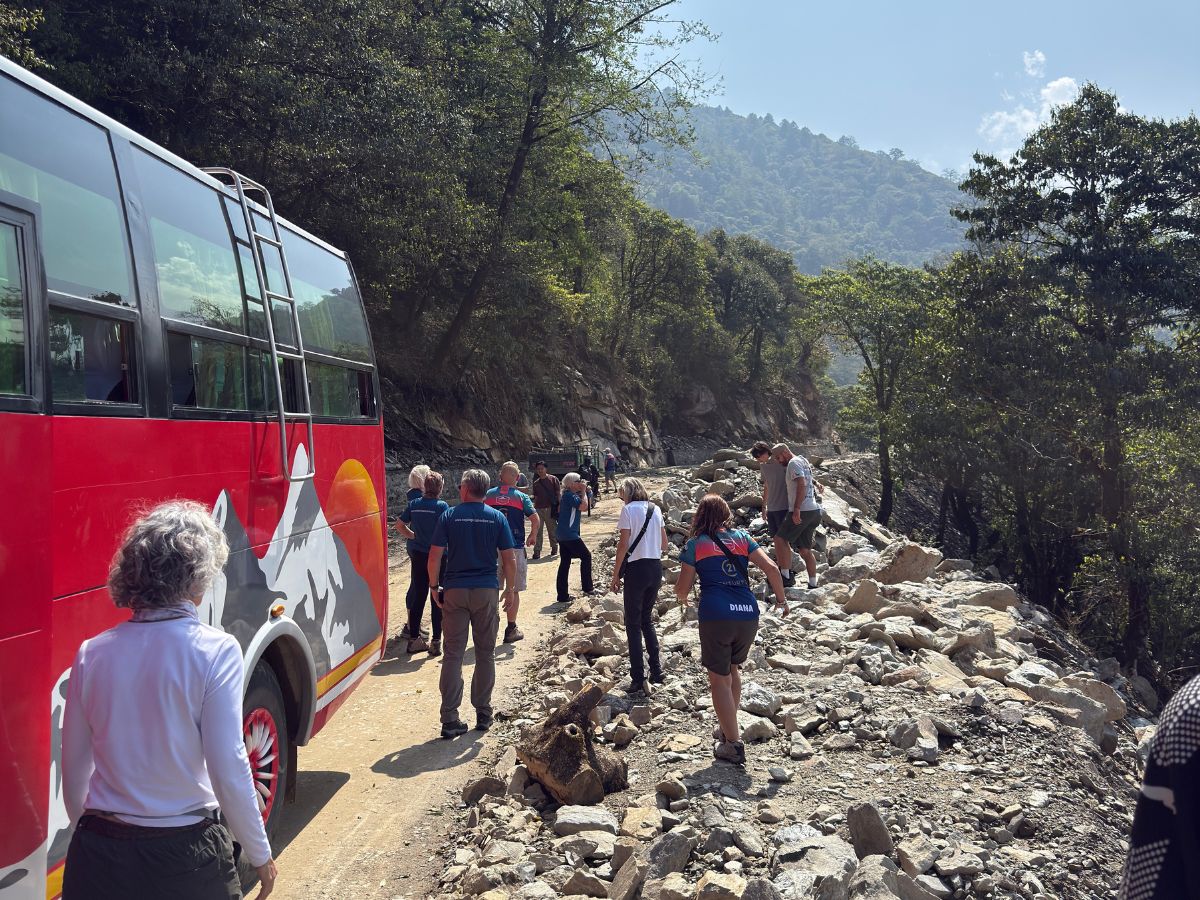
Embark on a marvelous journey to Langtang Valley with an early morning scenic drive from Kathmandu to Syabru Besi, a Tamang village in the Rasuwa district of the Langtang area. The drive takes you north, passing through interesting towns and farmland, as you ascend towards the cooler environment above the mid-hills, leaving behind the lowland rice terraces. 

Upon reaching the entrance of Langtang National Park in Dhunche (1,965 m), a major town in the Langtang area, you will make a brief stop before continuing downhill to our first overnight destination at Syabru Besi village, a remote location with cozy lodges.

The standard service includes transportation by bus, lunch, dinner, and lodging.

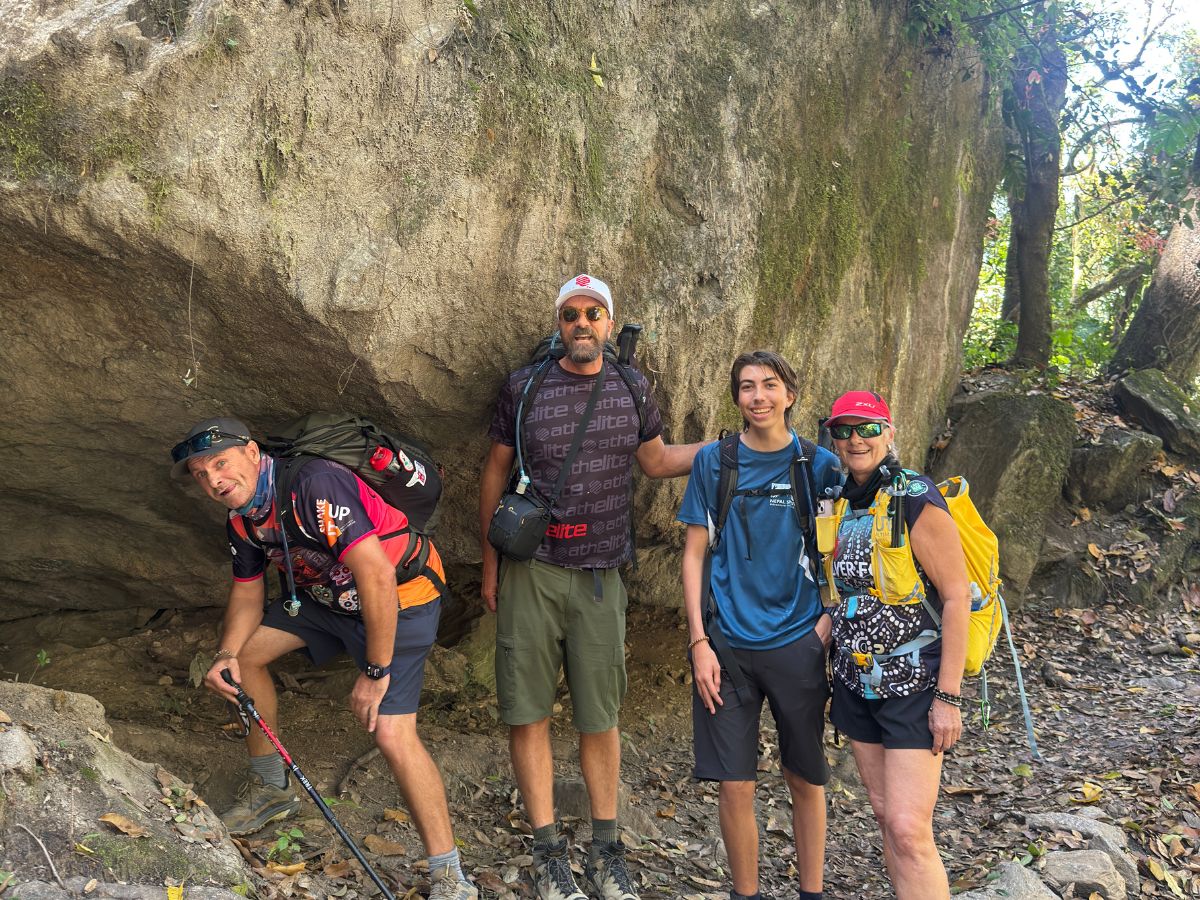
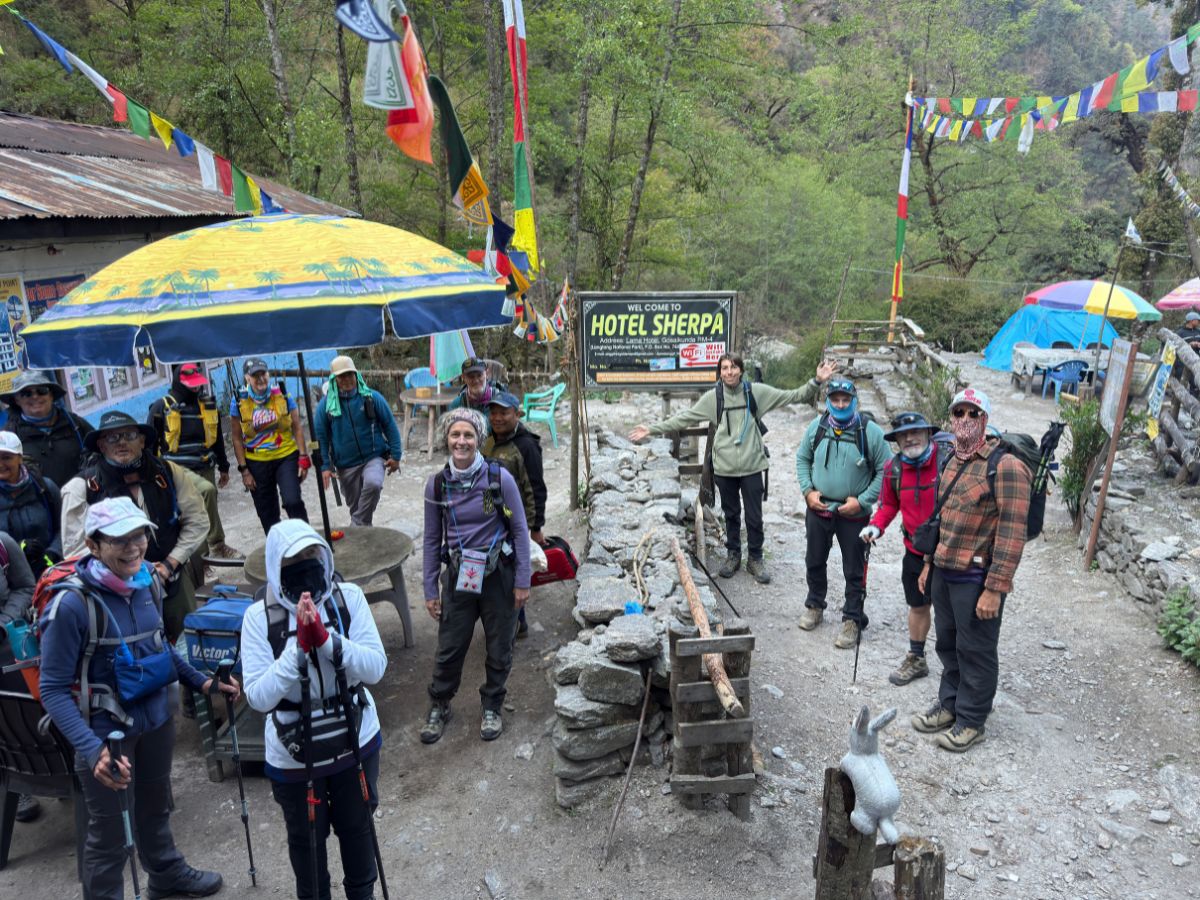
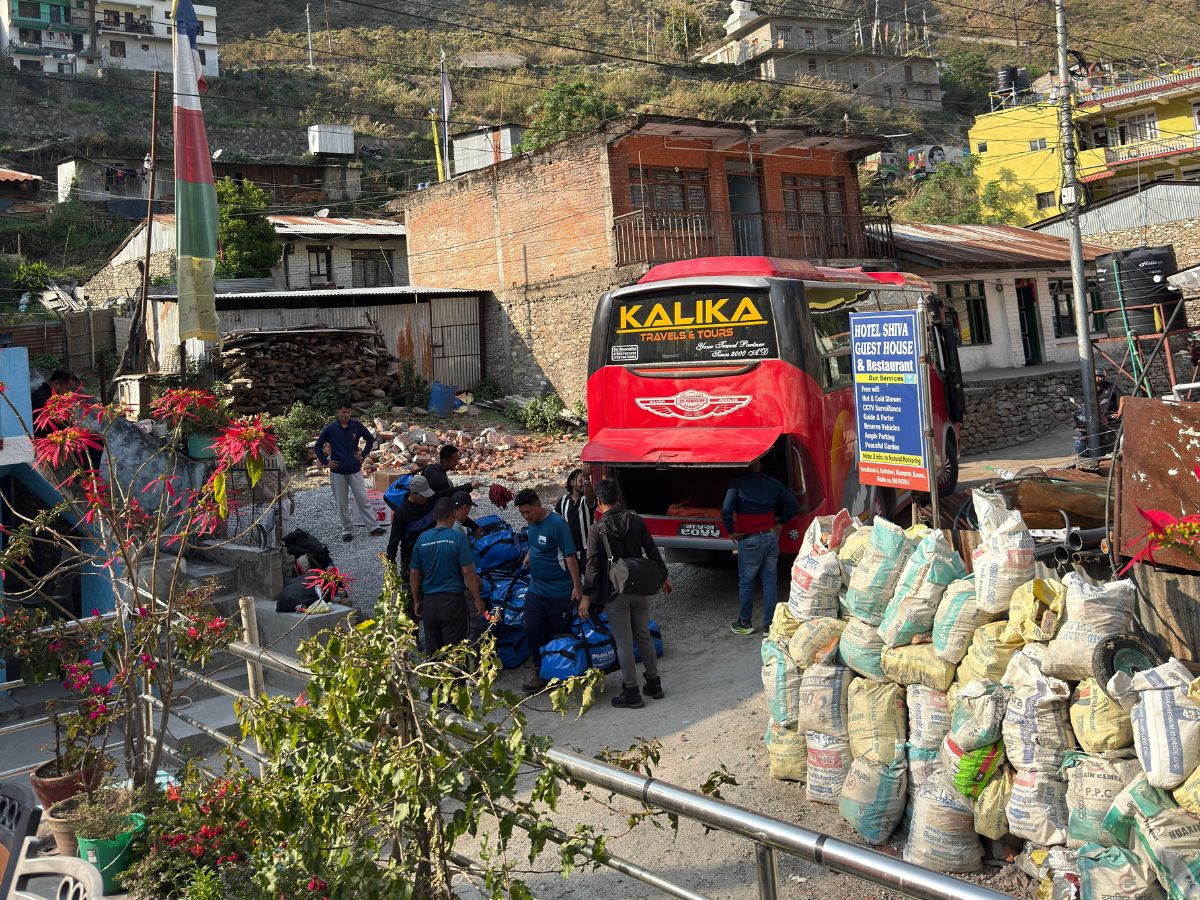
Trekkers taking a short break to enjoy the view on the way to Syabrubesi.Trekkers gathered for a photo before beginning their journey.
Day04

Syabru to Lama Hotel Approx. 5 Trek, 11-12km

The first day of our trek begins with a climb that lasts a few hours, followed by a gradual walk through terraced farms and scattered villages. As we continue, we reach a riverside where the trail from Thulo Syabru meets several teahouses and lodges. After a short rest, we will walk uphill through serene forested areas filled with tall rhododendron, oak, and pine trees. This path leads us into a river gorge as we follow the Trisuli River upstream to the Lama Hotel, where we will stop for the night.

The standard service includes breakfast, lunch, dinner, and lodge accommodations.

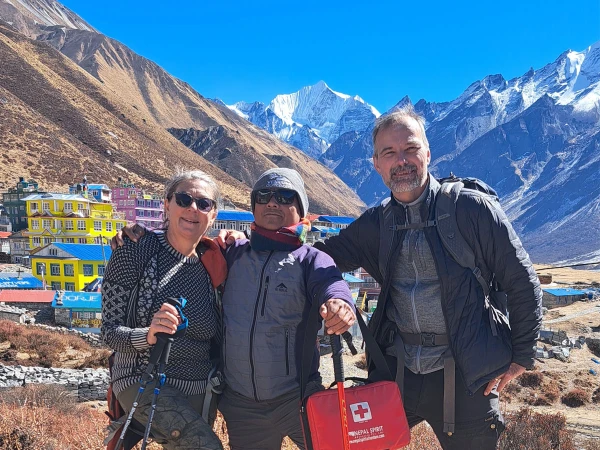
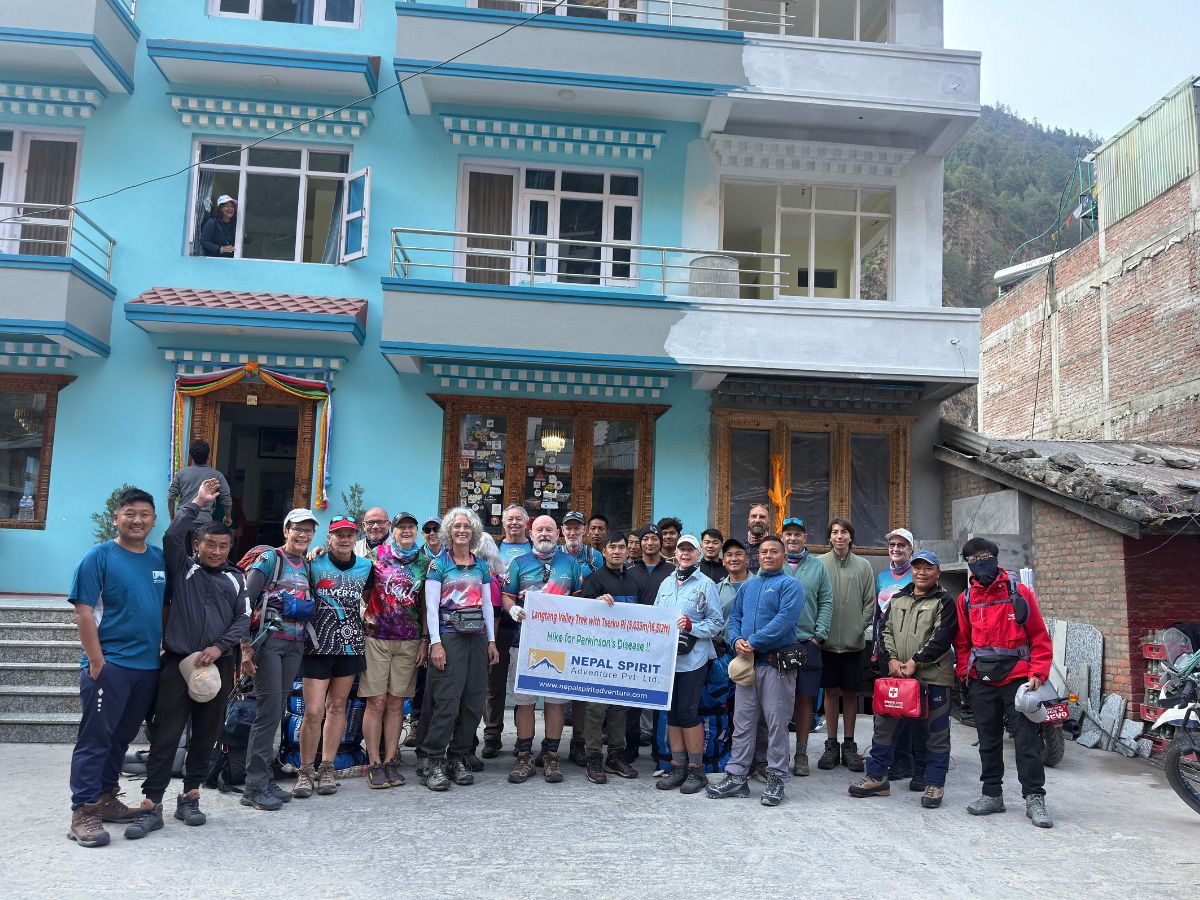
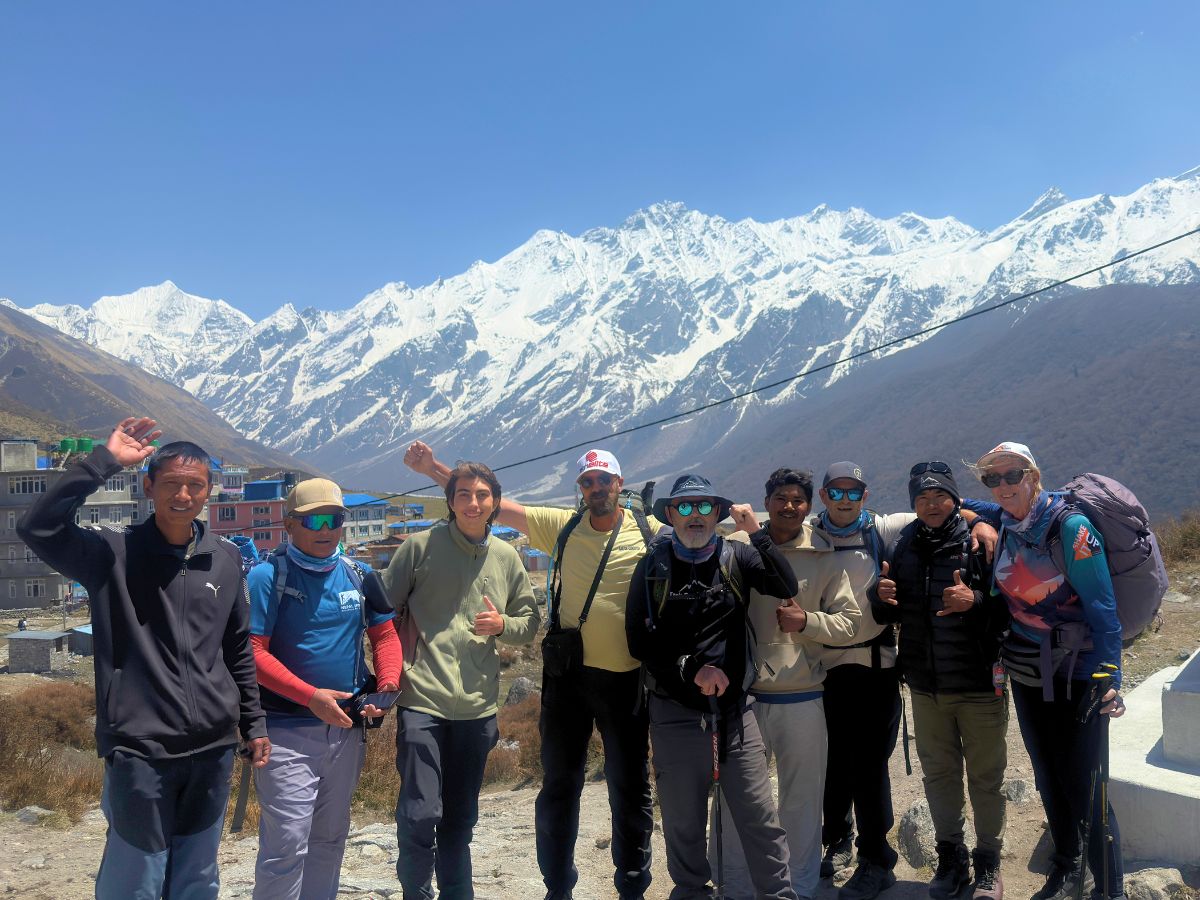
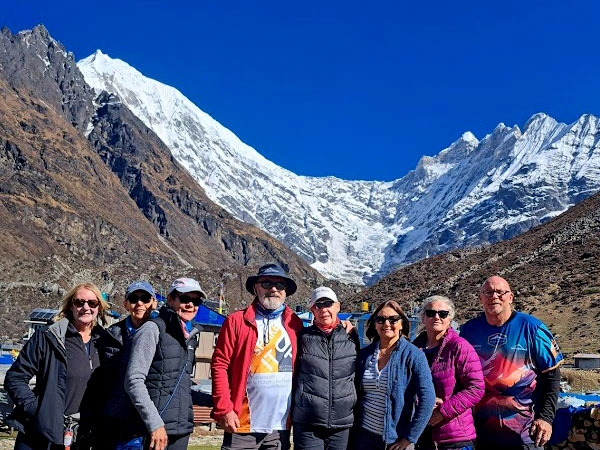
Scenic trekking route surrounded by nature on the way to BambooA team of trekkers smiling for a group photo in Syabrubesi, Nepal.
Day05

Trek to Langtang Village, Approx. 6hrs 13-14km

After a pleasant morning accompanied by the sound of the flowing river, the trek leads into a river gorge surrounded by dense woodlands. Along the way, you will pass a few small settlements and farms. The midday walk takes you to Ghoretabla, which means "Horse-Stable" in Nepali. After a nice break or lunch stop, the afternoon trek continues towards our overnight destination at Langtang Village, requiring a few more hours of moderate walking from Ghoretabla.

Langtang Village is a moderately sized settlement inhabited by the Bhotia and Tamang peoples, who have been the natives of the Langtang region for hundreds of years. The surrounding villages were devastated by avalanches as a result of the significant earthquakes on April 25 and May 12, 2015, but they are slowly returning to normal life.

Standard services include breakfast, lunch, dinner, and lodge accommodations.

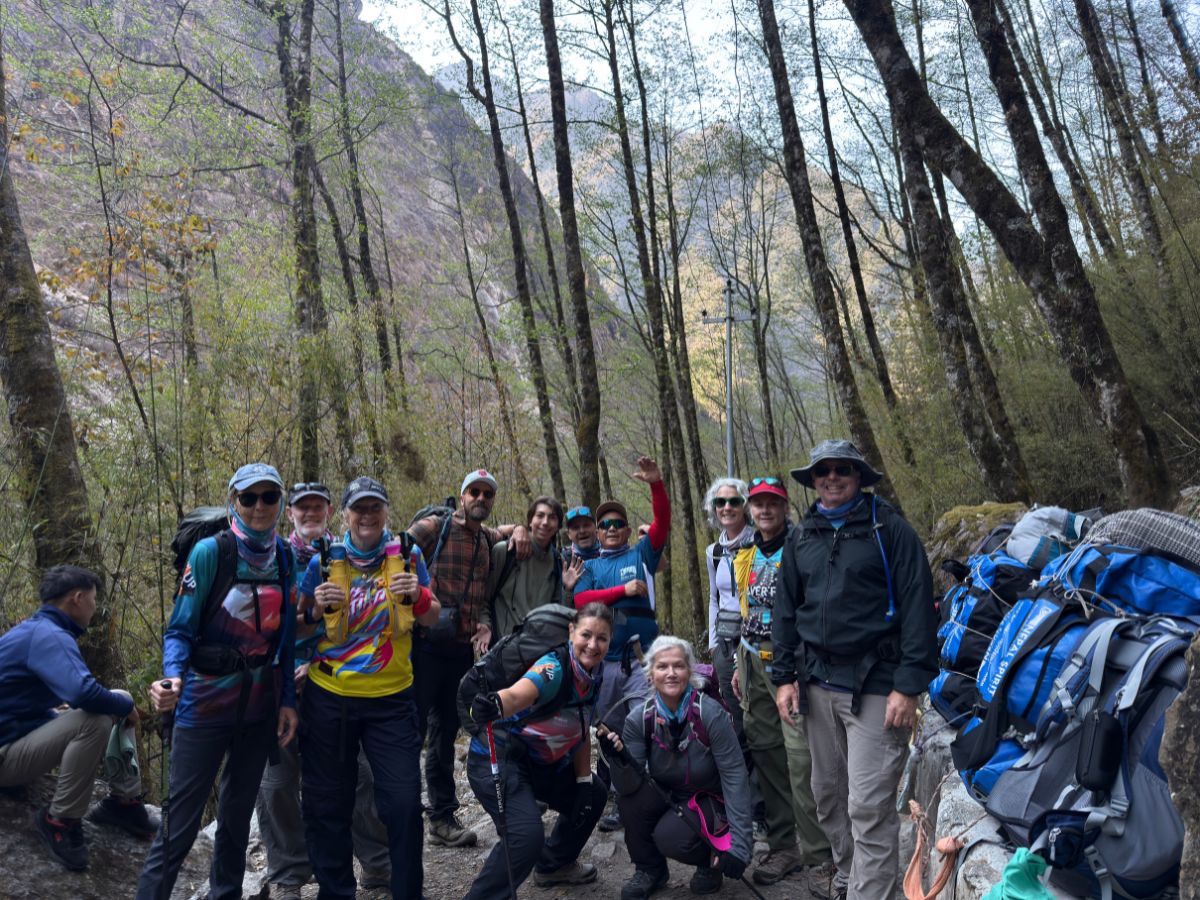
A scenic group photo taken on the journey to Langtang VillageHikers preparing for the trek with stretching at Lama Hotel
Day06

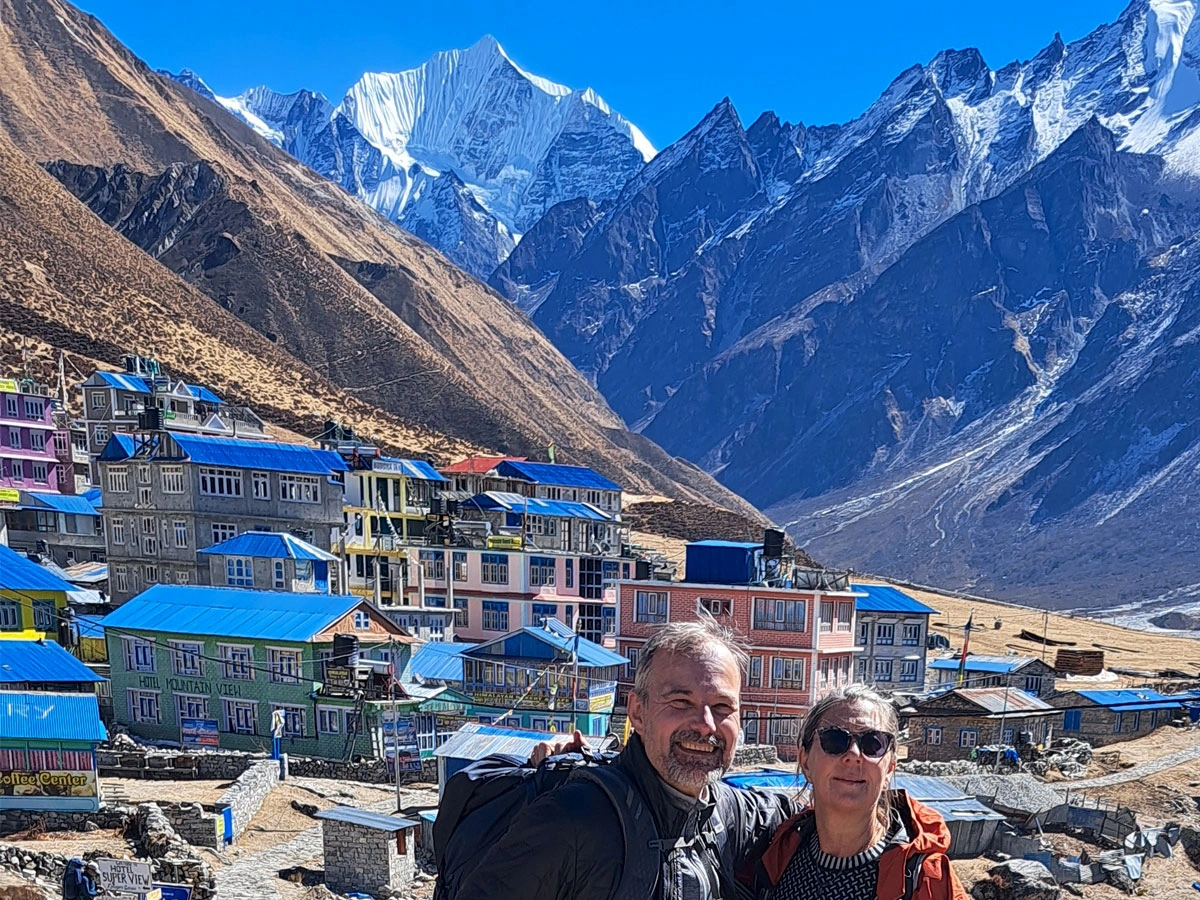
Approx. 4 hours trek to Kyanjin Gompa, 7km

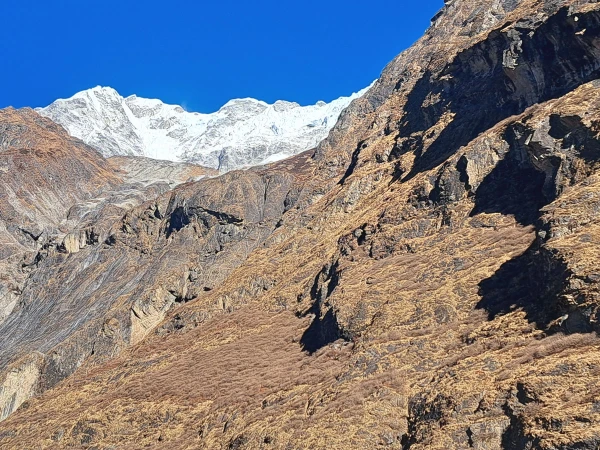
Today's trek to Kyanjin Gompa will take just a few hours. The walk begins with a short, steep climb after leaving the tree line and the river gorge. As you ascend, you will encounter short bushes of azalea (also known as bush rhododendron), juniper, and prickly barberry. After this climb, the trail opens into a wide path along the glacial valley, offering splendid views of the snow-capped mountains, including Dorji Lakpa, Langtang Lirung, Tserko Ri, Langshisa, and Naya Kanga (or Ganja La Peak).

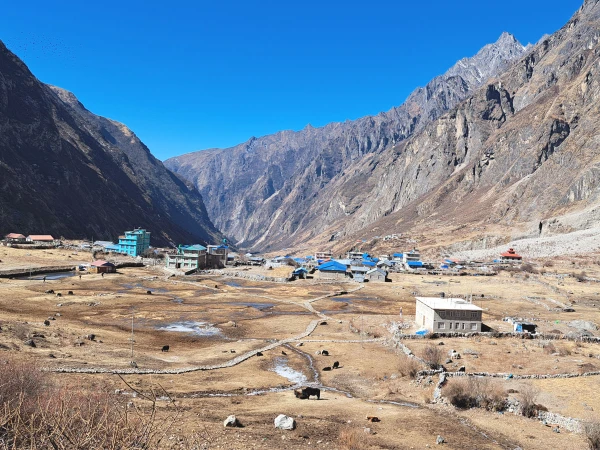
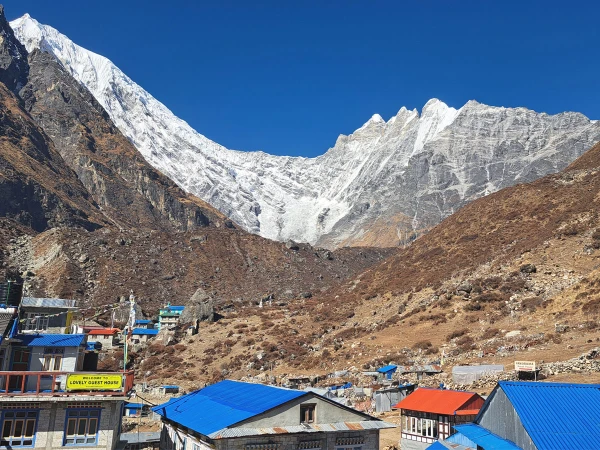
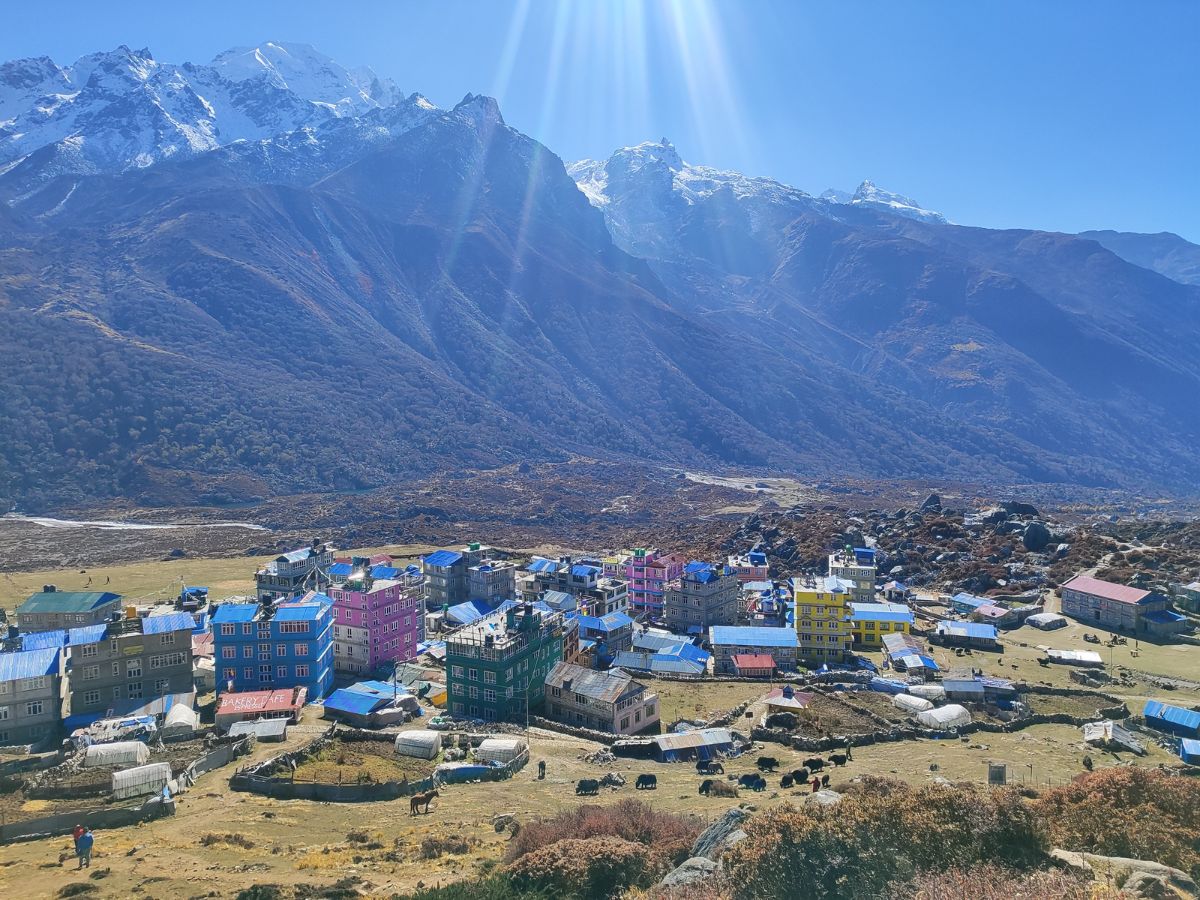
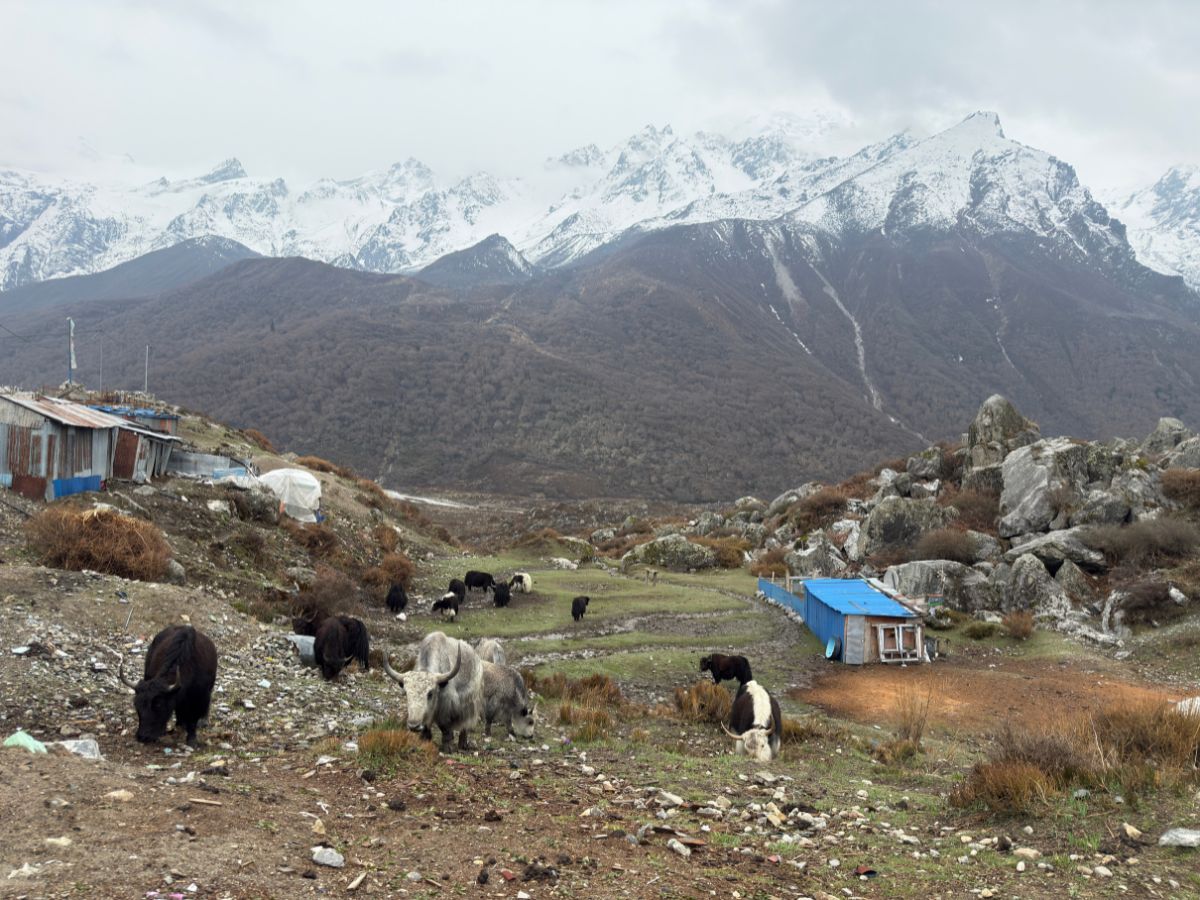
As you reach Kyanjin Gompa, you'll discover a beautiful area with a wide valley and stunning views of the Langtang Lirung glacier and nearby icefalls, located just next to the lodges. Kyanjin is home to an old monastery situated on a rocky moraine ridge. The Langtang Valley features extensive grazing areas for yaks and is also known for its Yak Cheese Factory, established over three decades ago with Swiss assistance.

The standard service includes breakfast, lunch, dinner, and lodge accommodations.

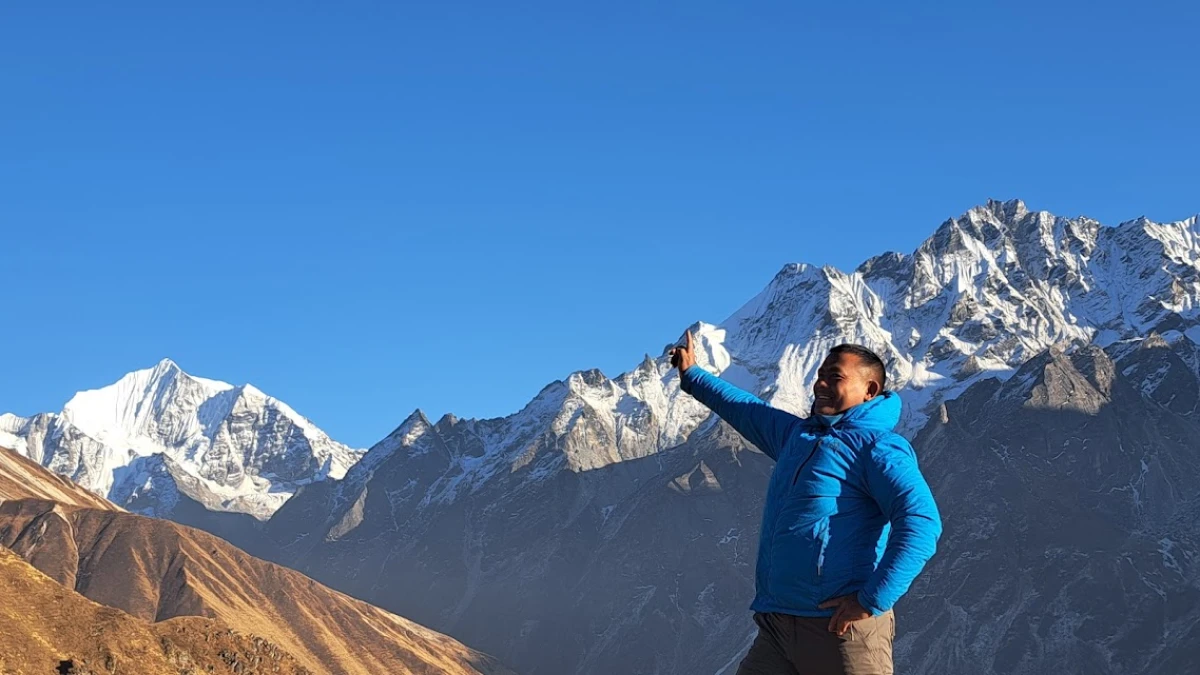
View of Kyanjin Gompa with surrounding Himalayan mountainsArriving at Kyanjin Gompa, the heart of Langtang Valley
Day07

Climb Tserku Ri (5,033m), Approx. 7hrs Trek, 10-11km

Important Day of the Langtang Valley Trek

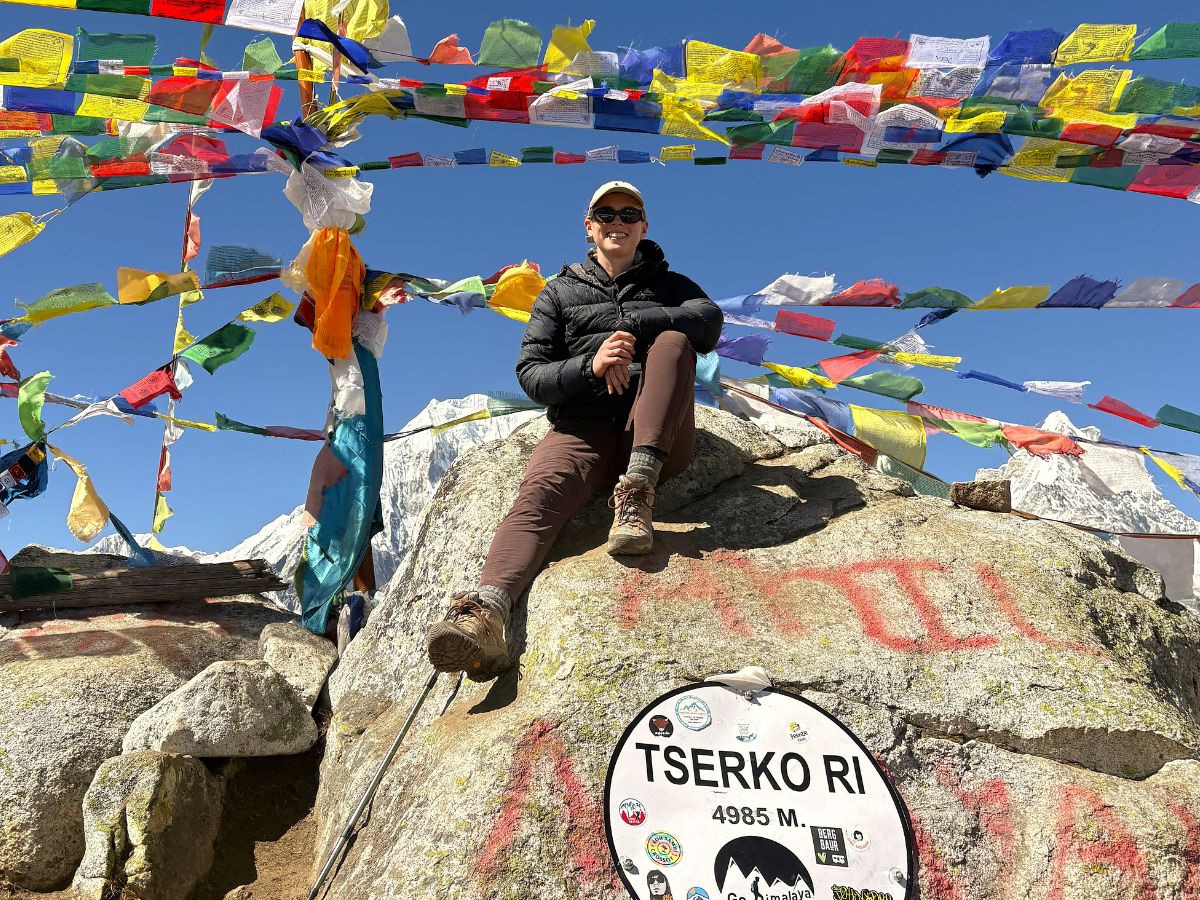
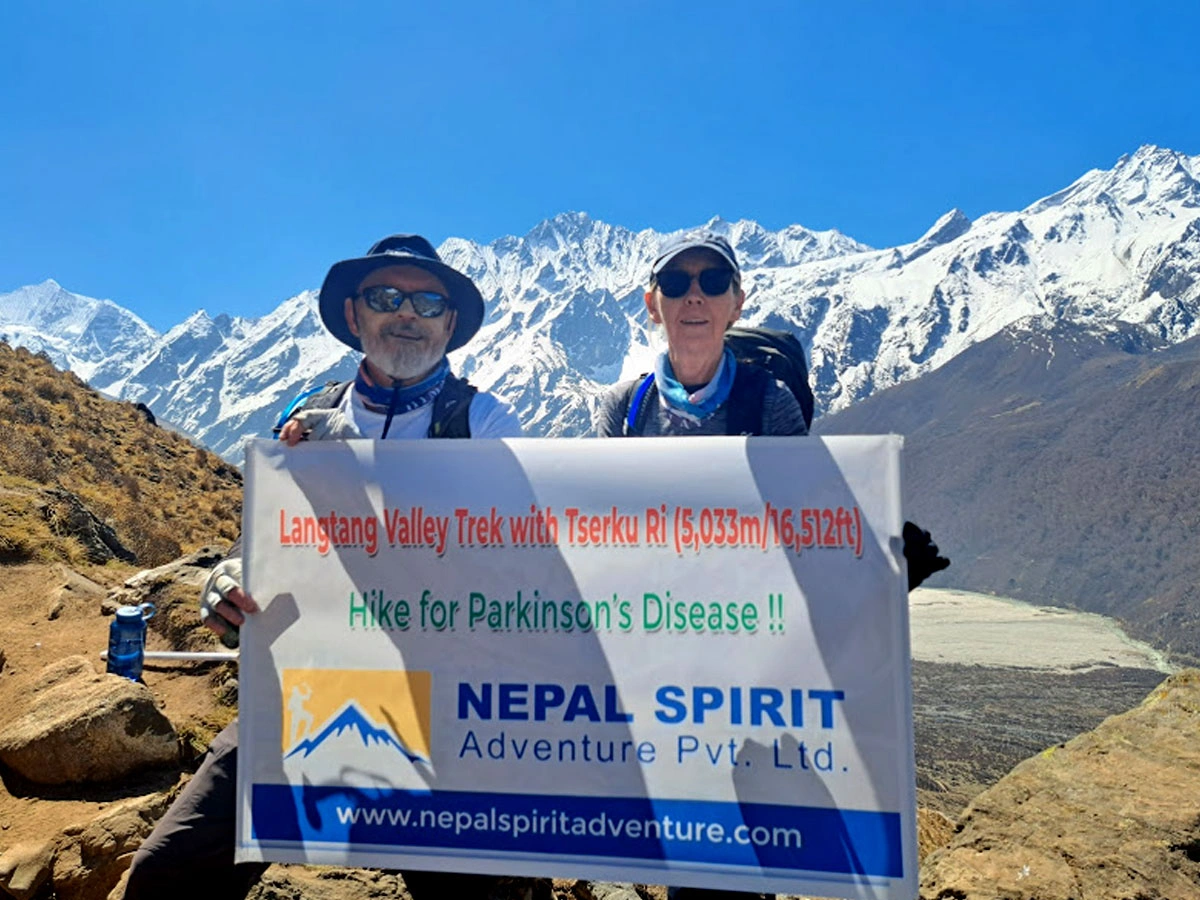
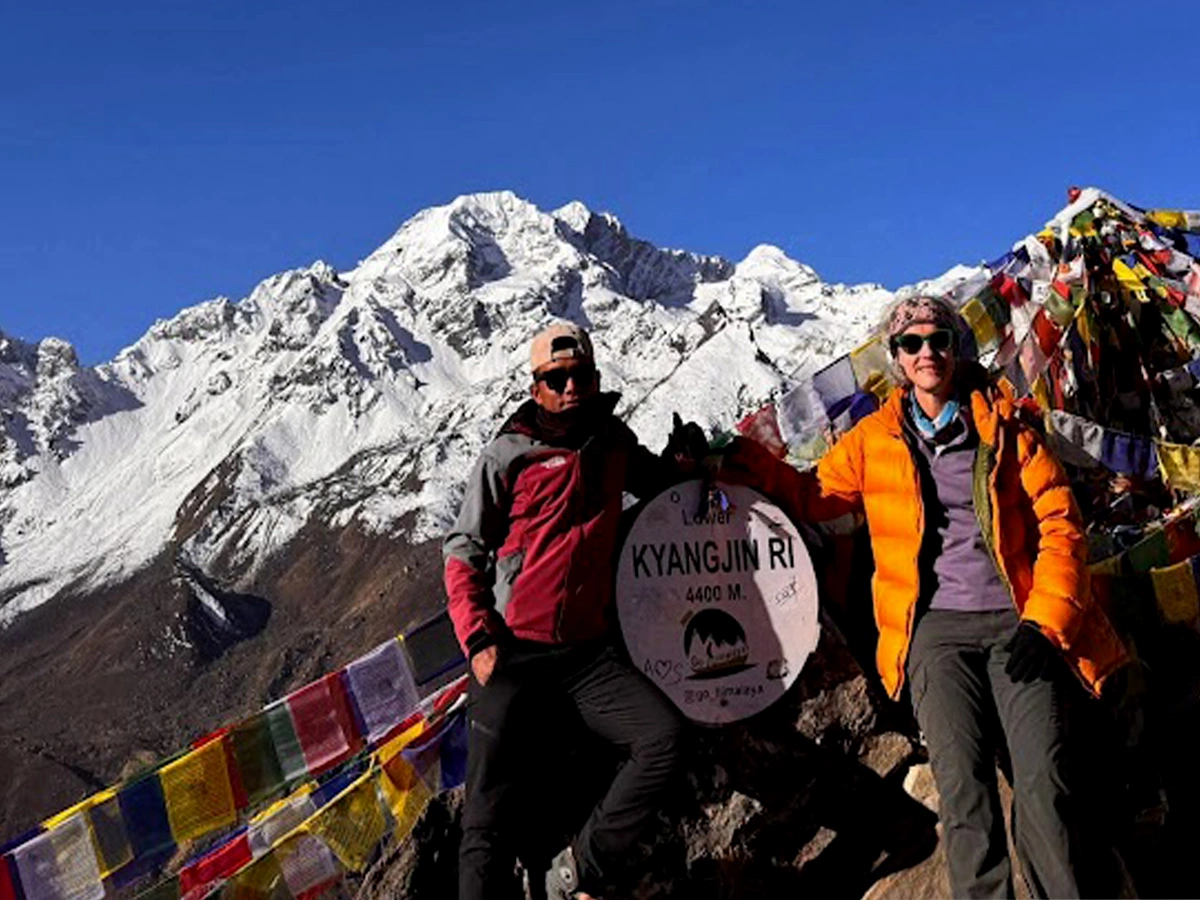
After waking up early in the morning, you’ll ascend to Tserko Ri (5,033 m), the highest point accessible from Kyangjin Gompa. This challenging hike takes you to an elevation where altitude sickness can become a concern. It’s important to take steady steps, breathe deeply, and stay hydrated throughout the trek, from the top, which offers 360% stunning mountain views.

Our trail will take us past the Langtang Lirung Glacier, providing fantastic views of the towering Langtang Lirung peak. At the summit, you’ll be treated to stunning panoramic views of Langshisa Ri, Kimsung, Changbu, Langtang Lirung, Dorje Lakpa, and Yala peaks.

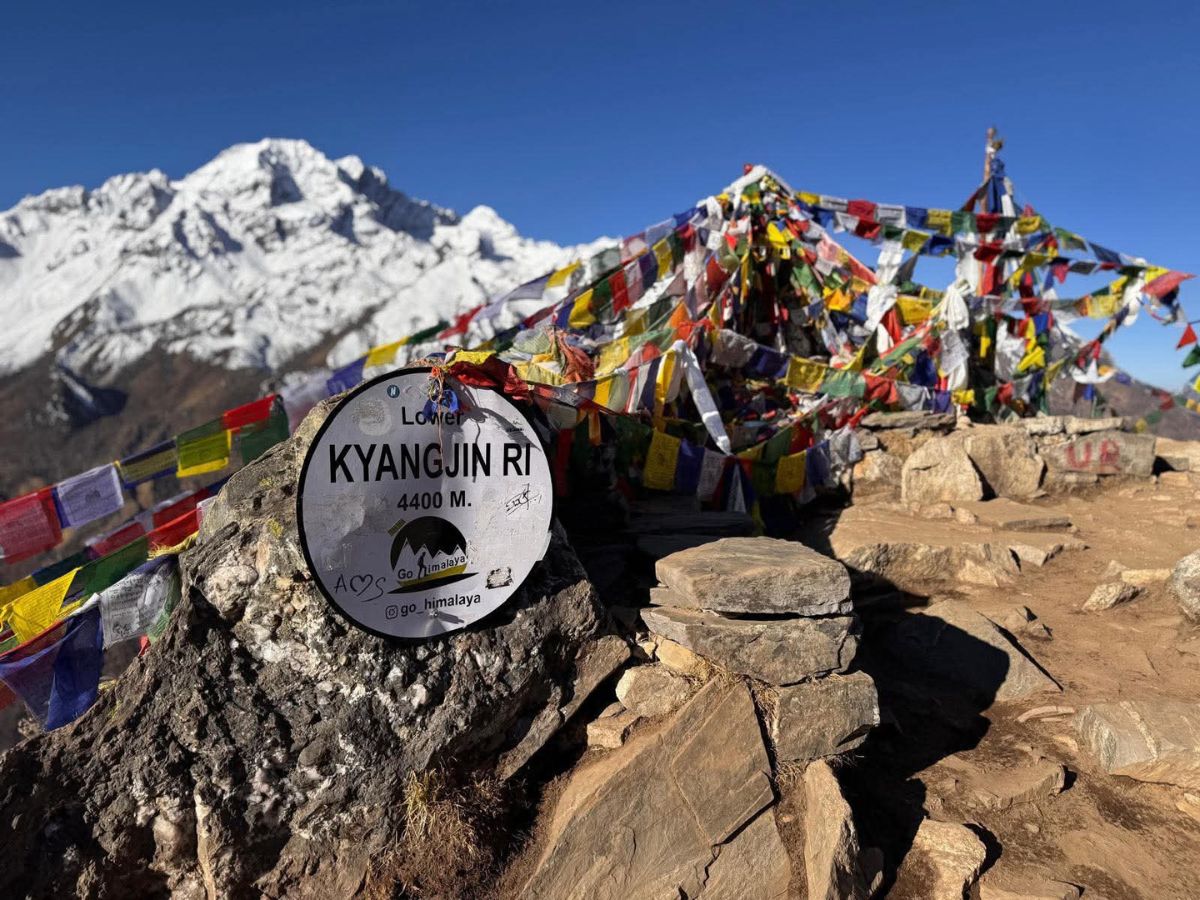
If you prefer a gentle option, you can hike to Kyangjin Ri or Langshisa Kharka instead. These alternatives offer beautiful scenery without the extreme altitude gain. The route will lead you past yak pastures and grassy meadows, all surrounded by soaring white peaks. At the end of your hike, you can take some pictures, enjoy the views, and then return to the village.

Mountain Views:

We can see the panoramic views of Chimsedang Lekh and Kangjal Himal, a ridge of peaks to the south of the valley. You'll also have stunning views of several significant mountains, including Naya Kanga (5,844m), Ganchenpo (6,387m), Dorje Lakpa (6,990m), Pemthang Karpo Ri (6,830m), and Langtang Lirung (7,245m). To the north, across the border in Tibet, stands the massive Shishapangma (8,046m), which is the 14th-highest mountain in the world.

The standard service includes breakfast, lunch, dinner, and lodge accommodations.

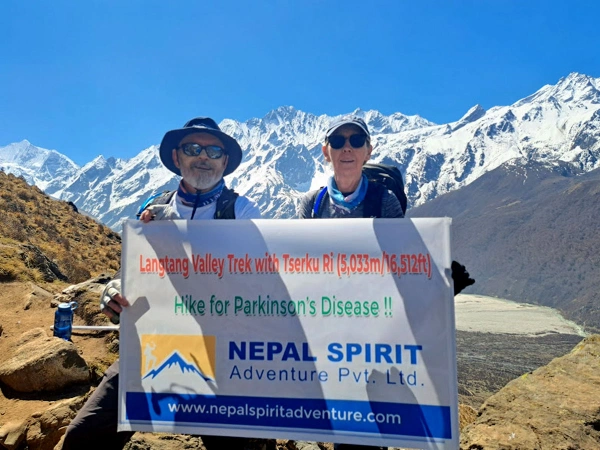
Scenic view from Lower Kyanjin Ri with Himalayan mountains.Trekker at Tserko Ri summit overlooking the mountain range.
Day08

Kyanjing Gompa to Lama Hotel Approx.6/7hrs Trek, 20km

Long day trek, easy walking from a high-altitude place to a low-altitude place. Approximately a 21-kilometer trek from Kyanjin Gompa to Lama Hotel takes about 6-7 hours. Mountain views and the landscape are spectacular, and the trek follows back through the bank of the Langtang River.

After a delightful experience at Kyanjing Gompa in the Langtang Valley, the day begins with an extended trek that is significantly easier due to the mostly downhill route. The journey takes you through Langtang Village and Ghodatabela, following the path alongside the Langtang Khola. Enjoy pleasant walks through the refreshing forest before arriving back at the Lama Hotel for an overnight stay.

Standard services include breakfast, lunch, dinner, and lodge accommodations.

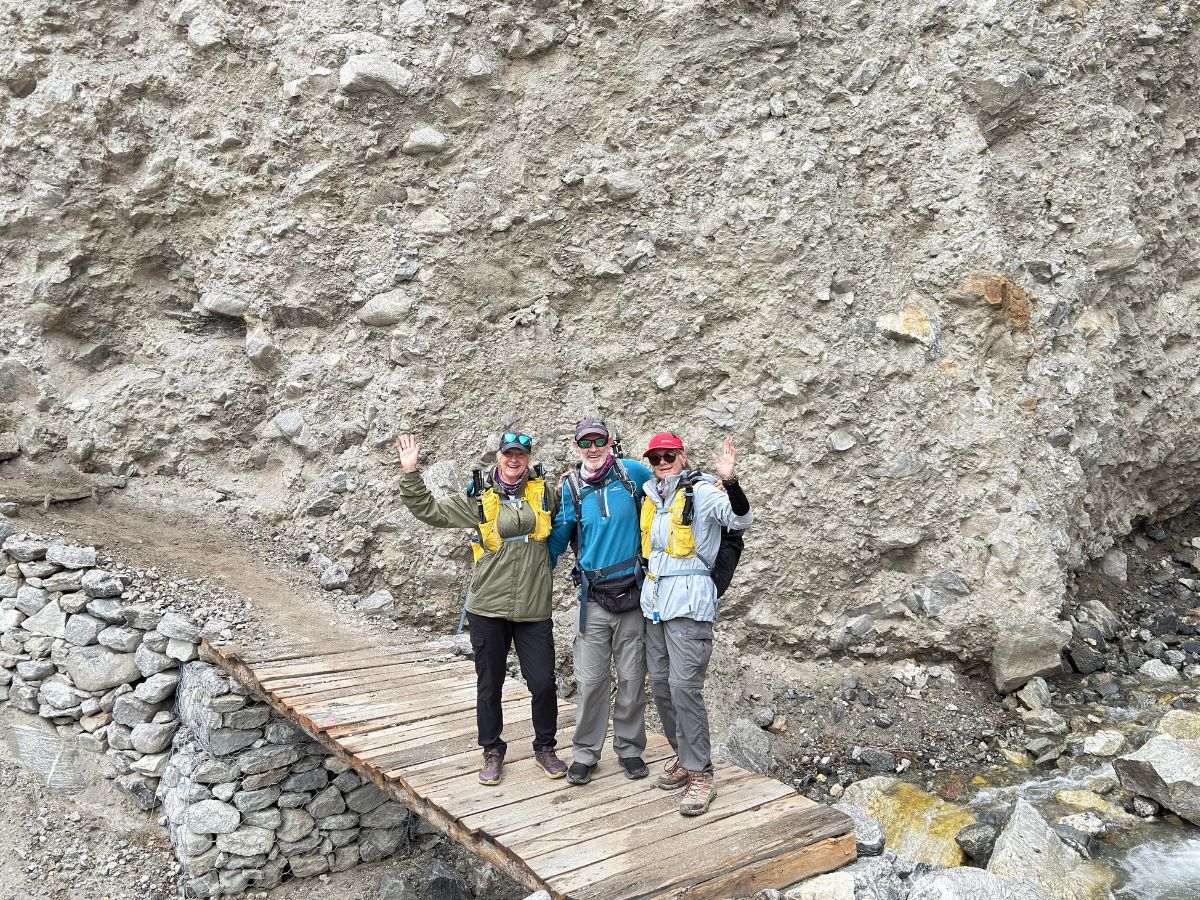
Photo moment on a wooden bridge in the mountains.Yak grazing in Kyanjin Gompa village.
Day09

Trek back to Syabrubeshi , Approx. 6hrs, 11km

Your final day trek of Langtang Valley:

On the final day of the trek, you will journey down to Syabrubesi, the starting and ending point of the Langtang Valley Trek. It will be a long day of descent, passing through the small villages of Bamboo, Pahiro, and Domen, until you arrive back at the place where your mountain adventure began.

Your trekking journey through this remarkable Langtang Valley concludes here. After this trek, you will always be able to cherish memories of red pandas, ancient monasteries, and the towering Langtang Himal overnight in a hotel.

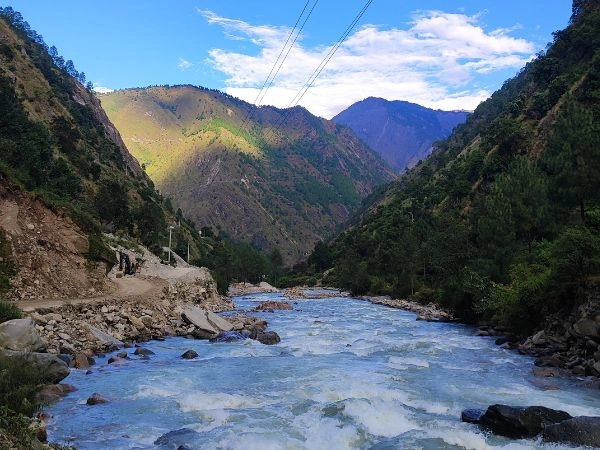
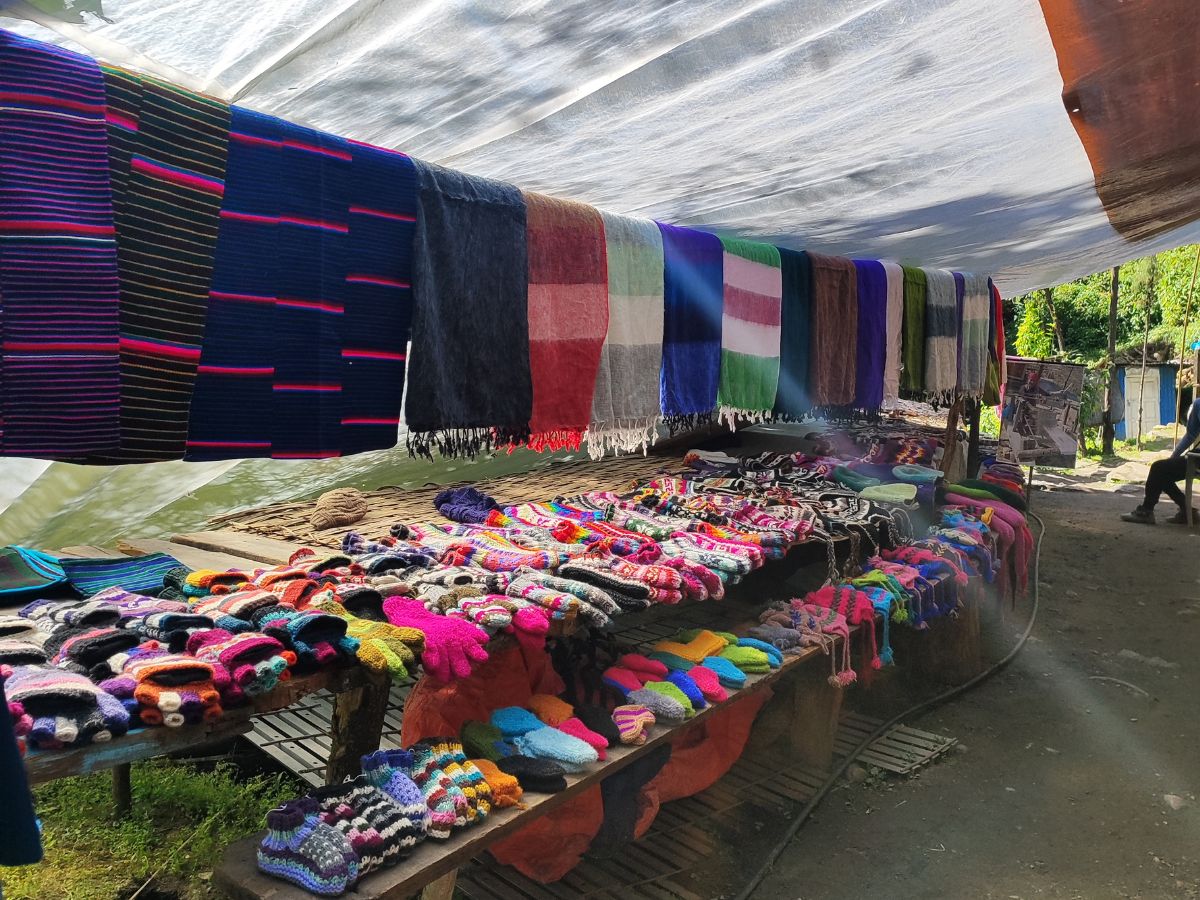
Supporting local vendors by purchasing souvenirs, hats, and glovesLangtang Khola river flowing through the valley.
Day10

Bus Drive back to Kathmandu 6/7hrs -122 km

Approximately 122 kilometers (6-7 hours) by bus back to Kathmandu

The following morning, after enjoying your final breakfast in the hills of the Langtang region, an exciting drive begins as we ascend towards Dhunche town. This journey continues along a winding descent, leading you to the warmer environment of Trisuli Bazaar, before finally returning to Kathmandu after your remarkable trekking experience in the Langtang Valley. A transfer to your hotel will be arranged upon your arrival.

For those interested in extending their adventure, we can discuss options such as the Tamang Heritage Trail or the Gosainkunda Lake Trek during the journey.

Note: Do you prefer traveling by private vehicle? A private vehicle is available upon request.

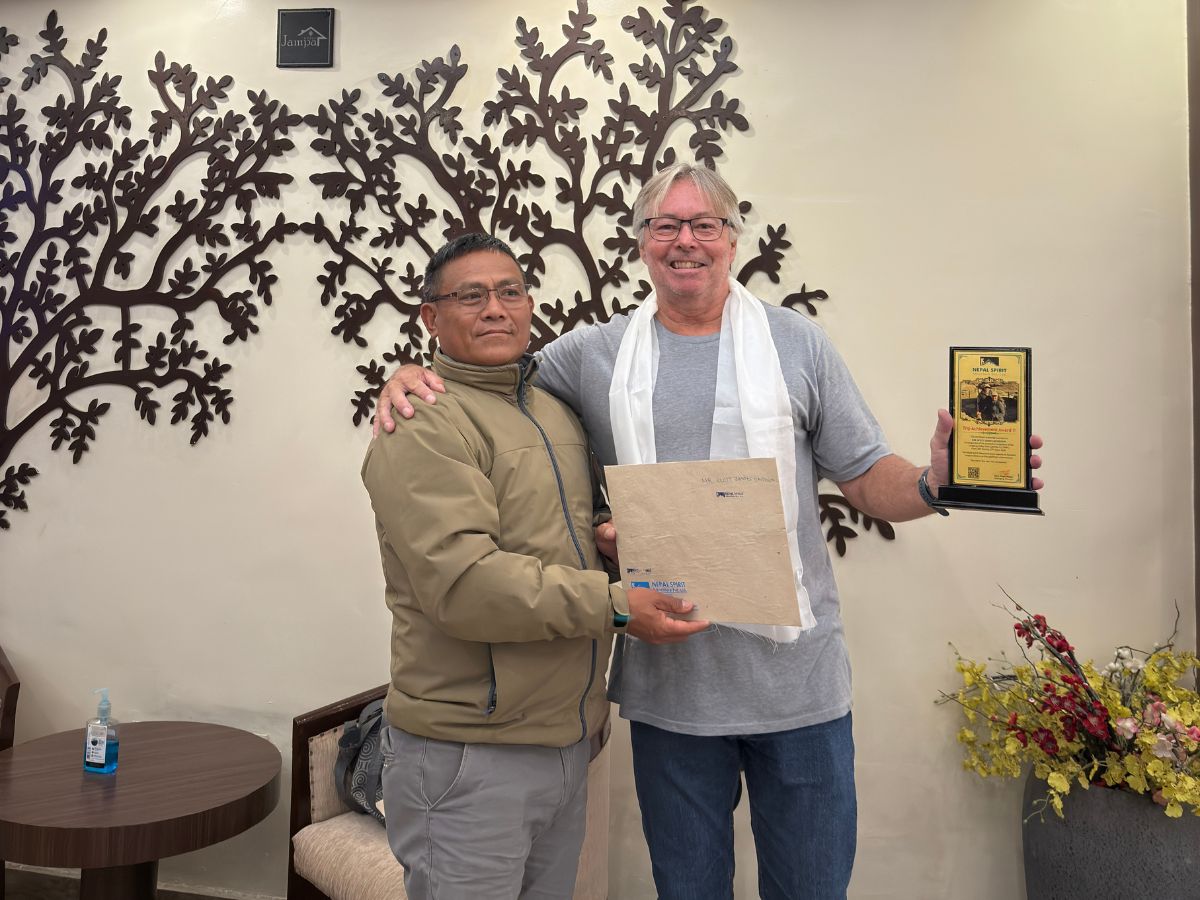
Nepal Spirit AdventureNepal Spirit Adventure
Day11

Departure ( End of Trek)

Transfer to Tribhuvan International Airport for your departure. This day marks the end of your Langtang Valley Trek. After enjoying a unique experience in Nepal, it’s time to say goodbye to the friends and acquaintances you have made during this journey. Our driver will drop you off at Kathmandu Airport (TIA) a few hours before your flight.

If you’re interested in experiencing more Himalayan adventures, Bhutan Tour and Tour to Tibet, please get in touch with us. We will be more than happy to assist you in planning another unforgettable trip.

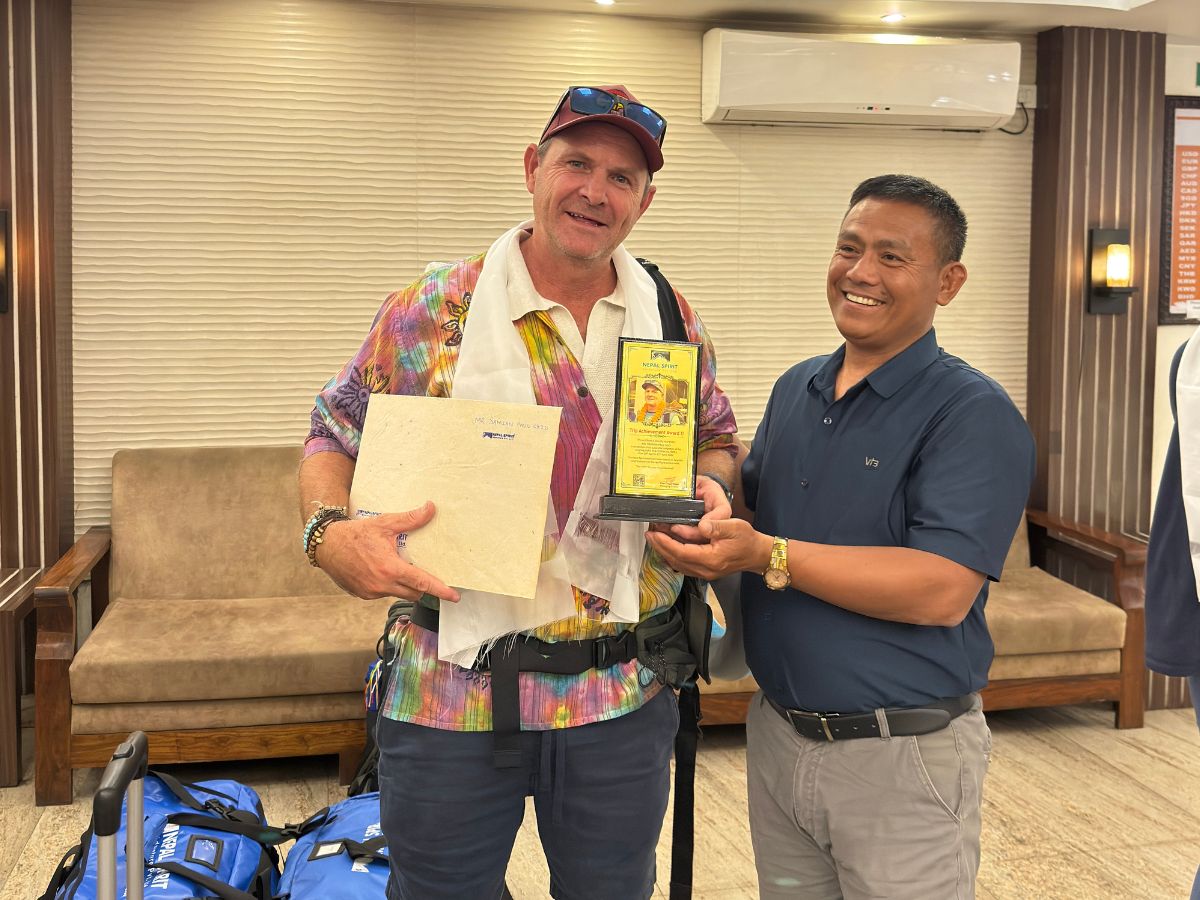
Nepal Spirit Adventurenepal spirit adventure
Still Confuse?
No worries — we’re here to help. Whether you have questions or just need a bit more clarity, feel free to reach out. Our team is ready to guide you every step of the way.

Cost Details

Includes

Accommodation in Kathmandu:

  • Three nights' hotel with breakfast included (two nights before and one night after the trek)
  • We provide the hotel's best location in the market, restaurant, and monuments. 

Transportation:

  • Airport arrival and departure by private vehicle (Tribhuvan Airport, Kathmandu)
  • Kathmandu to Syabrubensi by bus (trek starts)
  • Syabrubensi to Kathmandu by bus (trek ends here)

Langtang Valley Trek Permit:

  • Langtang Valley trek permit
  • TIMS cards

Food & Accommodation:

  • Twin shared room in a guesthouse/teahouse on trek
  • 3 Meals a day (breakfast, lunch, and dinner)
  • The meals are chosen from the menu
  • Seasonable fruits
  • One cup of tea or coffee is included with breakfast each morning

Trek Guide and Porters:

  • Experience a Sherpa trek guide (trained-licensed)
  • Strong, friendly porters (one porter for two trekkers)
  • Guide and porter food, accommodation, transportation, meals, salary, and insurance

Provided Trek Equipment:

  • Down sleeping bag
  • Down jacket
  • Duffel bag
  • T-shirt
  • Flesh Hat

NOTE: Sleeping bag, down jacket, and duffel bag are to be returned after the trek

First Aid and Customer Service:

  • Provided general medicine as first aid
  • The first aid is staff and guests (carried by the trek guide)
  • You can ask any questions before and after trip booking
  • Every day, PH calls a meeting with the trek guide (To know the trek condition)

Service Charge:

  • Government tax
  • Applicable company and related taxes
  • Company service charge

Excludes

International Airfare & Nepal Visa:

  1. Your international flight to Kathmandu
  2. Nepal visa (you can get on arrival)

Personal Trek Equipment & Extra Expenses:

  1. Personal trek equipment for Langtang Valley
  2. Travel insurance and rescue operation coverage
  3. Drinks beverages: Alcoholic and non-alcoholic drinks, including mineral water, Sprite, Coca-Cola, juice, extra tea, coffee, beer, whiskey, chocolate biscuits, and more.
  4. An extra night in a hotel in Kathmandu after the trek
  5. Tipping 

Private Transportation:

For travelers seeking greater comfort and flexibility, private transportation between Kathmandu and Syabrubesi can be arranged at an additional cost. This option offers a more convenient and personalized travel experience compared to public transportation.

Our transportation team will be happy to assist you with the arrangements and provide detailed information, including the most competitive and reasonable rates for the service.

Select Departure Dates
Jul 2026
Aug 2026
Sep 2026
Oct 2026
Nov 2026
Dec 2026
Jan 2027
Feb 2027
Mar 2027
Apr 2027
May 2027
Jun 2027
Jul 2027
Aug 2027
Sep 2027
Oct 2027
Nov 2027
Dec 2027
Departure Date
Starts: Jul 02, 2026Ends: Jul 12, 2026
Status
Guaranteed
Confirm
Price
US$699
Departure Date
Starts: Jul 11, 2026Ends: Jul 21, 2026
Status
Guaranteed
Confirm
Price
US$699
Departure Date
Starts: Jul 17, 2026Ends: Jul 27, 2026
Status
Guaranteed
Confirm
Price
US$699

Guaranteed Departure Dates and Private Trek Arrangements

All of our published online departure dates for the Langtang Valley Trek are guaranteed to operate and begin from Kathmandu, Nepal.

If our scheduled departure dates do not match your travel plans, please feel free to contact us. We are happy to arrange alternative departure dates that fit your preferred schedule and itinerary. Whether you would like to customize the duration of your trek or include additional hiking opportunities, such as the scenic excursion to Kyanjin Ri for panoramic mountain views, we can tailor the trip to meet your needs.

For travelers seeking greater flexibility and a more personalized experience, private treks can be organized throughout the year. Private departures allow you to travel at your own pace, choose your preferred dates, and enjoy a customized trekking experience with family, friends, or your own group.

Trek Departure Options:

  1. Guaranteed Group Departures: Fixed departure dates that are confirmed to operate.
  2. Flexible Departure Dates: Custom departure dates available upon request.
  3. Private Treks: Personalized trekking experiences available year-round.
  4. Customized Itineraries: Optional side hikes and itinerary adjustments to suit your interests and schedule.

Our team is committed to providing a trekking experience that is flexible, comfortable, and tailored to your travel preferences, ensuring an unforgettable adventure in the beautiful Langtang Valley.

Essential Information

We encourage all trekkers to review the information below carefully to ensure a safe, enjoyable, and rewarding experience in the Langtang region. The trek begins in Kathmandu, the capital city of Nepal.

Equipment Packing List for the Langtang Valley Trek

When preparing for the Langtang Valley Trek, it is important to pack according to the season, as weather conditions can vary significantly throughout the year. Different seasons require different clothing and equipment to ensure your comfort and safety during the trek.

Below is a recommended packing list of essential items for the trek. Any belongings that you do not need during the trek can be stored free of charge at the Nepal Spirit Adventure office or at your hotel in Kathmandu.

If you do not have the required trekking gear, there is no need to worry. Most trekking equipment can be purchased or rented at reasonable prices in Kathmandu upon your arrival.

Porter and Luggage Guidelines

According to our booking terms and conditions, we provide one porter for every two trekkers. The luggage weight limit is between 10 and 13 kilograms per trekker.

To make packing easier, we recommend sharing a duffel bag with your trekking partner. Nepal Spirit Adventure will provide a duffel bag for use during the trek. In addition, each trekker should carry a personal daypack to keep valuables, important documents, water, snacks, and other daily essentials easily accessible throughout the trek.

Proper preparation and packing will help ensure a comfortable and memorable trekking experience in the beautiful Langtang Valley.

Head:

  • Sun hat or scarf
  • Winter hat, an insulating hat, or a wide-brimmed hat
  • Headlight with extra batteries

Face:

  • Sunscreen
  • Sunglasses with UV protection
  • Face/body wipes

Hands:

  • Lightweight gloves
  • Heavyweight winter gloves

Body:

  • Hiking shirts
  • Long-sleeved shirt made of synthetic fiber
  • Hooded rain jacket
  • Fleece jacket
  • Lightweight cotton pants
  • T-Shirt (bring lightweight wool)
  • Polypropylene underwear
  • Down jacket (available for rent in Kathmandu)
  • Sweater
  • Waterproof jacket and pants

Footwear:

  • Hiking Boots
  • Thick wool socks (Take an extra pair of thick, light socks)
  • Sandal

Essential Gear:

  • Backpack or daypack (size depends on whether you take a porter or not)
  • Thermal bottle
  • Water purification
  • Trekking pole
  • Sleeping bag (-15 degree bag is best in the high altitude trek)
  • Toiletries (toilet paper, toothpaste, toothbrush)

Personal Accessories:

  • Money
  • Watch
  • Cell phone
  • Camera
  • Chocolate bar/biscuit

Extra Items:

  • First aid kit
  • Extra passport photos and passport photocopies
  • Notebook and pen
  • Binoculars

How can we get a Nepal visa?

# You can get a Nepal visa upon arrival at Kathmandu Tribhuwan International Airport. If you are traveling to Nepal by overland service, you can also get a visa at every border between Nepal, India, and China. You can also apply for the online visa service before arriving in Nepal.

Nepal Visa Fees:  On-arrival visa fees at entry points

It is our pleasure to provide you with Nepal visa fees, which also don't include travel. As per the Nepal government rules, the following costs are for a Nepal Visa.

  • 15 Days – 30 USD
  • 30 Days – 50 USD
  • 90 Days – 125 USD

Health and Fitness Requirements for the Langtang Valley Trek

Good health and physical fitness are essential for enjoying a safe and successful trekking experience in the Himalayas. The Langtang Valley Trek is considered a moderate trek and is suitable for individuals with a reasonable level of fitness and stamina.

Previous trekking experience is helpful but not mandatory. If you are new to trekking, we recommend preparing in advance by engaging in regular physical activities such as walking, hiking, jogging, cycling, or other cardiovascular exercises for several weeks or months before your trip.

The highest point reached during the Langtang Valley Trek is approximately 3,910 meters (12,828 feet) above sea level. The trail passes through beautiful local villages, terraced farmlands, forests, and riverside paths. Trekkers should be prepared to walk for approximately 5 to 6 hours per day on varied terrain.

As long as you are in good health, maintain a positive attitude, and have a moderate level of fitness, you can complete this trek. However, the higher altitude and daily walking require adequate physical preparation and endurance.

Medical Advice:

For your safety and well-being, we strongly recommend consulting your doctor before booking or undertaking the trek. A general medical check-up can help identify any health conditions that may affect your ability to participate in high-altitude trekking.

If you have any pre-existing medical conditions, please inform us at the time of booking. We may also request relevant medical information to ensure that appropriate support and guidance can be provided throughout your journey.

Proper preparation and fitness training will help you enjoy a comfortable, safe, and memorable trekking experience in the spectacular Langtang Valley.

Can I Charge My Batteries and Electronic Devices During the Trek?

Yes, it is possible to charge your batteries and electronic devices during the Langtang Valley Trek. Most teahouses and lodges along the trekking route provide charging facilities through electricity or solar power systems.

In Nepal, the standard power supply is 220–240 volts at 50 Hz. We recommend bringing a universal travel adapter or a two-pin/three-pin plug adapter, as the electrical sockets in Nepal may differ from those used in your home country. Adapters can easily be purchased in Kathmandu before the trek.

Please note that charging facilities in remote mountain areas are often limited, and lodges may charge a small fee for recharging electronic devices such as mobile phones, cameras, power banks, and batteries. The cost may vary depending on the location and the type of device being charged.

For added convenience, we also recommend carrying a fully charged power bank, especially if you plan to use electronic devices frequently during the trek.

What Is the Risk of Altitude Sickness During the Langtang Valley Trek?

Altitude sickness, also known as Acute Mountain Sickness (AMS), can occur when trekkers ascend to higher elevations too quickly without allowing their bodies sufficient time to acclimatize. Symptoms may begin to appear at altitudes above 3,000 meters (9,843 feet).

During the Langtang Valley Trek, some trekkers may experience mild effects of altitude, such as shortness of breath during physical activity, mild headaches, fatigue, or occasional light-headedness. These symptoms are relatively common and usually improve with proper rest and acclimatization.

More serious cases of Acute Mountain Sickness may include severe headaches, nausea, dizziness, loss of appetite, difficulty sleeping, confusion, and unusual fatigue. It is important to recognize these symptoms early and take appropriate action.

If you feel unwell or notice any signs of altitude sickness during the trek, inform your guide immediately. Our experienced guides are trained to monitor altitude-related symptoms and will advise you on the safest course of action, which may include additional rest, acclimatization, or descending to a lower altitude if necessary.

How to Prevent Altitude Sickness:

While altitude sickness can affect anyone regardless of age or fitness level, the risk can be reduced by following a few simple precautions:

  1. Ascend gradually and follow the planned itinerary.
  2. Stay well hydrated by drinking at least 3–4 liters of water per day.
  3. Avoid excessive alcohol consumption and smoking.
  4. Eat nutritious meals and maintain your energy levels.
  5. Inform your guide immediately if you experience any symptoms.
  6. Allow your body adequate time to acclimatize to higher elevations.

Dehydration and overexertion are among the most common factors that contribute to altitude sickness. Maintaining a steady pace, staying hydrated, and listening to your body are essential for a safe and enjoyable trekking experience.

With proper preparation, acclimatization, and guidance from our experienced trekking team, most trekkers complete the Langtang Valley Trek safely and comfortably.

What Is the Group Size for the Langtang Valley Trek?

All of our scheduled departure dates for the Langtang Valley Trek are guaranteed to operate. We offer both fixed-departure group treks and private trekking experiences throughout Nepal to suit different travel preferences and schedules.

The minimum group size for the Langtang Valley Trek is two participants, while larger groups of ten or more trekkers can be accommodated upon request. Whether you are traveling with friends, family, or a larger organization, we can customize arrangements to meet your needs.

Solo travelers are also welcome. We can organize a private trek for individual trekkers, subject to a single supplement charge. Alternatively, solo travelers can join one of our existing group departures and enjoy the opportunity to trek with fellow adventurers from around the world.

If our published departure dates do not fit your schedule, please contact us. We are happy to arrange flexible departure dates and can open new group departures based on your preferred travel dates whenever possible.

Trekking Options:

  1. Fixed Departure Groups: Join a scheduled trek with other travelers.
  2. Private Treks: Enjoy a personalized trekking experience with your own group.
  3. Solo Trekking Arrangements: Private departures are available for individual travelers.
  4. Custom Departure Dates: Flexible departures can be arranged upon request.

Our goal is to provide a trekking experience that matches your schedule, budget, and travel style while ensuring a safe, enjoyable, and memorable adventure in the beautiful Langtang region.

When Is the Best Time for the Langtang Valley Trek?

The Langtang Valley Trek can be enjoyed throughout much of the year, but the best trekking seasons are spring (March to May) and autumn (September to November). During these months, weather conditions are generally stable, skies are clear, and the mountain views are at their most spectacular.

Daytime temperatures are comfortable for trekking, while rainfall and snowfall are relatively uncommon. In Kathmandu, Nepal's capital city, temperatures typically range between 15°C and 35°C, depending on the season. As you gain altitude, temperatures gradually become cooler, especially above 3,000 meters.

Autumn Season (Mid-September to November)

Autumn is considered the most popular trekking season in Nepal. Following the monsoon rains, the atmosphere is fresh and clear, providing excellent visibility and breathtaking views of the Himalayan peaks.

Highlights:

  • Clear blue skies and outstanding mountain views
  • Stable weather conditions
  • Comfortable daytime trekking temperatures
  • Vibrant landscapes and excellent photography opportunities

Temperature:

  1. Kathmandu: Generally above 20°C during the day
  2. Higher elevations: Cold mornings and evenings
  3. Highest trekking areas: Temperatures may drop to around -15°C at night

Winter Season (Late December to February)

Winter offers peaceful trekking trails and some of the clearest mountain views of the year. Although temperatures can be very cold, especially at higher elevations, daytime conditions are often sunny and pleasant.

Highlights:

  • Fewer trekkers and quieter trails
  • Crystal-clear mountain views
  • Peaceful trekking experience

Temperature:

  1. Kathmandu: Up to 23°C during sunny days
  2. Higher elevations: Night temperatures may range from -10°C to -15°C
  3. Occasional snowfall at higher altitudes

Winter trekking is suitable for well-prepared trekkers who are comfortable with colder conditions.

Spring Season (March to May)

Spring is another excellent time for the Langtang Valley Trek. The weather becomes warmer, and the hillsides come alive with blooming rhododendrons, wildflowers, and lush vegetation.

Highlights:

  • Colorful forests filled with blooming flowers
  • Pleasant temperatures at most elevations
  • Excellent trekking and photography conditions
  • Vibrant natural scenery

Temperature:

  1. Kathmandu: Can reach up to 35°C in warmer periods
  2. Higher elevations: Moderate daytime temperatures and cool nights
  3. Some snow may still be present on higher trails and viewpoints early in the season.

Monsoon Season (June to Mid-September)

Although trekking is possible during the monsoon season, it is generally less popular due to frequent rainfall, slippery trails, and limited mountain visibility.

Conditions:

  • Increased rainfall and humidity
  • Cloudy skies and occasional landslides
  • Lush green landscapes and fewer tourists
  • Trekkers considering a monsoon trek should be prepared for wet weather and changing trail conditions.

Our Recommendation

For the best overall trekking experience, we recommend planning your Langtang Valley Trek during spring (March to May) or autumn (September to November). These seasons offer the most reliable weather, comfortable temperatures, and magnificent views of the Langtang Himalayan range.

No matter when you choose to visit, the Langtang Valley offers a unique and unforgettable trekking experience with stunning mountain scenery, rich cultural heritage, and warm local hospitality.

Equipments

Langtang Valley Trek Equipment

For the Langtang Valley Trek, typically walking between 7–10 days, reaching around 3,870 meters at Kyanjin Gompa and up to about 5,000 m if you hike Tserko Ri, the viewpoint of the Langtang Valley trek. The key is layering for temperatures that can range from warm afternoons to below-freezing mornings and nights.

The Langtang Valley Trek Equipment is another factor, and no one makes a happy trip without quality equipment. We're pleased to recommend the following equipment packing list for the trek to Langtang Valley for those who are planning to do it.

Essential Equipment Checklist

Clothing (Layering System)

Base Layers:

  1. 2 moisture-wicking thermal tops
  2. 2 thermal bottoms
  3. 2–3 trekking T-shirts (synthetic or merino wool)

Mid Layers:

  1. Fleece jacket
  2. Lightweight insulated jacket

Outer Layers:

  1. Waterproof/windproof shell jacket
  2. Waterproof trekking pants
  3. Warm down jacket (essential for Kyanjin Gompa and Tserko Ri)

Trekking Bottoms:

  1. 2 trekking pants
  2. Thermal leggings
  3. Comfortable camp pants or shorts

Head & Hands

  1. Warm beanie
  2. Sun hat or cap
  3. Buff/neck gaiter
  4. Lightweight gloves
  5. Insulated gloves for higher elevations 

Footwear

  1. Waterproof trekking boots (well broken-in)
  2. 3–4 pairs trekking socks (wool or synthetic)
  3. Camp shoes or sandals
  4. Optional gaiters in winter or monsoon conditions 

Trekking Gear

Backpack:

  1. 30–40 L daypack if using a porter
  2. 40–50 L backpack if carrying everything yourself
  3. Rain cover for backpack

Sleeping:

  1. Sleeping bag rated to at least -10°C
  2. Sleeping bag liner (optional but useful)

Trekking Essentials

  1. Trekking poles (highly recommended)
  2. Headlamp + spare batteries
  3. 2 liters of water capacity (bottles or hydration bladder)
  4. Power bank (10,000–20,000 mAh)
  5. Sunglasses (UV protection)
  6. Sunscreen SPF 50+
  7. Lip balm with SPF

Health & Safety

  1. Personal medications
  2. Basic first-aid kit
  3. Blister treatment
  4. Hand sanitizer
  5. Wet wipes
  6. Water purification tablets or a filter
  7. Electrolyte powder
  8. Toilet paper 

Optional but Useful

  1. Camera
  2. Binoculars
  3. Lightweight towel
  4. Snacks/energy bars
  5. Thermos flask
  6. Microspikes (winter or after snowfall)

What You Can Rent in Kathmandu

If you don't already own trekking gear, many trekkers rent:

  1. Down jacket
  2. Sleeping bag
  3. Trekking poles
  4. Backpack
  5. Microspikes (seasonal)

This is often more economical than buying equipment for a single trek.

 Our Seasonal Notes

March–May & September–November (best seasons):

  1. The standard gear list above is sufficient.

December–February:

  1. Add heavier gloves, a warmer sleeping bag, and consider microspikes due to ice and snow above 3,000 m. 

If you're trekking this month (June), expect monsoon conditions. Prioritize:

  1. Quality rain jacket
  2. Rain pants
  3. Backpack rain cover
  4. Quick-dry clothing
  5. Waterproof boot treatment
  6. Extra dry socks 

Langtang Valley Trek- 11 Day FAQs

The Langtang Valley trek is situated north of Kathmandu, the capital city of Nepal. This trekking route is part of the Langtang Region, which is the third most popular trekking area in the Himalayas of Nepal.

The Langtang Valley Trek is an easy hike and cultural journey located in the Langtang region. This trek reaches a maximum elevation of 3,840 meters at Kyanjin Gumba. Overall, the Langtang trek is considered to be straightforward, making it suitable for those looking for a less challenging high-altitude experience in the Langtang area.

We start and end this adventure from Syabrubesi, which requires approximately a 6-7 hour bus drive from Kathmandu.

It is approximately 122 km away and takes about a 6-7 hour bus journey from Kathmandu to Syabrubesi.

The best time to go to the Langtang Valley is from September to May. The weather is usually stable from September to December, with mild to warm days and cold nights. February, March, April, May, June, October, November, and December are the best times to do this trek.

The weather in the mountains is often unpredictable. If you're not properly prepared for the sudden changes and variability of conditions in this stunning area, you might find yourself in an uncomfortable situation. Here are some essential weather basics to help you arrive in the Himalayas well-equipped and ready for anything.

Generally, nights are much cooler than daytime hours. Many first-time trekkers are surprised by the significant temperature variations that can occur within a single day. During the day, temperatures can rise as high as 25 degrees Celsius (77 degrees Fahrenheit), only to drop to -20 degrees Celsius (-4 degrees Fahrenheit) within 24 hours. While it is impossible to predict the exact weather for each day in the mountains, you can expect certain trends based on the month and season.

Spring – March / April / May-June:

Spring is one of the best times of the year to visit the Langtang region, although it can become somewhat crowded during this season. You'll enjoy beautiful, clear blue skies and a variety of blooming flowers.

During spring, the average temperature is around 20°C (68°F), with a maximum of 25°C (77°F) on sunny days. In the mornings and at night, particularly in areas above 4000 meters, temperatures can drop to a minimum of -15°C (5°F).

Monsoon – July / August

Travel during the monsoon season is generally not recommended, as it tends to rain at lower altitudes (below 3500 meters). In areas above 4000 meters, there is occasional rainfall, but it can also be dry. Very few people travel during this season. However, trekking during the monsoon has its advantages; the increased rainfall creates stunning views of waterfalls, and it's the best time to avoid crowds.

During the monsoon months, the average temperature is around 22°C (71.6°F), with a maximum of 30°C (86°F) on sunny days. In the mornings and at night, temperatures can drop to a minimum of -5°C (23°F) in areas above 4000 meters.

Autumn: September / October / November

Autumn in the Langtang region is a popular trekking season, similar to springtime, and is considered one of the best times to explore. During this period, you can enjoy the beauty of blooming flowers and clear blue skies, providing stunning views from nearly every angle.

The average temperature in the fall is around 17 degrees Celsius (62.6 degrees Fahrenheit), with maximum temperatures reaching 20 degrees Celsius (68 degrees Fahrenheit) on sunny days. In the mornings and at night, temperatures can drop to a minimum of -15 degrees Celsius (5 degrees Fahrenheit) in areas above 4,000 meters

Winter – December / January / February

Winter lasts from mid-December to mid-February. Despite the colder temperatures, many people choose to trek during this time due to the reduced crowds. Visibility is still decent, although foggy conditions are common, so it is advisable to allow for extra days in your itinerary.

During winter, the average temperature is about 10 degrees Celsius (50 degrees Fahrenheit), with maximum temperatures of 17 degrees Celsius (62.6 degrees Fahrenheit) on sunny days. However, it can drop to a minimum of -20 degrees Celsius (-4 degrees Fahrenheit) in the mornings and evenings at altitudes above 4,000 meters. Please note that the above temperatures are based on the exterior of guesthouses. There is no need to worry about the cold, as we provide sleeping bags and extra blankets to ensure our clients stay warm during their stay.

The Langtang Valley Trek typically takes 7-10 days to complete, depending on the itinerary, trekking pace, and acclimatization schedule. Due to its proximity to Kathmandu, it is one of Nepal’s most accessible Himalayan treks. It is an excellent choice for travelers with limited time who still want to experience stunning mountain scenery and local culture.

The trek features breathtaking mountain scenery, including snow-capped peaks, glaciers, and alpine forests. You'll also pass through traditional Tibetan-style villages, visit ancient Buddhist monasteries, and enjoy magnificent views of Langtang Lirung, Dorje Lakpa, and Ganchenpo within Langtang National Park.

Yes, the Langtang Valley Trek is generally suitable for beginners with a reasonable level of fitness. The trek is considered moderate in difficulty, with well-established trails and gradual ascents. With proper preparation, regular walking or light training before the trek, and adequate acclimatization, first-time trekkers can comfortably complete the journey.

Langtang National Park is Nepal’s first Himalayan national park, established to protect the region’s unique mountain ecosystems, wildlife, and cultural heritage. The park is renowned for its diverse landscapes, including glaciers, alpine meadows, dense forests, and rugged Himalayan peaks. It is also home to a variety of wildlife and traditional Tibetan Buddhist communities, making it one of Nepal’s most scenic and culturally rich protected areas.

While it is possible to trek the Langtang Valley independently, hiring a licensed guide is highly recommended. A guide can enhance your experience by providing local knowledge, cultural insights, and assistance with navigation. They also help ensure your safety, especially in remote areas and changing mountain conditions, making the trek more enjoyable and stress-free.

Yes, all of our guides are fluent in English and are experienced, licensed professionals. They are trained to communicate clearly with international trekkers and provide valuable insights into the local culture, history, and traditions of the Langtang region. They can also assist with communication in villages and teahouses, ensuring a smooth, comfortable, and informative trekking experience.

Yes, the required Langtang Valley Trek permits are included in our 11-day package and will be arranged for you before the trek.

The package includes a licensed guide, one porter for two trekkers, all required transportation (local bus), trekking permits, and three meals per day. Drinks, snacks, and private transportation are not included but can be added for an additional cost.

We recommend carrying an additional USD 15–20 per day to cover personal expenses such as drinks, snacks, hot showers, Wi-Fi, battery charging, and tips. Please note that credit cards and foreign currencies are generally not accepted along the trekking route. It is essential to carry sufficient Nepali Rupees (NPR) for all purchases and transactions during the trek.

In addition to the package cost, trekkers should budget for personal expenses along the trail. Common extra costs include drinks and snacks (approximately USD 2–10 per day), Wi-Fi access (USD 3–5), hot showers (USD 2–4), and charging electronic devices (USD 2–4 per hour). Tipping your guide and porter is also customary and should be considered when planning your budget.

Teahouses along the Langtang Valley Trek offer a wide variety of meals to suit different tastes and dietary preferences. Popular options include traditional Nepali dishes such as dal bhat (rice, lentil soup, and vegetables), as well as Western and Asian favorites like pasta, noodles, fried rice, soups, pancakes, eggs, and potatoes. Vegetarian meals are widely available, and most teahouses can accommodate basic dietary requirements.

Accommodation on the Langtang Valley Trek is primarily provided in traditional teahouses, which are locally operated mountain lodges. These teahouses offer simple twin-sharing rooms with basic furnishings, including beds, mattresses, pillows, and blankets. Shared bathroom facilities are common, especially at higher elevations. At lower elevations, some teahouses may offer attached bathrooms and hot showers for an additional fee.

Yes, most teahouses offer hot showers for an additional fee, typically ranging from USD 2 to 4 per shower.

Yes, we accept the remaining balance in cash upon your arrival. We accept major currencies, including USD, EUR, and NPR (Nepali Rupees). If you prefer to pay by credit or debit card, a 3.5% bank processing fee will apply. Please contact us in advance if you have any questions about payment methods.

The best way to prevent altitude sickness is to ascend gradually and allow your body time to acclimatize. Stay well-hydrated, eat nutritious meals, and avoid alcohol and excessive exertion. It is important to take acclimatization breaks as recommended in your itinerary and pay close attention to how your body feels. If you experience symptoms of altitude sickness, such as headache, nausea, or dizziness, inform your guide immediately, rest, and descend if necessary. Some trekkers also use Diamox as a preventive measure after consulting their doctor.

Langtang National Park is home to a diverse range of wildlife and bird species. During the trek, you may spot animals such as red pandas, Himalayan tahr, langurs, and musk deer, particularly in the park’s forested areas. Bird enthusiasts may also encounter a variety of Himalayan species, including the colorful Himalayan monal, eagles, pheasants, and other native birds. While wildlife sightings cannot be guaranteed, the Langtang region offers excellent opportunities to observe Nepal’s unique mountain ecosystem.

Stay on the main trail, be cautious in landslide-prone areas, and keep updated on weather conditions. Trek at a steady pace, stay hydrated, and follow your guide’s instructions to ensure a safe and enjoyable journey.

In the event of an emergency, inform your guide immediately. Our guides are trained to respond to emergencies and can arrange appropriate medical assistance, including helicopter evacuation if necessary. Nepal Spirit Adventure will coordinate the emergency response and provide support throughout the process. To ensure you are fully protected, we strongly recommend purchasing travel insurance that covers high-altitude trekking and emergency evacuation.

Pack essentials such as a warm sleeping bag, thermal layers, a waterproof jacket, trekking poles, a headlamp, gloves, a hat, a reusable water bottle, and basic toiletries. Sturdy hiking boots and lightweight, moisture-wicking clothing are also highly recommended.

Yes, it is highly recommended to bring your own water purification method, such as water purification tablets, a filter bottle, or a UV purifier. Although drinking water is available along the Langtang Valley Trek, tap and stream water is not safe to consume without treatment. Having a reliable purification method ensures safe and convenient access to drinking water throughout the trek.

Sturdy, water-resistant hiking boots with good ankle support and a strong grip are best. Make sure they are well broken in before the trek to avoid blisters.

Yes, travel insurance is highly recommended for the Langtang Valley Trek. Your policy should cover high-altitude trekking (up to at least 5,000 meters), emergency medical treatment, and helicopter evacuation, as medical facilities in the region are limited. Having proper insurance ensures peace of mind and financial protection in case of unforeseen emergencies during the trek.

Yes, you can rent trekking gear in Nepal, especially in Kathmandu’s Thamel area, where many shops offer a wide range of equipment. Items such as sleeping bags, down jackets, trekking poles, and backpacks are available at affordable daily rental rates. Renting gear is a convenient option for trekkers who want to travel light without compromising on essential equipment.

Dress modestly, ask before taking photos, and greet locals with “Namaste.” Remove shoes before entering homes or monasteries, use your right hand for giving/receiving, and walk clockwise around religious sites.

You may experience local festivals like Losar (Tibetan New Year) and Yartung, as well as national celebrations such as Dashain and Tihar, depending on the time of your trek.

Yes, tipping is customary but not mandatory. It is appreciated to tip your guide and porter according to the level of service they provide.

Video Reviews

What Our Guests Say?

Langtang Valley Trek 2026

Nepal Spirit Adventure – A Five-Star Adventure!

I absolutely loved this trek and would happily travel with Nepal Spirit Adventure again.

This was a trip I had been planning for quite some time. I researched several trekking companies, but Nepal...

read more +
Zara
Zara -Australia
June 17, 2026
I highly recommend Nepal Spirit Adventure

I highly recommend Nepal Spirit Adventure. From the moment we began, everything was smoothly organized. However, what truly stood out was the team. They have a wonderful way of bringing everyone together, and from day one, we felt like family.

...
read more +
Dianne Carter
Dianne Carter -Australia
May 27, 2026
Easy and Best Mountain View

The trip was easy and offered stunning mountain views through Langtang National Park, which is easily accessible from Kathmandu and showcases a culture similar to that of Tibet. The hiking route was comfortable and suitable for all types of hikers....

read more +
M
Mary -Australia
December 16, 2025

Handpicked for You

Tamang Heritage Trek - 7 Days
Duration: 7 Days
5.0(1 Review)
Price From
US$555
Holy Gosaikunda Lake Trek
Duration: 7 Days
5.0(2 Reviews)
Price From
US$425
Need Help? Call Us+977 9851072590