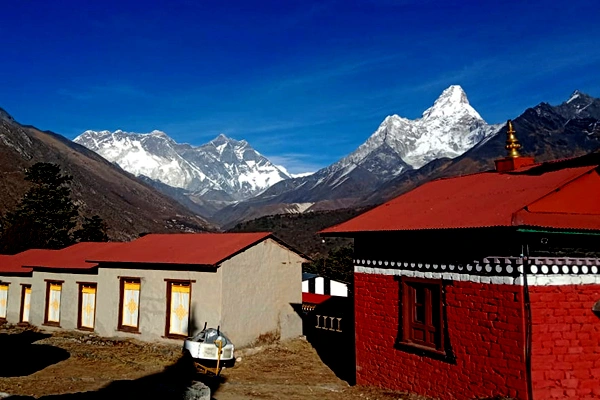

The journey to the base of the world's highest peak, Everest Base Camp, is gradual, blending elevation with the peaceful beauty of the Khumbu region. Everest Base Camp sits at an altitude of 5,364 meters | 17,000 feet, which is often the highest point for most trekkers. The altitude game seems even higher than where we started at 2,860 meters in Lukla, the gateway to the Base Camp.
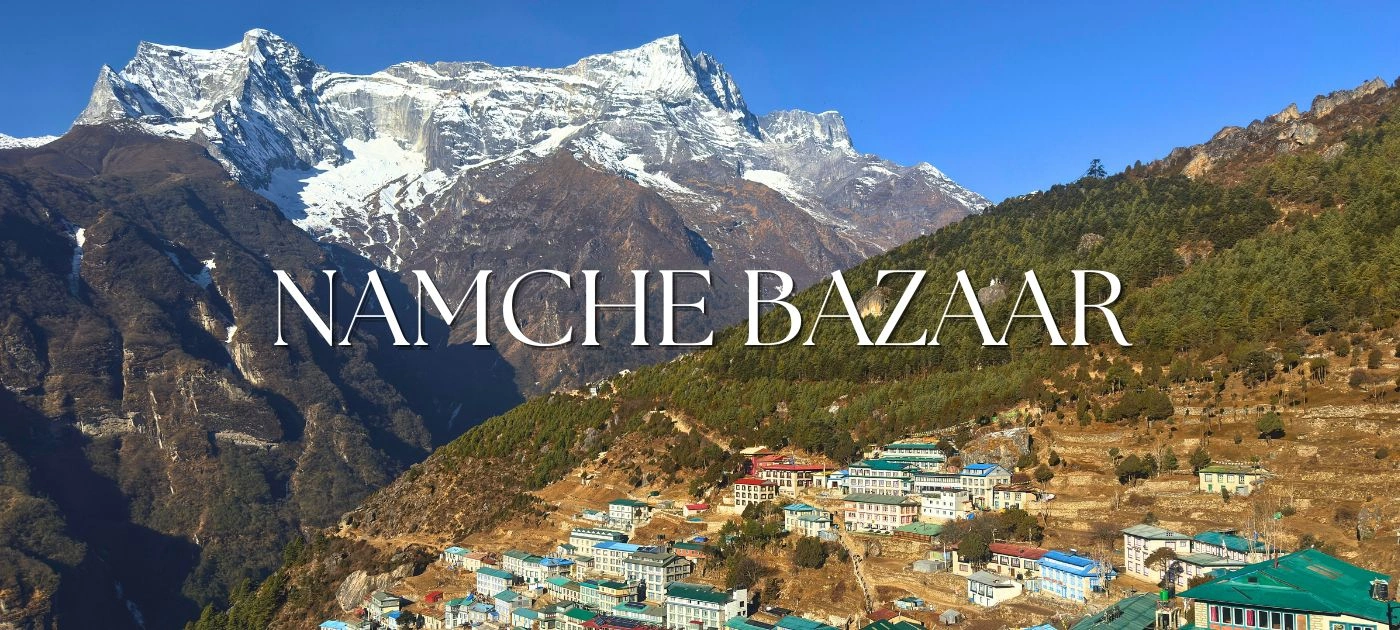
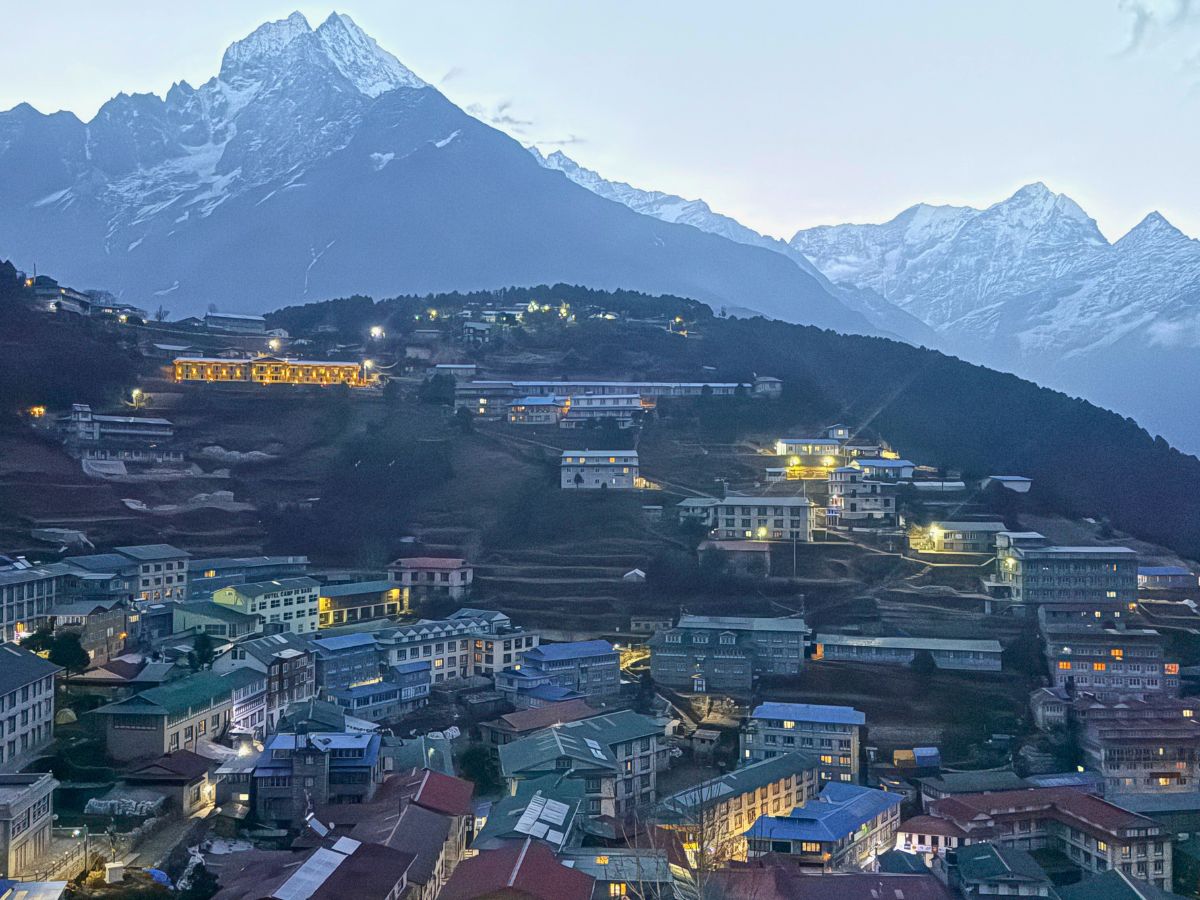
Namche Bazaar, the capital of the Sherpas, sits at 3,440 meters, which marks the first acclimatization day on day 3. The rest day is a crucial and mindful investment as the body begins to struggle with reduced oxygen availability above 2,500 meters, which we call the “risk zone”. By the time you reach Namche, the inspired oxygen pressure is only about 69% of sea level values. Acclimatization gives your body the days it needs to build a biological bridge across that oxygen gap.
A rest day doesn’t simply mean sleeping under warm blankets; it’s rather about moving for a few hours to a predetermined destination, reaching a certain altitude, and returning to low elevation. In the mountains, we follow the golden rule, “Climb High, Sleep Low.” This means you hike to a higher elevation and then return to the lower altitude. This practice stimulates the production of Red Blood Cells (RBCs) without overstressing the body. Acclimatization day in Namche Bazaar helps to adjust your hiking and sleeping patterns in preparation for the next day in Tengboche/Debuche.
The same principle applies in the Namche Bazaar, where we ascend to the Everest View Hotel, located at an elevation of 3,884 meters. The hike takes around 3-4 hours for a round hike to the Everest View Hotel. However, this is not the only option for acclimatization. Namche Bazaar offers multiple viewpoints and serves as a great destination for a day hike.
-
Classical Syanboche to Everest View Hotel route
-
Sagarmatha National Park Museum Integrated with Everest View Hotel.
-
Sagarmatha Next Center
-
Khumjung Village
-
Khunde Village
-
Thame Village
-
Namche Monastery
1. Syanboche to Everest View Hotel Route
This is the classic acclimatization walk- a gentle 3-4 hours of a round trip that embodies the “climb high, sleep low” principle. Starting from the upper edge of Namche, you ascend through forests of fir and rhododendron to the Syanboche airstrip (3,780 m), which was once used for small aircraft but is now a peaceful viewpoint. A short, steady climb leads to the Hotel Everest View (3,880 m), a landmark built in 1971 that still holds the charm of the world’s highest luxury hotel. From its terrace, on a clear morning, you’ll see Everest, Lhotse, Nuptse, and Ama Dablam in a sweeping panorama. The trail is well-marked, with benches along the way- ideal for taking in the mountain air and watching yaks graze on the alpine meadow. For trekkers, this route is the most effective way to stimulate altitude adaptation while earning unforgettable views.
2. Sagarmatha National Park Museum Integrated with Everest View Hotel
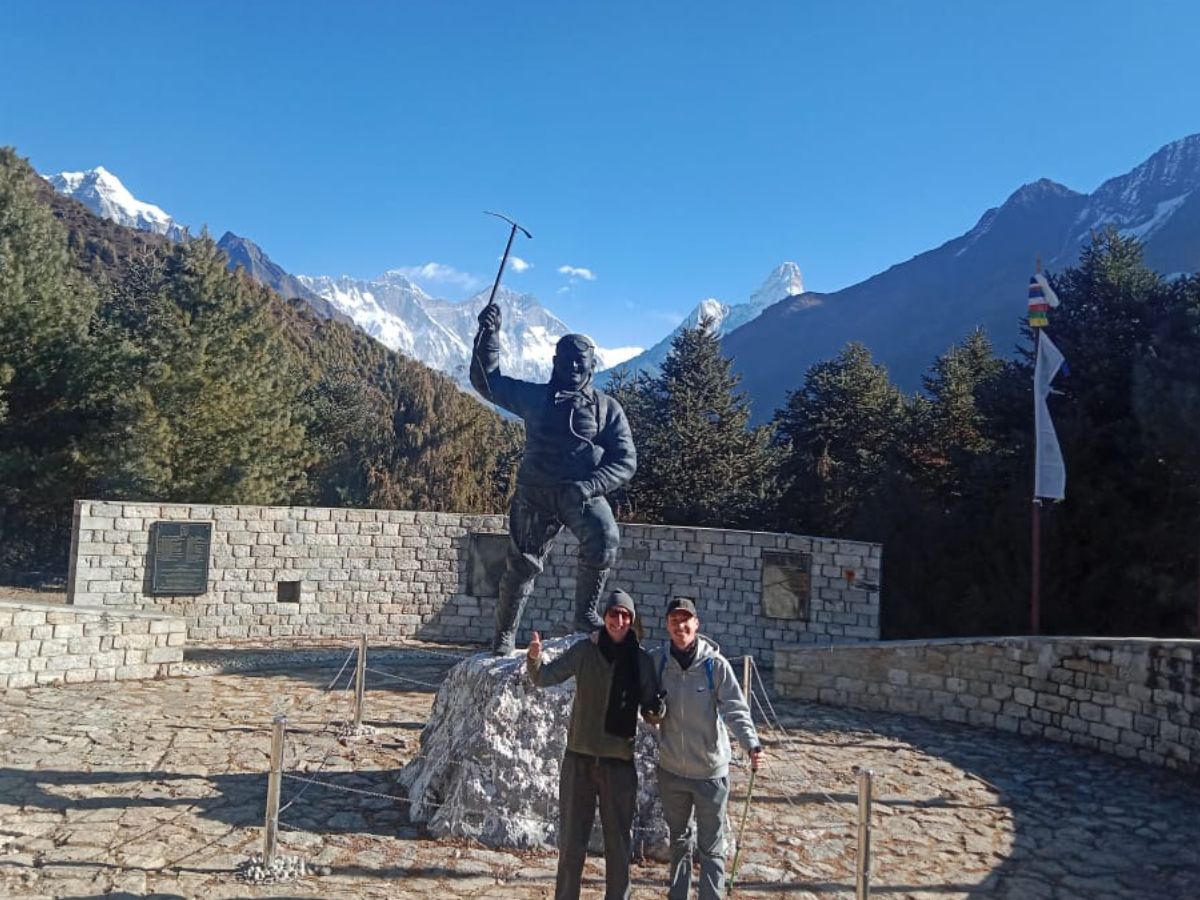
Perched on the same ridge as the Hotel Everest View, the Sagarmatha National Park Visitor Center (often called the museum) offers a compact but fascinating introduction to the park’s UNESCO World Heritage status. Upon arrival, you will be greeted by the legend himself, Tenzing Norgay Sherpa. Inside, you’ll find exhibits on the region’s geology, wildlife, and the cultural heritage of the Sherpa people. Interpretive panels and a small diorama help visitors understand how life thrives from the lowland forests to the high glaciers.
The museum is often combined with the Everest View Hotel- you can visit the center first to orient yourself, then walk another few minutes to the hotel. The viewpoint outside the museum is also one of the best spots to peep and adore the charm of the surrounding glorious and all-radiating mountains. The visible peaks include Kongde, Paniyotappa, Sundar Peak, Tangi ragi tau, Kusum Kangaroo, Khumbulia, Nuptse, Everest, Lhotse, Ama Dablam, among others.
3. Sagarmatha Next Center
Sagarmatha Next is a pioneering sustainability center located above Namche, near the Syanboche airstrip. This unique facility serves multiple purposes, combining elements of an art gallery, waste-management facility, and educational hub, making it the first of its kind in the Everest region. Visitors to the centre can explore various sculptures and installations created from solid trash collected along the trekking and expedition trails, demonstrating the potential of transforming litter into artistic works through collaborative efforts.
The center’s flagship program, “Carry Me Back,” invites trekkers to bring back one kilogram of non-biodegradable waste (such as empty cans or plastic) to Lukla or Kathmandu. This program aims to help alleviate the litter problem in the mountain area. Sagarmatha Next is highly recommended as a destination, especially for those descending from the Everest View Hotel.
4. Khumjung Village
Khumjung village is a notable destination in the Khumbu region, renowned for its traditional Sherpa village that feels worlds away from the bustle of Namche after an hour’s walk. The village is characterized by its wide stone streets, neatly arranged houses, expensive potato fields, and ancient chortens. One of the village's most significant landmarks is the Sir Edmund Hillary School, founded in 1961 as the first educational institution in the Khumbu region, still educating the local Sherpa children.
A short trek uphill leads to the Khumjung Monastery, which houses a glass-encased yeti scalp that draws curious visitors and remains a beloved piece of local folklore. Walking through Khumjung gives trekkers a glimpse of authentic Sherpa life: women weaving yak wool, children heading to school, and prayer flags fluttering against a backdrop of Ama Dablam, Thamserku, and Khumbila.
5. Khunde Village
Located next to Khumjung, Khunde (3,840 m) is a quieter neighbor with a significant historical narrative. The focal point of Khunde is the Khunde Hospital, a remarkable institution also established by Sir Edmund Hillary in 1966. Originally staffed by a dedicated team of volunteer doctors from around the world, the hospital has evolved over the years and is now fully operated by local healthcare professionals. It plays a vital role in providing essential medical services to the entire upper Khumbu region.
In addition to its hospital, Khunde is home to a small gompa, or monastery, which adds to the cultural richness of the village. Visitors can enjoy the remarkable and breathtaking vistas of the Kwangde Peak.
6. Thame Village
Thame, situated at an elevation of 3,820 meters, is located a full day’s hike from Namche, which takes approximately 4-5 hours one way. Thame village is one of the oldest and most traditional Sherpa settlements in the Khumbu region, often bypassed by trekkers rushing to Everest Base Camp. Visitors to Thame are rewarded with a timeless, picturesque landscape that features stone houses, ancient mani walls, and the revered Thame Monastery, which clings to a cliff above the village.
The monastery is well-known for its annual Dumje festival and for being the birthplace of several legendary Sherpa climbers, including Tenzing Norgay’s father and Apa Sherpa. A trip to Thame offers not only a chance for solitude but also an opportunity to immerse oneself in the rich cultural heritage of the area. This route showcases a part of the Khumbu that remains deeply connected to its pre-trekking roots.
7. Namche Monastery ( Namche Gompa)
Namche monastery, officially known as Namche Gompa, is located on a small hill overlooking the main market of the Namche Bazaar and serves as the spiritual heart of the village. It is affiliated with the Nyingma school of Tibetan Buddhism. The gompa’s interior is adorned with vibrant murals, butter-lamp offerings, and a central shrine surrounded by statues of key figures, including Padmasambhava (Guru Rinpoche) and various other Buddhist deities.
Early mornings are the best time to visit, as this is when monks gather for prayers, creating a serene atmosphere enhanced by the aroma of juniper incense. For many Sherpa families, the monastery holds significant cultural importance, offering blessings and serving as a common stopping point for trekkers on their journey into the mountains. Regardless of religion, the tranquil environment and the stunning views of Namche’s horseshoe valley make it a worthwhile place to pause and reflect.
Conclusion
An Acclimatization hike doesn’t mean to match the regular hiking distance, duration, and hours. Keep it short, make sure to reach a determined elevation. In Namche Bazaar, the mountains don’t just offer breathtaking views; they teach patience, respect, and the subtle art of listening to your body. Whether you hike to the Everest View Hotel, explore the Sherpa Culture museum, or simply sit with a cup of butter tea watching the sun set over Thamserku, each moment spent here builds the foundation for the heights ahead.
Many trekkers underestimate the importance of a structured rest day. In our Everest Base Camp trek packages, we include a guided acclimatization hike- exactly what your body needs to adapt while soaking in the best views of the Khumbu. We don’t just take you into the mountains; we help you experience them safely, authentically, and memorably.